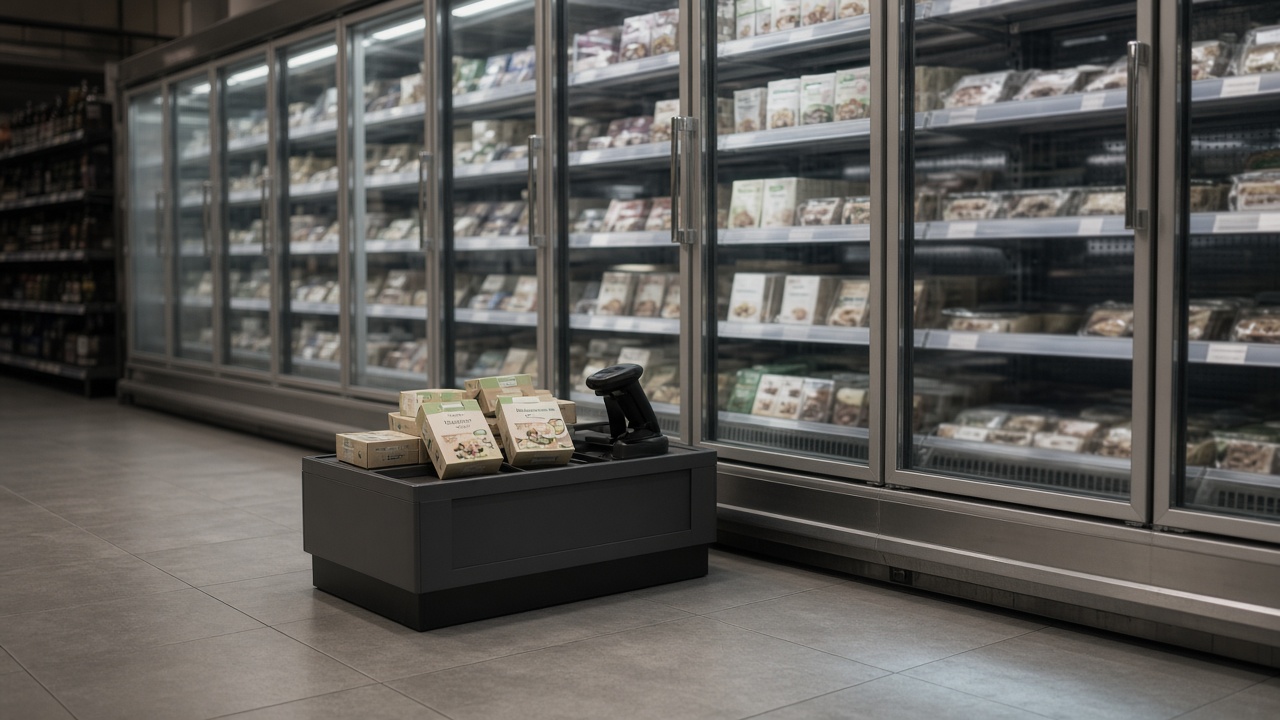
Waitrose & Partners rolled RFID-tagged pick shelves for Duchy Organic meal kits at twelve Oxfordshire branches after internal shrink and substitution data showed chilled-aisle mis-picks—customers grabbing chicken kits when they meant plant-based—added an average 47 seconds to self-checkout interventions during weekday 6 p.m. peaks, according to an operations bulletin store managers received Monday and reviewed by InfoHandle. The shelves are not a new product line; they are a fulfilment fix for kits that already ship to those stores in mixed cartons.
How the pick shelf works
Each kit slot carries an ultrahigh-frequency tag encoded with SKU and use-by date. Partners scan a handheld reader when restocking; the shelf lights a subtle amber LED if a shopper places the wrong protein variant in the bay. Click-and-collect desks use the same signal to verify orders before bags leave the store. Waitrose stressed the tags are not linked to customer accounts—this is back-of-house inventory, not loyalty tracking.
Duchy Organic recipes rotate seasonally; September boxes feature squash and kale from contracted farms in Herefordshire and Gloucestershire. RFID does not judge freshness—it only matches barcode families. Partners still do tactile checks for damaged film.
Time and money for households
Meal kits sit at a price premium to loose ingredients; Waitrose’s Oxfordshire pricing keeps four-portion kits at roughly £6.50–£8.00 per serving once you add pantry staples. The retailer’s pitch is Tuesday-to-Thursday time savings for dual-income households commuting on the A34 or A40. Mis-picks erased that benefit when returns clogged service desks.
Who does the work
Restocking shifts gained fifteen minutes per delivery because tags must be activated at the back door—unpaid customer labor is unchanged, but partner labor rose slightly. Union reps at one Oxford store asked whether RFID targets would join performance scorecards; regional management said no for the twelve-store pilot, yes if chain-wide.
Limits and allergies
LED prompts do not replace allergen labels; nuts and gluten information stays on box backs. Trading standards officers in Oxfordshire said they will inspect whether lighting cues confuse elderly shoppers who already struggle with small print—accessibility reviews are scheduled for October.
Stores in the pilot include Oxford city centre, Summertown, Witney, Bicester, Abingdon, Didcot, Henley-on-Thames, Banbury, and three out-of-town branches along the M40 corridor—chosen because online-order volumes for Duchy kits were already above the chain median. Managers were told not to shrink ambient facings to make room; the RFID bay replaces one facing of premium ready meals that under-indexed last winter.
If you shop these branches, look for the low chilled shelf with amber indicators—not the ambient pasta wall. The pilot runs through Christmas; data will decide national rollout. What is knowable today: Oxfordshire Waitrose stores are testing RFID to stop protein swaps, Duchy kits are the guinea pig, and checkout delays were measured before the fix shipped.