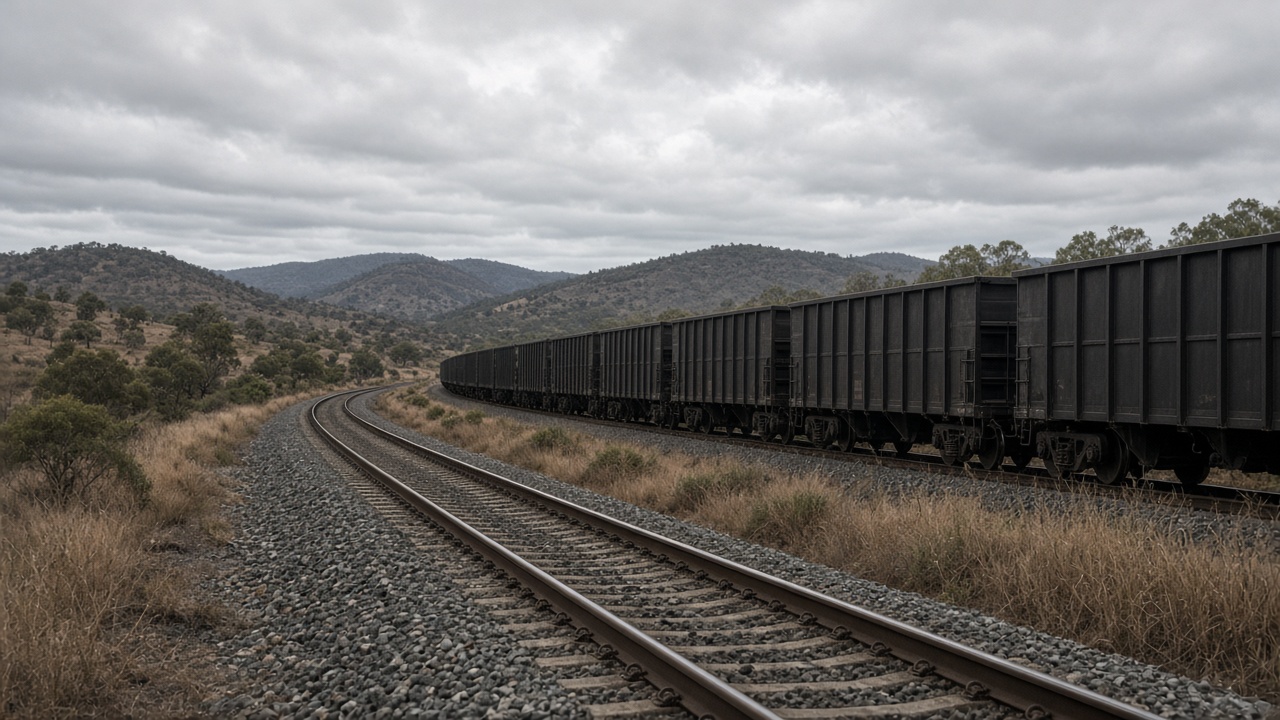
Whitehaven Coal Ltd booked additional train paths on the Hunter Valley coal corridor in the days before a statewide maintenance shutdown, aiming to land Gunnedah Basin tonnes at Newcastle export terminals ahead of a 72-hour track closure that starts 6:30am Tuesday 22 September. The producer runs Maules Creek, Narrabri and smaller mines through Pacific National and Aurizon haulage contracts onto Port Waratah and Newcastle Coal Infrastructure Group berths. Losing a full mid-week window would pinch September sales into an already tight vessel queue, logistics managers told brokers in a closed call summarised to InfoHandle.
What the shutdown blocks
The Australian Rail Track Corporation plans works across 135 sites between Warabrook and Kooragang, Muswellbrook, and branches toward Ulan and Turrawan. About 900 contractors and 100 ARTC staff will renew track, repair bridges, adjust signals and fix level crossings. Passenger services switch to coaches; coal and other freight stop entirely during the core window, with overnight possessions on adjoining nights. ARTC said planning ran more than twelve months to stack non-compatible jobs into one closure rather than dribbling delays through autumn.
For Whitehaven, the timing collides with quarterly export accounting and with spot thermal coal bids still sensitive to Asian power demand. Unlike Hunter-only producers, Whitehaven's rakes travel from the west of the network, so any pre-positioning requires path priority negotiated with the track manager and both haulage partners. Empty wagons must also be staged to reload quickly once lines reopen before month's end.
Labour and contractor view
Union delegates at Newcastle terminals said stevedores expect a short lull then a burst of receivals when trains return. Labour-hire firms in Muswellbrook reported extra shifts last week for trackside contractors, a separate workforce from mine crews but sharing accommodation pools that tighten when maintenance camps fill. Miners on 12-hour rosters at Maules Creek were not asked to cut production; the lever is logistics not geology. Haul truck queues at load points stayed normal, while rail schedulers resequenced which silos emptied first.
Whitehaven owns three WH-class locomotives for certain shuttles, but most tonnage still rides on PN and Aurizon pools. Those operators face the same closure; extra paths before Tuesday are the relief valve. Drivers on FIFO rosters from the coast said fatigue rules capped how many additional runs could be stacked without breaching safeworking hours.
Terminal and vessel queue
Port agents track combined vessel queues at PWCS and NCIG. Whitehaven's quarterly disclosures have noted weather and swell interrupting load rates even when rail performs. Banking extra tonnes on stockpiles before the shutdown hedges against a slow restart if wet weather follows, a pattern the company documented after Hunter flooding cut lines west of Maitland for twelve days in prior years. Stockpile space at Newcastle is finite; marketing teams must align with traders so extra coal does not sit unshipped past laycan windows.
Competitors with Hunter pit-to-port chains face the same closure. The difference for Whitehaven is distance: every hour of shutdown costs more when round trips start near Gunnedah. That is why path auctions in the week before maintenance drew attention from analysts covering ASX coal names.
Investor read-through
Whitehaven shares trade as a lever on thermal coal prices and on operational reliability. A managed rail strategy does not change resource quality at Narrabri, but it protects revenue recognition. Funds holding the stock for dividend cover watch whether guidance assumes rail risk or treats it as exceptional. Management has not issued a standalone market notice on the shutdown; the story sits in logistics calls until September production and sales reports land.
ARTC executives said the shutdown should improve reliability afterward, reducing journey times that silently tax quarterly tonnes. Whitehaven is effectively prepaying rail utilisation to borrow against that future benefit.
After Friday reopening
Schedulers expect a phased return 6:30am Friday 25 September, with priority freight nominated in consultation with major coal holders. Whitehaven will watch whether PN and Aurizon restore cycle times fast enough to hit export targets without discounting late cargoes. If post-shutdown congestion collides with another weather event in the Gunnedah Basin catchment, the early path bookings become the difference between a footnote and a guidance conversation in October.