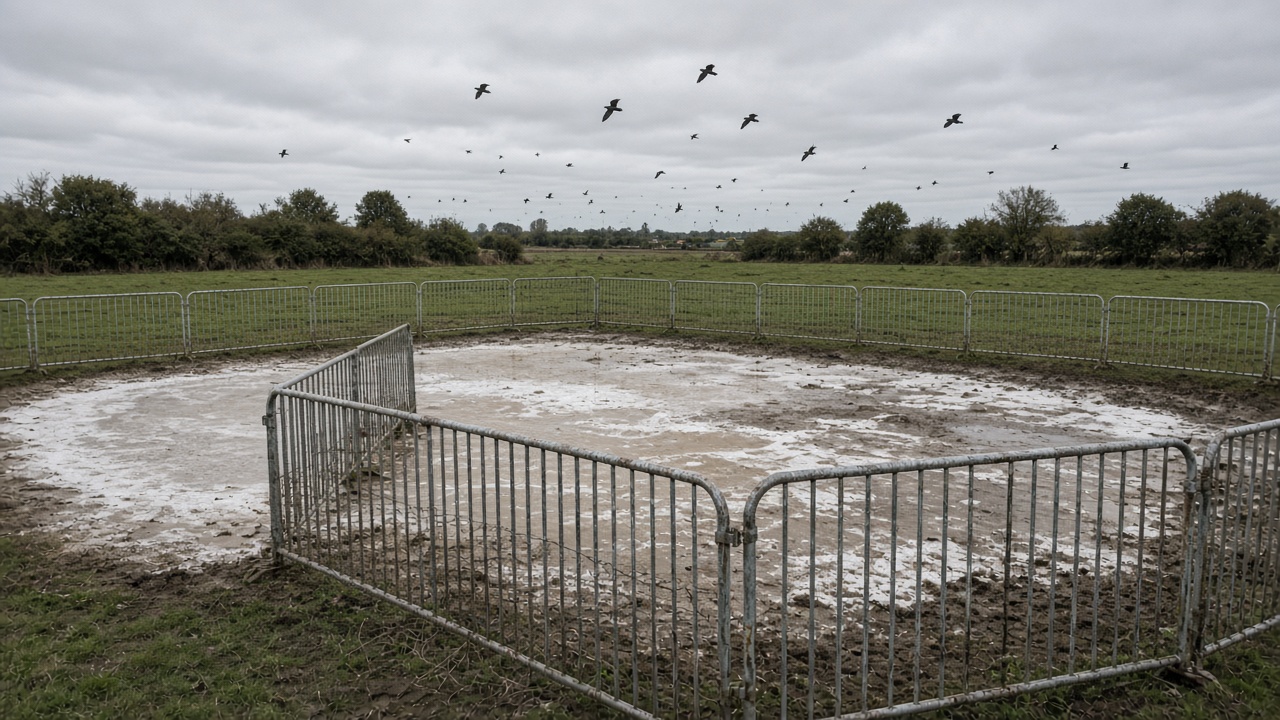
Cheshire Wildlife Trust erected temporary fencing around a six-hectare pasture where brine from a disused salt mine cavity has surfaced for two summers, after lapwings and redshank began nesting in pools with chloride levels roughly eight times background river readings, according to an Environment Agency incident log updated Thursday and site briefings InfoHandle attended by phone. The trust is not trying to drain the field for farming—it is keeping cattle and ground-nesting birds out while engineers test whether controlled pumping can lower the water table without collapsing legacy mine workings.
Where the brine is coming from
Cheshire’s Northwich and Winsford salt mines left pillar-and-stall voids beneath farmland. When rainfall percolates, brine can migrate along fissures and daylight through “wild” brine springs. A licensee still extracts salt commercially nearby; regulators distinguish that active brine field from this seasonal flare on trust-managed land, but chloride spikes correlate with heavy September rain on already saturated soils.
EA sampling on 12 September recorded conductivity above 15,000 microsiemens per centimetre at the field’s low point—fine for salt-tolerant algae, hostile to invertebrates waders need for chick food. Dead fly larvae in one transect suggested the birds were foraging in a food desert dressed as wetland.
Why fence instead of pump first
Collapsing voids make aggressive pumping risky; the trust’s contractor is logging pressure at shallow boreholes before increasing extraction. Fencing buys time: lapwing scrapes inside the zone were abandoned after two dogs from a public footpath disturbed clutches. The trust moved the footpath margin three metres and posted temporary diversion signs—lawful under countryside access rules with Natural England’s written consent.
Who regulates what
Mine abandonment falls to the Coal Authority for coal and to local mineral planning for halite; brine discharge to ground is an EA water discharge issue if piped, but diffuse seepage is handled as land contamination remediation with the landowner. Here the trust owns the surface rights; mineral rights remain with a legacy company that sent a hydrologist to the first meeting but has not funded works.
What happens through winter
If pumping tests stabilize chloride below 4,000 microsiemens, the trust may scrape shallow scrapes outside the brine lens for lapwings next spring. If not, the field stays fallow with fencing maintained against storm damage. Cattle on adjacent meadows are watered from a mains trough upslope—farmers were warned not to let stock drink from the pool line.
Readers walking the diversion should keep dogs on leads through March; disturbed nests are not replaced. The open question is whether the licensee’s wider brine field management will change after this flare. For now, the map fact is specific: a fenced Cheshire field, measured salt, and wading birds steered away from water that looks like habitat but is not.