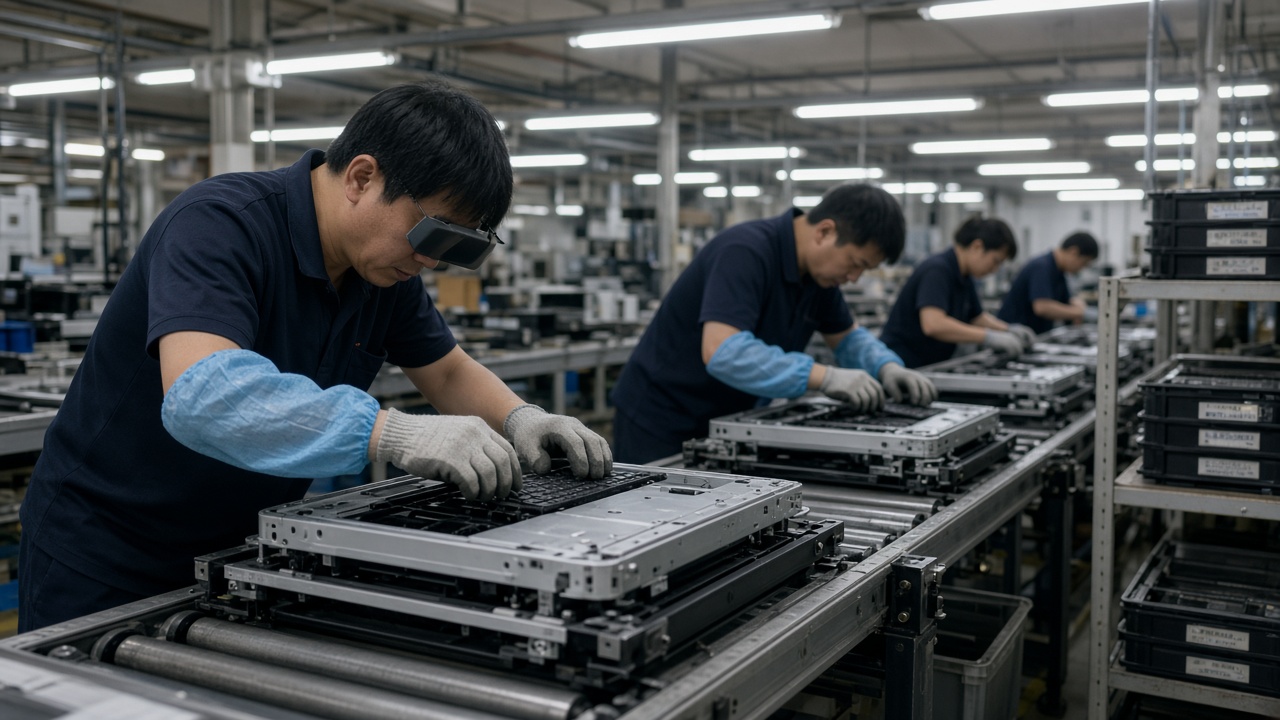
Wistron Corp. shares rose after supply-chain checks indicated higher attach rates on Copilot-ready enterprise notebook bids for North American and European fleet refreshes, traders and two ODM program managers told InfoHandle on Friday. The company has not revised formal margin guidance; the move reflects reference designs with dedicated NPUs passing customer security reviews faster than earlier Windows-on-Arm pilots.
Who led and by how much
3231.TW closed up about 3.6 percent on turnover roughly forty percent above its twenty-day average, according to Taiwan Stock Exchange tables. Quanta and Compal ticked higher in sympathy, but Wistron's enterprise mix is the focus.
Late-session blocks included a lot brokers tagged as a sovereign wealth fund adding Taiwan ODM exposure after a Fortune 500 RFP listed Wistron as primary builder for a twelve-thousand-unit Copilot PC rollout starting November.
Mechanism behind Copilot fleet bids
Enterprise buyers now score laptops on local AI inference for meeting summarization and device security agents—not just CPU benchmarks. Wistron's Taoyuan campus qualified chassis with Intel Core Ultra and AMD Ryzen AI configurations that meet Microsoft Copilot+ branding checklists, including webcam shutters and TPM modules fleet IT departments audit.
ODM margins improve when customers accept bundled imaging, asset tagging, and zero-touch enrollment services Wistron performs in factory rather than at customer loading docks. Copilot-ready SKUs carry higher service fees per box even if hardware ASPs flatten.
What the street already had in the number
Consensus assumed notebook ODM margins would compress in 2026 after pandemic-era peaks. Friday's pop suggests either enterprise mix is richer than models assumed or component costs stabilized enough to stop emergency rebate wars.
Foreign institutional investors were net buyers for a fifth session, flow data show—a modest vote that PC demand is not only consumer Chromebook churn.
What would falsify the trade by Friday
A Microsoft licensing change that delays Copilot deployment on existing fleets would freeze builds even if hardware is ready. Conversely, a Dell or Lenovo promotional bundle could claw back an RFP Wistron thought was locked.
Wistron's next update comes with monthly revenue disclosure; if enterprise SKUs do not lift blended margin commentary, today's bid could unwind.
Taoyuan and Chongqing specifics
Program managers in Taoyuan added night shifts for firmware flashing stations that preload Copilot policies per customer tenant IDs—a step that previously happened overseas and leaked launch dates. Chongqing lines handle mainland China SOE bids with separate image builds to satisfy data residency rules.
Security auditors from two U.S. financial institutions toured Wistron floors last week; passing those visits unlocked deposit payments on fleet POs stuck in procurement since summer.
Investor takeaway
Nina Okonkwo's desk treats Wistron as a services-and-mix story inside a mature PC market. Copilot fleet wins move margins before retail sell-through data confirms because enterprises book on delivery acceptance, not Black Friday queues. Whether it sticks depends on November revenue prints—and on whether AI PC narratives survive another week of component price headlines without a pause.
Options desks priced implied volatility on Wistron higher into earnings season, reflecting headline risk but not collapse bets.
Management highlighted sustainability modules—recycled aluminum lids—that help customers meet procurement scorecards; those modules pair well with Copilot marketing slides chief information officers present to boards.
Analysts at two Taipei brokerages raised channel checks citing Wistron as lead builder on a European government tender for ruggedized Copilot laptops—low volume but high margin. Tender documents are public; delivery schedules are not.
Consumer notebook weakness remains the offset: if back-to-school clearance drags on component pricing, enterprise wins must carry blended margin. Until October revenue, Friday's session is a bet that fleet Copilot bids are the margin floor ODM investors wanted to see.
Wistron's investor relations team declined to comment on specific RFP wins, citing customer confidentiality. Supply-chain maps nonetheless show higher outbound air freight bookings from Taoyuan for enterprise SKUs with serialized asset tags—an operational tell traders watch when headline PC data is noisy.
Component buyers said DRAM contract prices stabilized enough to stop emergency spot purchases that hurt ODM quotes in spring; that backdrop makes Copilot mix the swing factor rather than memory spikes alone.