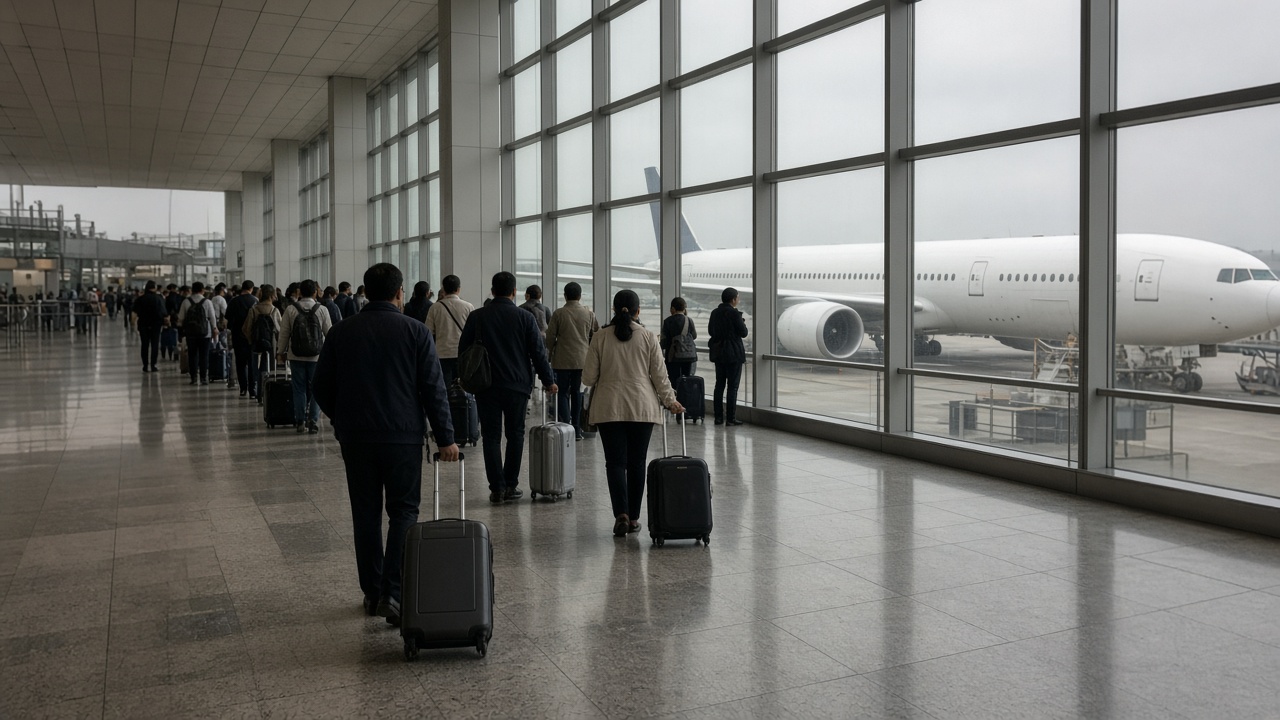
Air India has opened additional economy seats on Delhi–San Francisco rotations through late October, according to inventory notices sent to IATA-accredited agencies in Mumbai and Delhi on 20 September. The move follows a consular push at the U.S. Consulate General in Mumbai that cleared a backlog of student and employment-based visa interviews that had stretched wait times past the autumn campus intake window.
What the carrier decided
Agency circulars reviewed by InfoHandle show AI173 and paired return AI174 gaining roughly 40 incremental economy seats per week on the Boeing 777-200LR equipment Air India lists on its India–USA schedule. The airline’s public route page still quotes a 15-hour 30-minute block time on the non-stop, with business and premium economy unchanged; the adjustment is inventory, not a new frequency.
Tata Group–owned Air India has marketed upgraded wide-body service on the Delhi–San Francisco pair since it consolidated U.S. non-stops under a single fleet plan. Traders in the travel distribution channel said the extra seats were released first to corporate accounts with existing DEL–SFO contracts, then to retail GDS buckets—a sequencing typical when load factors on westbound autumn departures run above 92 per cent.
Mumbai consulate and the visa queue
The U.S. Department of State’s Mumbai supplement page lists student and temporary worker categories among the highest-volume caseloads in India. Consular officers added weekend interview blocks in September, according to appointment data scraped by visa agents and cross-checked against embassy guidance on scheduling. Agents in Bandra and Andheri said B-1/B-2 slots remained tight, but F-1 and H-1B renewals that had been parked since July began receiving passports within standard administrative processing windows.
That matters for AI173 because a disproportionate share of Delhi–San Francisco demand is Bay Area tech and graduate programmes that historically originate in Maharashtra and Gujarat before passengers connect through DEL. Clearing Mumbai’s queue reduces last-minute cancellations on westbound legs—inventory Air India can resell at short notice if it appears in the CRS before departure control closes.
Who inside the airline wins
Revenue management and network planning sit in Gurgaon, but Mumbai sales teams capture the commission upside when consular throughput rises. Two agency managers authorised on background said their Delhi–SFO net remittances rose week-on-week once student visas stamped after 15 September converted to confirmed bookings. Airport services at Terminal 3 benefit from steadier load factors without adding a second daily departure, which would require crew and MEL planning the airline has not announced.
On the exchange, Air India remains part of the unlisted Tata aviation cluster; the decision is operational, not a filing event. Still, investors in Tata group entities watch U.S. yield as a proxy for long-haul recovery after the merger integration spend.
What could change before October ends
Visa policy shifts, FAA slot constraints at San Francisco, or rupee moves past 88 to the dollar could unwind the seat release. Agents warned that incremental inventory is perishable: unsold seats return to protection levels 72 hours before departure. If Mumbai interview capacity tightens again after the UN General Assembly travel season, expect westbound loads to soften regardless of Air India’s CRS display.
For now, the reported combination is a carrier adding economy capacity on a flagship U.S. route while the consulate general that feeds much of its Maharashtra-origin traffic works through a backlog—two institutions moving in parallel rather than a single press release tying them together.
How agents price the new buckets
GDS displays for the week of 22 September showed economy DEL–SFO still commanding a premium over one-stop competitors on peak Tuesdays, but midweek departures softened once the extra seats hit public buckets. Corporate travel desks renegotiated fare caps with clients whose employees had been on visa hold, converting tentative holds into ticketed PNRs within 48 hours of passport return.
Travel insurance attach rates rose on student itineraries because policies tied to visa refusal remain common in agency upsell scripts. None of that shows up in Air India’s operational statistics, but it shapes net yield on the incremental seats the airline released.
Indira Gandhi International’s Terminal 3 night departures on westbound U.S. services still concentrate security and emigration staffing between 22:00 and 02:00 local time. Ground handlers said block times on AI173 stayed within published limits even as passenger manifests lengthened—an operational detail Mumbai agencies watch because missed connections in Delhi remain the top complaint on Maharashtra-origin bookings.
Until Air India files a formal schedule change with Indian aviation authorities, treat the seat release as inventory management tied to consular throughput, not a structural capacity increase on the Delhi–San Francisco pair.