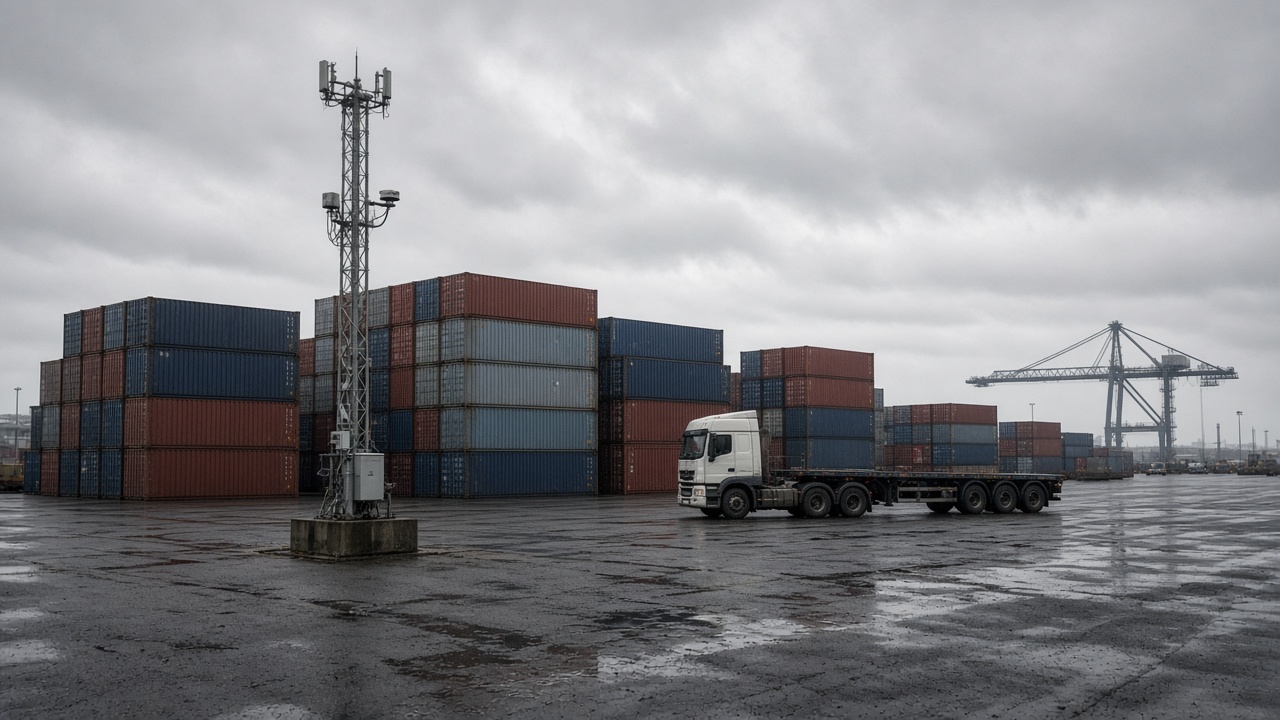
YardPulse, a Bristol logistics software firm backed by Bristol Port Company as a minority investor, won a £1.8 million Innovate UK grant through the former BEIS innovation pipeline to roll out container dwell telemetry across Avonmouth yards—tracking how long boxes sit before collection without installing new gate readers for every haulier, according to the award notice and port operations briefing InfoHandle reviewed. Dwell time drives demurrage invoices and empty-mile truck runs; port managers want hauliers to see queue depth on phones before drivers leave the M5.
How telemetry attaches
YardPulse clips UHF readers and licence-plate cameras to existing lighting poles, correlating container IDs from prior gate scans with movement between stacks. Machine-learning models—not named vendors in the public brief—estimate when a box becomes “actionable” for pickup versus still awaiting customs holds. Hauliers subscribe to API feeds; small fleets get a web dashboard because they lack TMS integrations.
Bristol Port’s role is site access and historical gate data, not exclusive software mandate; other terminals could license the stack if pilots hit accuracy targets above ninety percent on dwell alerts in September dry runs.
Grant structure and jobs
The £1.8 million pairs government co-investment with port equity already committed in YardPulse’s 2025 pre-seed. Innovate UK milestones require 12 months of live telemetry on at least three yard zones covering refrigerated and dry stacks. The company must hire six engineers in Bristol city centre and two field technicians in Avonmouth—local MP briefings touted apprenticeship slots with City of Bristol College logistics programmes.
Why hauliers care
Road Haulage Association members in the South West report drivers waiting three to five hours without pay when yards congest; better ETAs let dispatchers sequence multi-drop runs. Demurrage fights often hinge on timestamp disputes; signed telemetry logs could arbitrate if courts accept them—YardPulse’s legal appendix says admissibility is untested.
Customs and Brexit friction
Avonmouth handles agri-feed and automotive parts with mixed border processes; containers on hold for DEFRA checks look identical to ready boxes from the cab. YardPulse flags customs status only when port community system messages sync—if HMRC pipes lag, alerts lie. Operators were warned not to treat the dashboard as clearance authority.
Competition and limits
Major ports run proprietary TOS systems; YardPulse integrates via APIs, not replacement. Funding failure would have limited rollout to one yard; grant unlocks three. Winter gales knock cameras; redundant pole power is budgeted but not installed until month six.
Port community systems
Bristol Port’s community system feeds container status messages to HMRC and DEFRA interfaces; YardPulse reads those flags rather than guessing customs outcomes. When messages stall—as they did during a June software patch—telemetry showed false “ready” states for eleven hours; the post-incident review is why the grant milestone adds heartbeat monitoring on integrations, not just yard cameras.
Department for Business and Trade liaisons framed the award under productivity and decarbonisation headings: fewer idle truck engines cut local NOx even if the primary ROI is demurrage avoidance. Southwest Net Zero Hub cited the project in a regional transport note without committing match funding.
Smaller hauliers
Owner-operators without TMS software get SMS alerts when dwell exceeds a threshold they set in the web UI; YardPulse waived subscription fees for the first 200 accounts in Avonmouth to seed density. RHA Southwest reps said uptake depends on whether port gate staff endorse the timestamps when disputes reach arbitration.
Bristol City Council freight forums listed the grant in September minutes as a port productivity win, though councillors asked whether data would be shared with clean-air zone enforcement—YardPulse said number-plate reads stay inside haulier contracts unless courts order disclosure.
Port security reviewed camera angles so telemetry poles do not film driver faces at cab height; privacy impact assessment sign-off was a grant condition before poles went live on the refrigerated stack lane.
What is knowable today: BEIS-era Innovate UK money for £1.8 million, Avonmouth dwell telemetry live on a staged map, Bristol Port as site partner, hauliers getting ETA feeds without personal gate hardware. Whether demurrage bills drop depends on behaviour change, not sensors alone—but the grant makes the experiment real through next autumn.