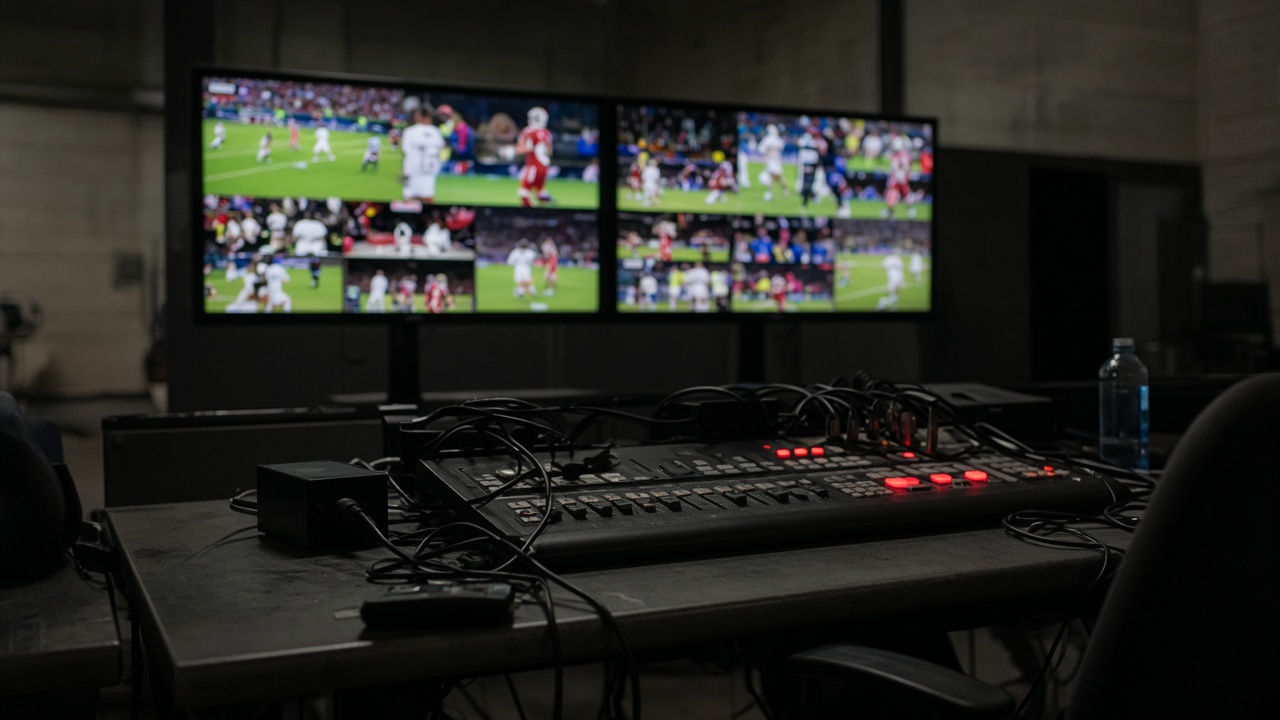
Tokyo Game Show organizers pledged Monday to salvage parts of the canceled September 21 Makuhari program through CESA’s official livestream stack, pending safety checks on production crews and satellite uplinks, after Typhoon No. 25 forced a full venue shutdown. The pivot reuses infrastructure that already carried business-day keynotes to YouTube, X, Twitch, TikTok, Niconico, bilibili, DouYu, and Douyin—turning a weather closure into a scheduling problem for producers rather than a greenfield broadcast.
How the stream is supposed to work
Friday’s typhoon notice said CESA would confirm which Monday stage events could air online once it verified that staff could reach control rooms without crossing flooded access roads. That conditional language matters: unlike a pre-recorded Nintendo Direct, TGS official programs mix host segments, developer interviews, and audience reaction shots that assume a hall feed. Producers must decide whether to run anchors from Makuhari’s international conference wing—which may still have power—or from backup studios in Tokyo with greenscreen layouts mimicking the event stage.
Last year’s TGS posted a four-day streaming matrix with twenty-one official programs and fourteen stage events, all mirrored across eight platforms. The 2026 site already lists an “Event Stage / Official Program and Streaming” hub separate from exhibitor-owned channels, giving CESA a single schedule owners can retarget when the physical show loses a day.
What moves and what does not
Publisher-owned streams—Capcom specials, Xbox showcases, LEVEL-5 broadcasts—can go live without Makuhari doors open if talent is studio-based. CESA-hosted segments tied to cosplay contests, family game park demos, or on-floor playtests are harder to rescue without B-roll from Sunday. Industry sources said some Monday slots would compress into highlight reels rather than live two-way segments, trading interactivity for punctuality when typhoon curfews limit crew hours.
Exhibitors that booked official program blocks for Japan Game Awards adjacency may negotiate new slots Tuesday via CESA’s producer desk, but international talent flights already departed after business days. That pushes more weight onto domestic developers who can record from Tokyo offices—a distribution choice that favors large publishers with in-house capture suites.
Platform policy and latency
YouTube remains the canonical archive, while X and Twitch carry real-time chat density publishers watch for sentiment metrics. Chinese mirrors on bilibili and DouYu require separate compliance review when games shown lack local licenses; CESA historically runs delayed feeds rather than risking takedowns. For Monday’s emergency schedule, expect staggered start times as producers re-encode segments per territory—a boring operations detail that determines whether a trailer beats social leaks.
Audio interpretation tracks that business visitors relied on Thursday and Friday may shrink to Japanese-only on rushed replays, a downgrade international PR teams grumble about but accept when the alternative is silence.
Consumer spine
Ticket holders who wanted hands-on time still lose; the stream is compensation theater, not a substitute for demo kiosks. CESA’s consumer-facing copy emphasizes safety and refunds first, streaming second—appropriate legally, but it means the product update is really for remote audiences who never planned to take the Keiyo Line. Family Game Park experiences, a free zone aimed at parents, do not translate to Twitch unless producers stage kid-friendly segments in studio, which few Monday schedules included.
For platform holders, the relevant metric is concurrent viewers versus Sunday’s in-person peak, not refund totals. If Monday streams beat last year’s online-only numbers from pandemic-era shows, expect CESA to argue hybrid resilience in sponsor decks even as exhibitors absorb teardown surcharges.
What to watch before Tuesday
Official social accounts will post finalized URLs once venue safety checks clear; until then, bookmark the 2026 program page rather than third-party restreams that inject unlicensed ads. Publishers may drop shadow uploads on their own channels minutes after CESA windows—standard practice when embargoes lift mid-typhoon.
The operational test is whether CESA’s streaming desk can publish a revised timetable faster than exhibitors leak footage from Sunday floors. Pass that test and Monday becomes a controlled digital day; fail it and the story is chaos on X, not the stage titles CESA hoped to spotlight.