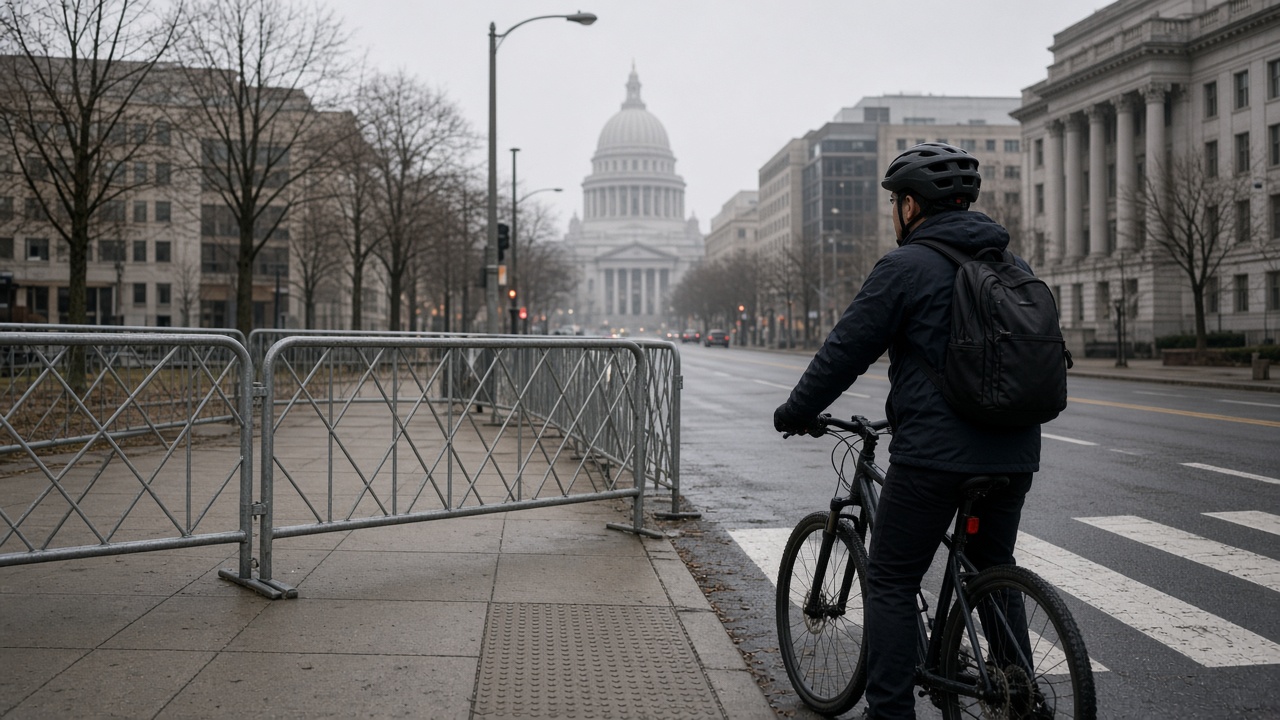
When Secret Service UN General Assembly perimeter maps closed Pennsylvania Avenue crosswalks between a Senate budget office and a House transportation subcommittee staffer’s desk, the couple—both mid-level policy analysts who share a Capitol Hill apartment—split their week into staggered commutes and swapped childcare blocks with neighbors also blocked by motorcade timing, a arrangement Adam Walker documents as institutional pressure on a specific household, not universal relationship advice.
Who these people are
She tracks FAA reauthorization markups; he covers appropriations riders on infrastructure grants. Neither is a principal; both must be in the room when managers expect live edits during UN week because principals fly to New York for side meetings. Their agency telework policies allow hybrid days, but committee chairs posted “in-person preferred” notices that week.
What institution sits on them
Secret Service road closures shift hourly with delegate movements; DDOT publishes PDFs but push alerts lag. OPM telework guidance does not override committee culture. Daycare near Eastern Market stayed open, but stroller routes through security checkpoints added twenty minutes each direction—enough to miss morning stand-ups if both parents tried to drop off together.
What they tried
They booked opposite telework days until a surprise markup pulled him downtown while her crosswalk closed—she worked from a library in Navy Yard with spotty Wi-Fi and missed a markup vote count. They tried shared calendars color-coded to motorcade feeds a Hill roommate scraped from reporter Twitter lists; accuracy was imperfect but better than official apps alone.
What failed
Assuming UN week would mirror last year’s closure map—it did not; an added hard perimeter near the IMF Tuesday trapped his bike on the wrong side of Connecticut Avenue until 11 p.m. Date night reservations in Dupont cancelled when neither could arrive without rideshare surge pricing north of $40.
What is not universal
Dual-staffer couples without kids traded apartments for crash pads in Arlington; single staffers couch-surfed. Contractors without telework rights lost billable hours at gates. This pair’s neighbor swap worked because both families knew each other from pandemic pods—not every Hill block has that trust.
What helped
Explicit text messages about which markup was “must attend” versus “send comments” reduced guilt fights. They ate breakfast together on telework overlap days and stopped expecting daily lunch walks until Friday, when perimeter maps loosened.
Advice last, narrow
If both partners serve institutions that treat summit weeks as hero hours, negotiate one shared off-site block for logistics, not romance—library Wi-Fi, backup childcare, who carries the work phone during motorcade windows. It is a logistics truce, not a fix for Hill culture that assumes someone else handles home time.
After UN week
Perimeters lift Sunday; they scheduled a long walk to debrief what to pre-book before the next IMF spring meeting. Institutions will not simplify; couples either build neighbor networks or accept that some weeks are parallel shifts in the same zip code—not shared evenings.
Congressional schedule overlap
When the Senate stays in session during UNGA while the House recesses, dual-chamber couples face asymmetric pressure—one partner “must” be in town while the other’s boss encourages remote work. This pair both served active committees, which made staggered telework impossible without career visibility costs they were unwilling to absorb in the same week.