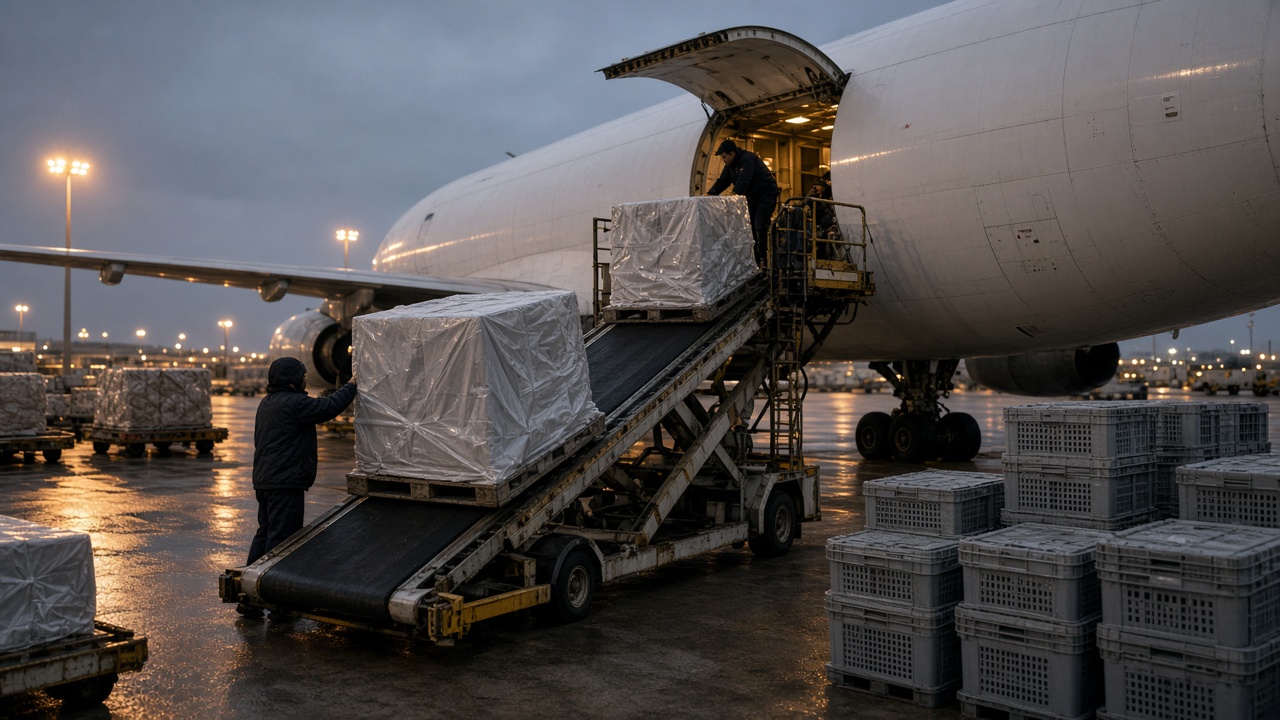
EVA Air scheduled extra Taoyuan cargo rotations and shifted wide-body belly space toward parcel freight this week after Mid-Autumn gift shipments overwhelmed passenger flights connecting Taiwan to North America and Southeast Asia. The carrier’s operations center told station managers to prioritize refrigerated mooncake boxes and time-definite e-commerce pouches on late-night departures, a tactical move that underscores how holiday mail still shapes airline economics long after pandemic-era cargo booms cooled.
Why belly-hold space snapped tight
Industry data from Taoyuan International Airport show inbound and outbound express volumes rising through the first two weeks of September as bakeries and marketplace sellers promised delivery before the Sept. 25 holiday eve. Belly-hold capacity on passenger routes is finite: each Boeing 777 or Airbus A350 carries roughly 20 to 25 tons below the cabin when passenger baggage is heavy. EVA’s network planners said eastbound flights to Los Angeles and Vancouver saw average parcel loads 18% above August, with mooncake cartons consuming disproportionate volume because of insulated packaging.
Forwarders complained that allotment confirmations that normally arrive 48 hours before departure were slipping to same-day decisions. That volatility pushes small shippers toward integrators, but integrator rates spike during holiday peaks, giving EVA an opening to sell incremental tonnage on its own metal.
What crews were told on the ramp
Internal bulletins reviewed by InfoHandle describe a split schedule: passenger agents continue standard check-in while cargo duty managers add “red-eye parcel” briefings for loadmasters. Teams were instructed to stage high-value insulated shipments last-on, first-off to minimize tarmac heat exposure in Taoyuan’s humid afternoons. Ground staff in Taoyuan’s Terminal 2 cargo office received updated weight-and-balance worksheets reflecting heavier lower-deck loads, triggering longer pushback times that passenger gate agents were asked to communicate as possible departure delays under 15 minutes.
Union representatives said overtime pools opened for forklift drivers through the holiday weekend, but the carrier avoided mandatory rest-day cancellations—a contrast to some regional competitors that reactivated full freighter crews during prior peaks.
Extra rotations without a permanent fleet bet
EVA’s public schedule filings with Taiwan’s Civil Aeronautics Administration show three supplemental cargo-oriented turns on Taipei–Anchorage and Taipei–Hong Kong sectors, designed to connect with integrator hubs rather than to launch a new freighter program. The airline retired dedicated freighters years ago; these rotations use passenger-configured 777-300ER aircraft with blocked seats in the rear cabin to balance weight when lower decks are full.
Anchorage remains a critical node because U.S. West Coast parcel hubs time-sort Asia-origin mail for next-day ground delivery. EVA is competing for the same pallets FedEx and UPS chase, but with lower frequency and more flexible pricing for Taiwanese exporters who already hold long-term passenger contracts.
What shippers should expect after the holiday
Operations managers expect belly loads to normalize by the first week of October, when mooncake demand drops and passenger baggage reclaim space. Until then, Taoyuan forwarders advise booking dimensional weight early and avoiding mixed shipments that include lithium batteries, which require separate safety declarations that slow build-up.
For EVA, the peak is a margin test: incremental cargo tonnage on existing passenger routes carries high incremental yield when fuel hedges hold. If parcel demand stays elevated into November—driven by U.S. holiday e-commerce—the carrier may keep one supplemental rotation on the winter schedule without committing to freighter leases. Employees will know which scenario is winning long before investors do: the load sheets from this week already show whether belly-hold is a holiday patch or a structural rebuild.
Taoyuan airport authority cargo staff said security screening lanes for small parcels will stay open an extra hour nightly through Sept. 24, a municipal coordination move that indirectly helps EVA meet departure banks without paying penalty fees to integrator partners. Shippers booking through EVA’s online cargo portal saw updated density calculators for mooncake insulation materials—a mundane IT tweak that prevents last-minute rejections at the acceptance counter. Cargo revenue controllers in Luzhu said they will publish a post-holiday load factor memo for investors watching yield per available ton-mile on passenger fleets.