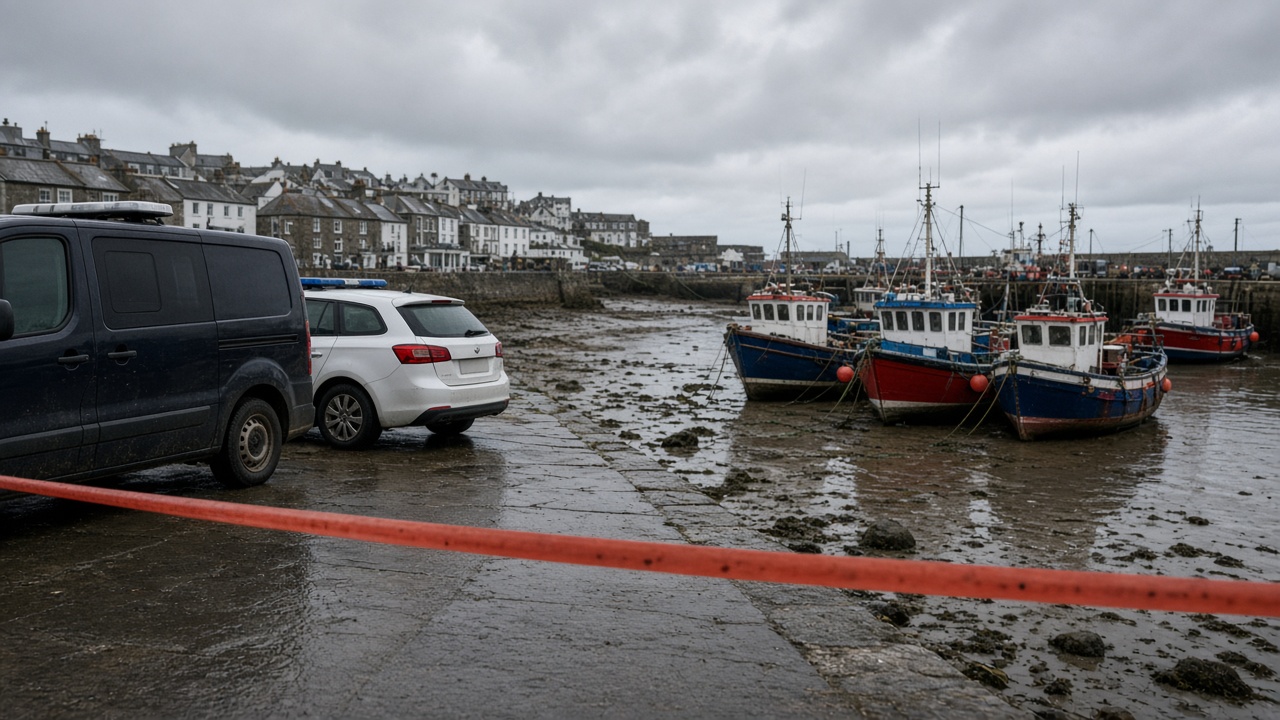
A 250-kilogram U.S.-made World War II missile discovered in the water at Falmouth Docks on Monday kept the Cornwall port shut through Tuesday as Royal Navy explosive-ordnance disposal teams worked inside a 300-metre safety cordon. Devon and Cornwall Police said three homes were evacuated overnight while Bravo Squadron specialists assessed whether the munition could be moved or must be detonated in place.
Discovery and immediate response
Divers contracted for routine berth maintenance reported the object half-buried in silt near a commercial quay used by offshore wind support vessels, according to BBC Cornwall’s first-day reporting. Harbour masters halted vessel movements before the evening high tide and redirected ferry foot traffic to alternative gates away from the dock basin.
Coastguard officers marked the site with buoys overnight. Navy sources told the BBC the munition resembles air-dropped ordnance common to Allied staging in the Fal estuary during 1944 logistics exercises, though final identification awaits X-ray and sonar profiling.
Cordon and evacuations
By Tuesday morning police had fixed a 300-metre exclusion zone spanning the quay, adjacent workshops and a stretch of public footpath overlooking the docks. Residents of three waterfront cottages left with council support and were booked into temporary accommodation in Falmouth town centre.
Businesses inside the cordon, including chandlers and rigging suppliers, were told to keep staff away until EOD gives an all-clear. Cornwall Council’s emergency desk said schools were not affected, but road signs warned drivers of diversions along A39 approach roads.
Navy EOD plan
Bravo Squadron, the Royal Navy’s dedicated southern EOD unit, took charge after army teams confirmed the object was maritime-dropped and corroded but potentially still fused. Navy spokespeople declined to broadcast timings, citing operational security, but indicated a controlled lift onto a blast barge was the preferred option if fuze integrity checks pass.
If the warhead is judged too unstable for transport, engineers may embed a small shaped charge in the harbour bed during a low-water window, a procedure Cornwall fire planners said would produce a brief acoustic shock but no airborne fragmentation beyond the cordon.
Port and community impact
Falmouth Docks is a hub for Atlantic survey ships and renewable-energy crews; each lost day ripples into crew-change schedules for vessels waiting off the Lizard peninsula. The harbour authority promised fee waivers for fishing boats rerouted to Penryn while the basin stays closed.
Local historians noted the Fal saw intensive U.S. Navy traffic ahead of D-Day, making legacy ordnance finds rare but not unprecedented. MP for Truro and Falmouth posted a short constituency update urging residents to avoid drone flights over the cordon so EOD teams could hear acoustic sensors clearly.
For Tuesday’s operational picture, the constants are the 250-kilogram device, the 300-metre cordon, three evacuated homes and Navy EOD still on the water while harbour masters wait for a safe window to reopen Cornwall’s busiest working dock.