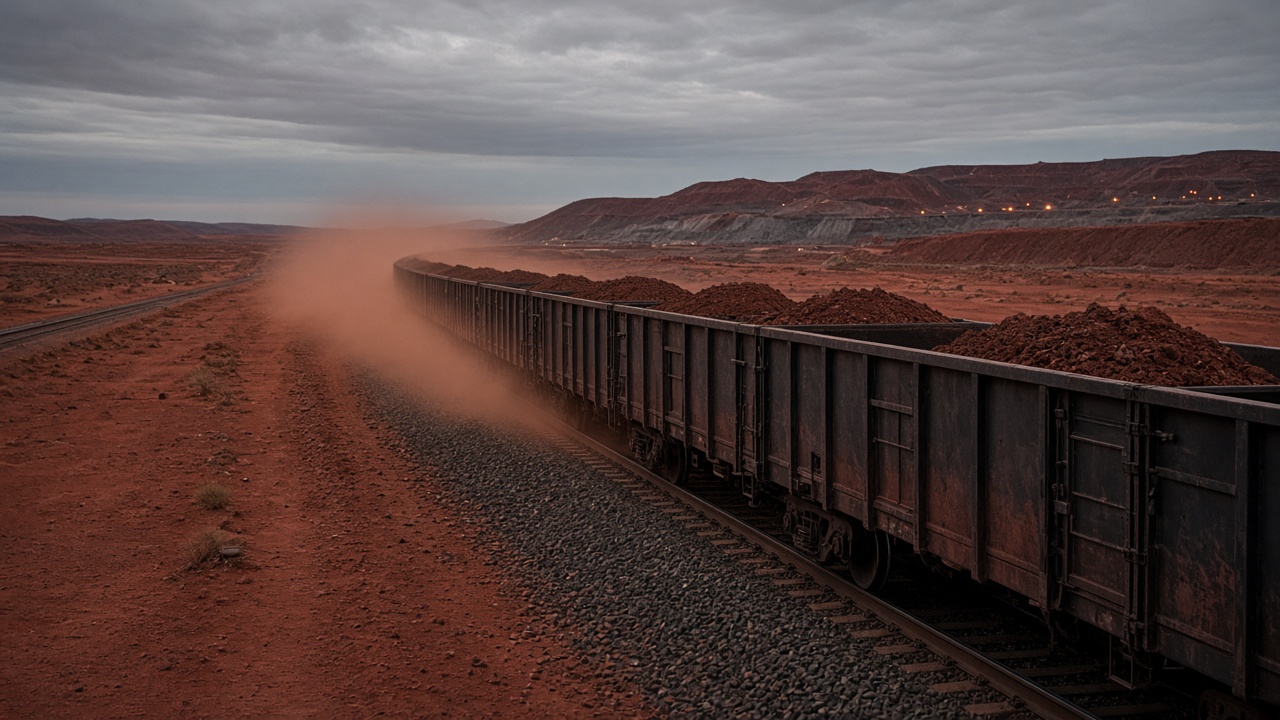
Fortescue Metals Group has cleared the next phase of its Pilbara rail automation after months of union talks, linking battery-electric locomotives on the main line with the remote operations centre that already runs more than 200 autonomous haul trucks. The decision does not end the company's courtroom fight with the Australian Workers' Union over enterprise agreements covering about 1,800 workers, but it does set ground rules for how drivers and maintainers will be redeployed as trains spend more kilometres without a cab occupant.
What changed on the track
Fortescue commissioned two Progress Rail battery-electric locomotives earlier this year, each carrying 14.5 megawatt-hours of storage—enough to displace roughly one million litres of diesel annually between them, ABC reported in February. Chief executive Dino Otranto said the company would test performance against its conventional diesel fleet before ordering a full transition, a timeline that aligns with Fortescue's 2030 real-zero target for terrestrial iron ore emissions.
The autonomous rail phase builds on a decade of Caterpillar MineStar Command deployments at Cloudbreak, Christmas Creek and Solomon. International Mining noted in March that Fortescue renewed that hauling agreement while advancing its in-house HaulX platform, which combines autonomous haulage, collision avoidance across more than 400 assets, and machine guidance. Union negotiators pushed for explicit training pathways into Hive controller roles before Fortescue signed off on expanding supervised autonomy from trucks to ore trains.
What workers heard on site
On the ground, the conversation was less about technology demos and more about rosters. AWU officials argued that automation without redeployment guarantees would simply export Pilbara jobs to Perth screens. Fortescue countered with commitments to upskill maintainers for high-voltage systems—consistent with the Power Up training centre the company opened to staff electrical trades for electrified equipment.
The broader bargaining backdrop remains tense. The Australian Financial Review reported in May that Fortescue went to the Federal Court to challenge union attempts to force negotiations over legacy agreements at Solomon, Eliwana, Cloudbreak and Christmas Creek. Protected action was not imminent when this rail phase was approved, but union leaders told members any automation rollout without consultation would be met with work bans on non-essential projects.
How autonomy fits the decarbonisation plan
Fortescue's Liebherr partnership targets zero-emission autonomous haul trucks, integrating fleet management with T 264 battery-electric units. Rail was always the harder segment: regenerative braking can recover 40–60 percent of energy on downhill runs, but port dwell time still requires grid charging through Pilbara Energy Connect transmission the company has been building at pace.
For investors, the rail phase is a capital allocation signal. Autonomous kilometres lower unit costs when ore prices soften, while electric traction reduces exposure to diesel spikes that have squeezed margins across the sector. For workers, the immediate question is whether Hive controllers hired in Perth will outnumber drivers displaced in the Pilbara—a ratio union talks were meant to clarify before Fortescue greenlit the phase.
What happens next
Fortescue will run paired battery locomotives on the trunk line while validating software hand-offs between train and truck autonomy stacks. Regulators will watch safety cases for mixed traffic on shared corridors. The AWU will continue parallel bargaining and court proceedings, meaning today's green light is operational, not legal, settlement.
If the phase performs, Fortescue could accelerate orders for additional battery sets, pulling forward diesel retirements that were pencilled in for late decade. If union friction escalates, the company still has court avenues—but every day of delay costs tonnes moved. The Pilbara has seen automation before; this round ties it directly to the union's fight for a first iron ore enterprise agreement in a generation.
Hive control and safety cases
Perth's Hive centre already sequences autonomous trucks across hundreds of square kilometres of red dirt. Extending that playbook to trains requires new fail-safe protocols for grade crossings, convoy spacing, and hand-offs between human-led maintenance windows and machine-led haul cycles. Union negotiators demanded visible human oversight roles—not ceremonial jobs, but paid positions with certification paths—before Fortescue signed the phase document.
Regulators will want evidence that battery fires, communication dropouts, and cyclone shutdowns are rehearsed. Fortescue's collision-avoidance rollout across light vehicles showed the company can standardise safety tech; rail adds mass and momentum that make testing slower. Workers on the ground say the company's Real Zero narrative only sticks if no one gets hurt during the transition.