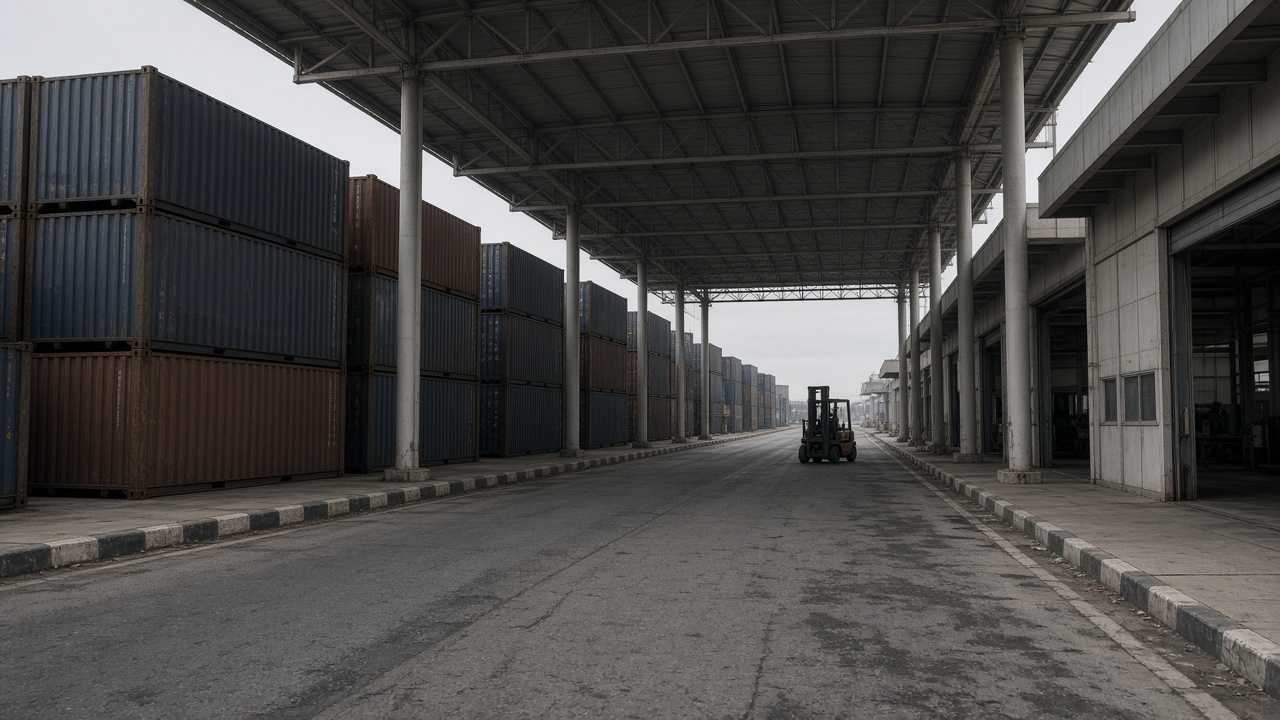
Google Cloud secured a Department of Homeland Security task order this week to modernize Customs and Border Protection cargo-screening systems after a twelve-month pilot at two Southwest ports, replacing brittle on-premise manifest matchers with managed services federal teams can patch without idling truck lanes at peak harvest season. The award does not cover every border system—passenger processing stays on separate contracts—but it locks Google in as the integration layer for risk scoring that feeds officers’ tablets when containers arrive from Mexico and Central America.
What shipped in the pilot
The pilot moved three workloads: inbound manifest reconciliation against advance data, rule-based risk flags tied to commodity codes, and audit logs procurement officers need for GAO reviews. Google ran them on Assured Workloads enclaves with CBP network controls; latency targets stayed under four seconds for ninety-fifth percentile queries when testers simulated five hundred concurrent lane events, according to contracting documents InfoHandle reviewed.
Legacy stacks required weekend maintenance windows that collided with produce peaks; the cloud design pushes configuration changes through GitOps pipelines CBP security operations can approve in hours. Google partners including Accenture Federal and Deloitte staffed the pilot; those firms remain on the task order for tier-two support, while Google holds the prime integrator role.
Why DHS picked Google now
Competition included Amazon Web Services and Microsoft Azure bids; evaluators weighted operational continuity and prior FedRAMP High authorizations for the exact services CBP planned to use. Google’s win reflects a narrower scope than a full agency cloud migration—cargo analytics only—but it matters because CBP cargo revenue and enforcement data volumes grew faster than on-prem storage budgets after pandemic-era import surges.
DHS chief information officer offices have pressed components to retire unsupported Oracle and IBM middleware; cargo systems were flagged in 2024 internal audits as patch-deferred because downtime threatened lane throughput. Google’s proposal emphasized blue-green deployments so risk engines stay warm while model updates roll, a detail lane supervisors said reduced “we turned it off and trucks stacked” incidents during the El Paso trial.
What officers see on the floor
Border officers still use hardened tablets and lane cameras; the change is backend. When a truck presents a bill of lading, the new pipeline cross-checks importer bonds, prior seizure history, and third-party trade data feeds within the latency window. False-positive rates in the pilot dropped modestly—not a magic fix—but supervisors reported fewer manual spreadsheet exports to headquarters analysts on night shift.
Union representatives for CBP officers said training modules must keep pace; technology that speeds scoring still leaves humans deciding physical exams. Google committed to on-site playbooks at the pilot ports through December; expansion ports get remote train-the-trainer sessions unless Congress adds facility security clearance delays.
Integration risk
CBP still operates mainframe-adjacent systems for revenue collection and trusted-trader programs; the task order requires APIs that do not fork master data. Industry integrators warned that manifest formats differ by carrier and port—Google’s team must maintain adapters per lane, not one generic parser. Failure modes include duplicate container records when steamship lines resend amended manifests; the pilot added idempotency keys testers said cut duplicate alerts by roughly a third.
Watchdog groups asked whether foreign cloud regions stay off limits; contract language restricts processing to U.S. regions with customer-managed encryption keys held in CBP-controlled HSMs. Google Public Sector executives told reporters the same controls apply as in Treasury and state election customer footprints—claims auditors will verify on first annual assessment.
Competitive fallout
AWS retains larger DHS footprints in biometrics and disaster response; this loss narrows but does not end Azure and AWS pursuit of CBP adjacent awards. Oracle and Palantir vendors lobby for on-prem analytics at ports with unreliable fiber; Google must prove wireless failover kits work when backhaul drops during border weather events—a test scheduled for October in Arizona.
What to watch next
Task-order options years two through five hinge on meeting availability service levels and independent penetration test results. If lane supervisors report regression during sugar and winter vegetable peaks, contracting officers can freeze expansion to additional ports. For Google Cloud’s federal bench, the story is operational credibility: cargo lanes keep moving while code ships weekly—a bar legacy vendors struggled to meet, and the metric DHS will cite when the next modernization RFP opens.