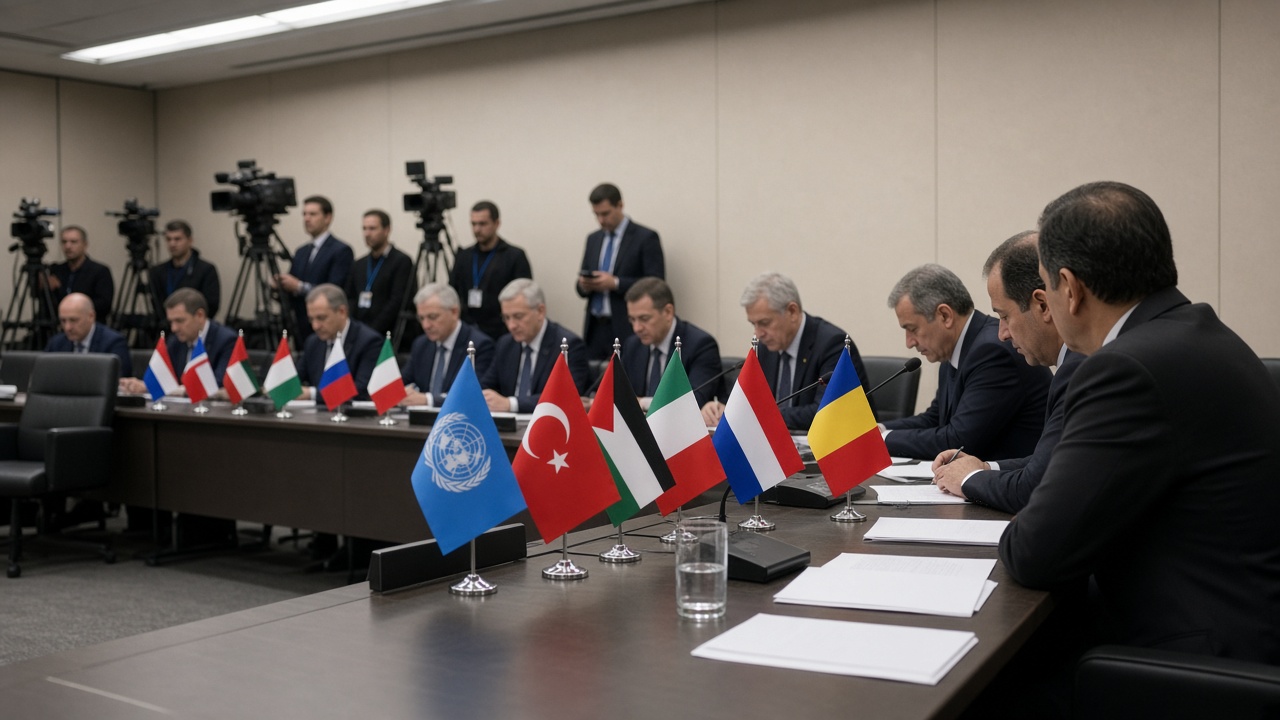
Leaders from Denmark and the United States signed an expanded Arctic security pact at United Nations headquarters in New York on Monday morning, anchoring a 10:30 a.m. Eastern ceremony that drew Danish Prime Minister Mette Frederiksen, Greenland Premier Mute Egede and U.S. President Donald Trump to the same table for the first time since spring’s tariff threats over the island’s mineral ambitions.
What the pact adds militarily
The framework authorizes additional U.S. rotational forces through existing Pituffik Space Base and port access along Greenland’s east coast, according to a joint statement distributed to reporters. Defense News reported that a new logistics annex covers pre-positioned fuel bladders, cold-weather engineering units and shared satellite downlink capacity for missile-warning sensors facing the Arctic Ocean.
Danish officials stressed the agreement stays inside NATO’s collective-defense umbrella rather than converting Greenland into a bilateral protectorate. “Arctic security is alliance business,” Foreign Minister Lars Løkke Rasmussen told Danish media pools before the signing. “NATO allies will share duties so no single capital carries the ice alone.”
Trump’s permanent-control language
Trump nonetheless repeated his claim that the United States should exercise permanent control over Greenland, telling cameras after the ceremony that “we’re not renters anymore.” Frederiksen answered that Greenland remains part of the Kingdom of Denmark with home-rule authorities intact, a line Copenhagen has used since Trump’s first-term purchase overtures.
Greenland Premier Egede, seated between the two leaders, said mining revenues and fisheries policy stay in Nuuk. He welcomed infrastructure investment but warned against “status talks that bypass Greenlanders.” CBC’s Washington desk noted that Canadian Arctic commanders watched the event closely, wary that expanded U.S. footprints could shift NORAD patrol routes over Nunavut.
NATO burden-sharing mechanics
Under the pact’s NATO annex, allies agreed to rotate maritime patrol aircraft through Kangerlussuaq on a quarterly schedule, with Denmark supplying basing permits and the United States funding runway upgrades. A separate intelligence-sharing portal will feed ice-thickness models and submarine cable maps to NATO’s Joint Force Command Norfolk, addressing gaps exposed when Russian research vessels lingered near undersea fiber lines last winter.
Reuters quoted alliance officials saying the deal does not create a new NATO command in Nuuk but assigns a liaison cell to coordinate exercises. Norway and Canada pledged observer status for upcoming cold-weather drills, while France offered satellite imagery under existing EU security programs.
Reactions in Copenhagen and Nuuk
Denmark’s Folketing is not required to ratify executive agreements of this type, but opposition parties demanded a hearing on basing rights and environmental safeguards for Thule-area wetlands. In Nuuk, the legislature scheduled a special session on revenue sharing from any U.S.-funded construction contracts.
Monday’s signature does not settle sovereignty rhetoric; it does harden the military scaffold around Greenland as climate change opens sea lanes and great-power competition returns to the High North.