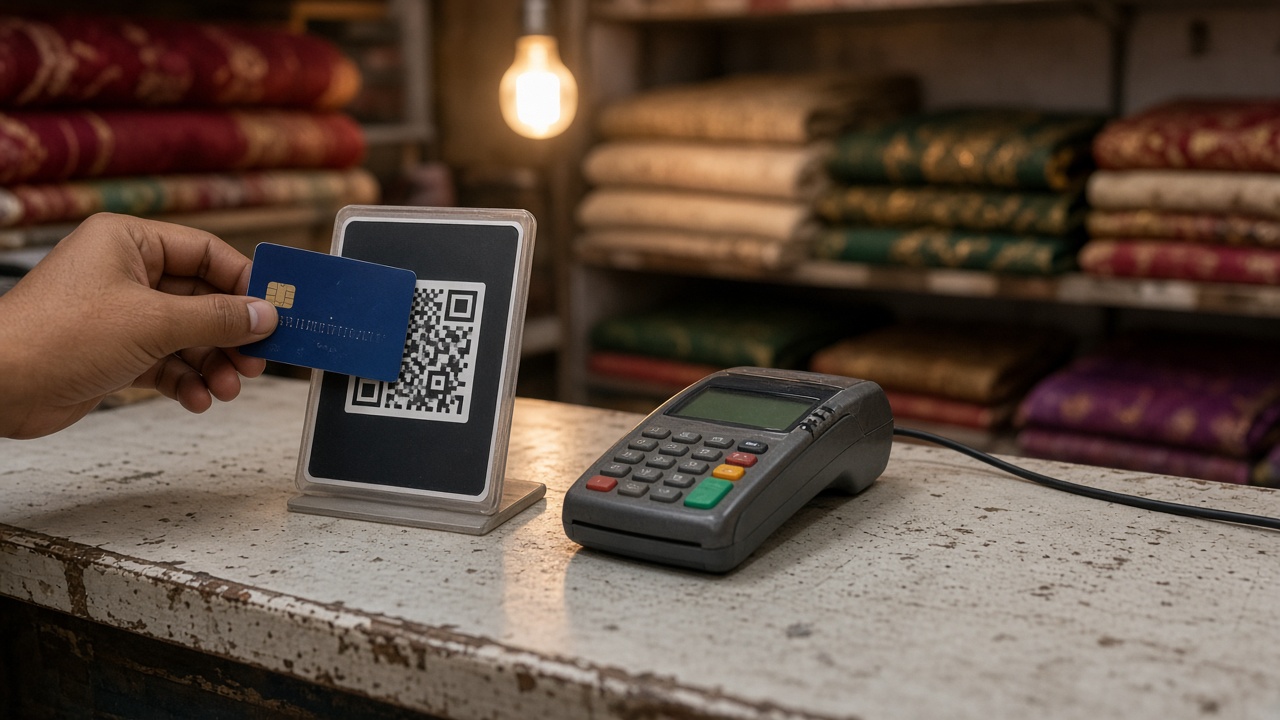
HDFC Bank increased monthly reward-point ceilings on select RuPay UPI-linked credit cards for the October–December festive quarter, according to merchant advisories and cardholder emails distributed on 19 September. The change targets QR and e-commerce spends where National Payments Corporation of India has pushed RuPay credit on the Unified Payments Interface rail alongside older Visa and Mastercard portfolios.
What the household bill looks like
Under the revised grid, premium RuPay UPI cards earn up to 8 per cent accelerated points on partner e-commerce categories capped at 2,500 points per month—500 points higher than the July–September limit HDFC mailed to customers. Everyday UPI merchant spends at groceries and pharmacies retain a 3 per cent accelerated tier but now share a combined monthly cap of 1,500 points instead of 1,200, according to the MITC annex InfoHandle reviewed.
Points redeem at ₹0.25 each into statement credit on most retail cards, implying a maximum ₹625 monthly uplift on the boosted e-commerce bucket before taxes and annual fees. Cardholders who miss minimum due amounts forfeit accelerated categories for that cycle—a standard HDFC clause Nisha Kapoor’s desk flags every festive season.
Which issuer and why RuPay
HDFC is India’s largest credit card issuer by spends; lifting caps on RuPay UPI variants steers incremental volume to NPCI’s domestic switch rather than international networks on legacy plastic. NPCI’s public UPI overview notes credit-on-UPI pilots linking issuer authorisation to merchant QR flows—a product HDFC markets heavily to existing Millennia and Tata Neu co-brand holders who already use UPI for P2M payments.
Competitors ICICI and Axis have parallel RuPay UPI cards, but HDFC’s cap move is the most aggressive among private banks this quarter, merchants said. SBI Card’s mass-market RuPay offerings focus on fee waivers rather than point ladders, leaving HDFC to chase affluent festive shoppers.
What happens on a missed EMI or due
RuPay UPI credit transactions that customers later convert to EMI follow standard HDFC schedules: processing fees, GST on interest, and foreclosure charges if prepaid. Missed EMIs trigger penal rates and can revoke festive accelerators retroactively if the account was delinquent when points posted.
Households should treat raised caps as rupees only if they pay in full—revolving balances at 42 per cent annualised interest erase reward value within weeks. The bank’s emails emphasise “pay total due by due date” in bold for that reason.
Regulatory and competitive backdrop
Reserve Bank of India press releases this year reiterated oversight on digital lending and merchant discounting; HDFC’s cap lift stays inside reward economics regulators tolerate when disclosed in MITC documents. NPCI gains switch fees and domestic scheme prestige if RuPay credit captures Diwali QR volume that might otherwise ride debit rails.
Merchants on HDFC’s smart-hub terminals said settlement times unchanged; the fight is issuer-side share of wallet, not acquirer pricing. Jewellery and bullion MCCs remain excluded from accelerated UPI credit categories—families buying gold still need traditional EMI at participating stores.
How to read the festive grid
Cardholders stacking Amazon and Flipkart sales should map category MCCs before assuming the 8 per cent tier applies—marketplace aggregators sometimes post under general retail codes. HDFC’s app now shows real-time cap consumption for RuPay UPI accelerators, a transparency upgrade from prior quarters when customers discovered exhausted caps only at statement generation.
For households budgeting Navratri and Diwali, the raised ceiling translates to roughly ₹150–₹200 extra statement credit per month if they hit the new e-commerce cap—meaningful on a ₹40,000 seasonal spend plan, trivial if they carry balances. The issuer wins interchange on incremental credit volumes; NPCI wins domestic routing; customers win only if they treat the card as a pay-in-full instrument during the festival rush.
Statement mechanics and fine print
HDFC posts accelerated RuPay UPI points within two billing cycles on most cards; delays still trigger call-centre volume when customers expect instant gratification after big-ticket appliance purchases. Co-brand Neu and Millennia variants share the festive grid but differ on annual fee waivers—households holding multiple HDFC products should confirm which plastic earns the higher cap before defaulting to the oldest card in the wallet.
Payment aggregators serving small merchants said RuPay credit on UPI success rates improved after issuer-side limit bumps in prior quarters; if authorisation failures drop this festive season, HDFC may extend the cap lift into Q4 without another marketing mailer. Until then, treat the October–December grid as a disclosed promotion, not a permanent earn rate, and screenshot MITC pages if disputes arise after statements close.