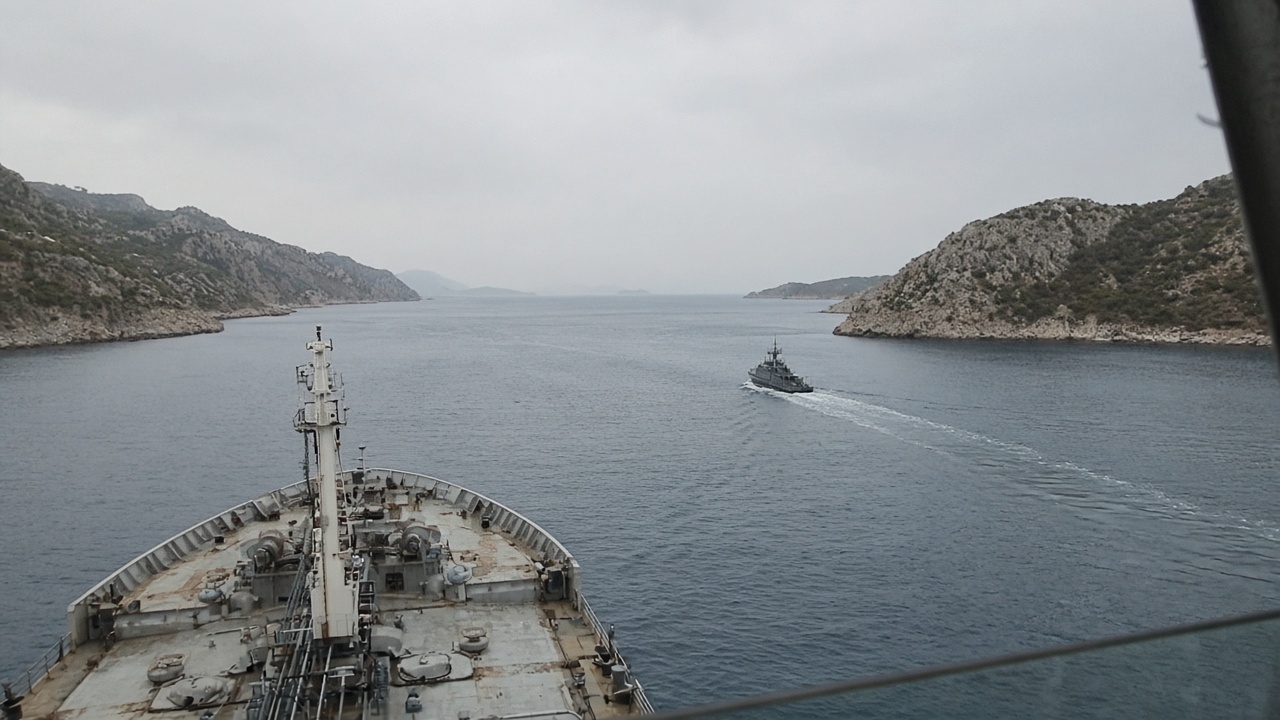
A senior Iranian official said Tuesday that Iran could reopen the Strait of Hormuz within seven days if the United States eases military pressure and lifts its blockade on Iranian ports, according to a Reuters interview conducted in New York as world leaders gathered for the United Nations General Assembly. The offer is conditional and tightly sequenced: Tehran wants Washington to state publicly that it seeks a diplomatic resolution, agree on a timeline, and then unwind enforcement steps that have kept tanker traffic and port calls in limbo since the summer escalation.
What Tehran is asking for
The official, who spoke on condition of anonymity, told Reuters the U.S. must “announce that it wants to resolve the issue diplomatically, make that official, and then agree on a timeline for how the process will move forward.” Only after that sequence, the official said, could Iran restore safe passage through the strait—the choke point through which roughly a fifth of global oil consumption typically moves—within a week.
Iran’s military central command warned Sunday that it had been informed the U.S. was preparing to restart military operations with regional partners, and that any new campaign would draw retaliation “without limitations and considerations.” Tuesday’s Hormuz messaging is the diplomatic counterweight: a finite reopening window tied to visible de-escalation rather than a unilateral concession.
Why markets are listening
Brent and WTI benchmarks have swung on every headline about Gulf shipping since June, when insurance surcharges and naval escort talk returned to trader dashboards. French President Emmanuel Macron pressed President Donald Trump on Hormuz reopening during a Monday meeting in New York, according to RFI, pairing the strait with separate proposals on Saudi infrastructure protection and a possible Ukraine-Russia energy truce. Macron’s package treats Hormuz as one lever among several to cool diesel and crude volatility before winter stockpiling accelerates in Europe and Northeast Asia.
Analysts caution that a seven-day reopening is not a permanent regime. Iran has previously closed or threatened closure during prior confrontations; insurers will want proof of sustained calm before rolling back war-risk premiums. Still, even a short guaranteed transit window could release stranded cargoes and ease prompt delivery fears that have fed into Asian refinery run cuts.
UN week optics
Iran’s delegation is expected to hold sidebar meetings while the General Debate opens Tuesday with Trump’s address. U.S. Secretary of State Marco Rubio is scheduled to meet Russian Foreign Minister Sergei Lavrov on Wednesday, a calendar collision that Gulf diplomats hope will not crowd out shipping talks. European envoys said they are drafting a joint statement urging freedom of navigation without naming enforcement mechanisms, mindful that any public NATO footprint could harden Tehran’s bargaining position.
Verification gaps
Shipping lawyers note that “reopening” requires more than a press statement: mine-risk surveys, pilotage agreements, and Iranian Revolutionary Guard Corps liaison channels must align. The senior official did not specify whether foreign warships would be barred from escort missions inside Iranian territorial seas, a detail tanker owners say is decisive for single-hull vintage fleets.
Washington has not confirmed the Iranian timeline publicly. National Security Council spokespeople declined comment Tuesday morning, pointing reporters to Trump’s UN speech. Until both capitals synchronize steps, the strait remains a priced risk rather than a solved route.
What comes next
Traders will watch Wednesday’s Rubio-Lavrov session for spillover: any Ukraine energy moratorium could free U.S. naval assets now stationed in the eastern Mediterranean. Iran’s seven-day clock, if accepted, would likely start only after a written U.S. commitment—meaning the earliest practical reopening may slip past the General Assembly’s first frantic days.
For the wire, the new fact is the number: seven days, tied to an end to port blockade and military pressure, offered from New York on the same morning diesel diplomacy is dominating Zelensky-Trump scheduling. Hormuz is back on the bulletin, not as a abstract threat but as a dated offer waiting on Washington’s answer.