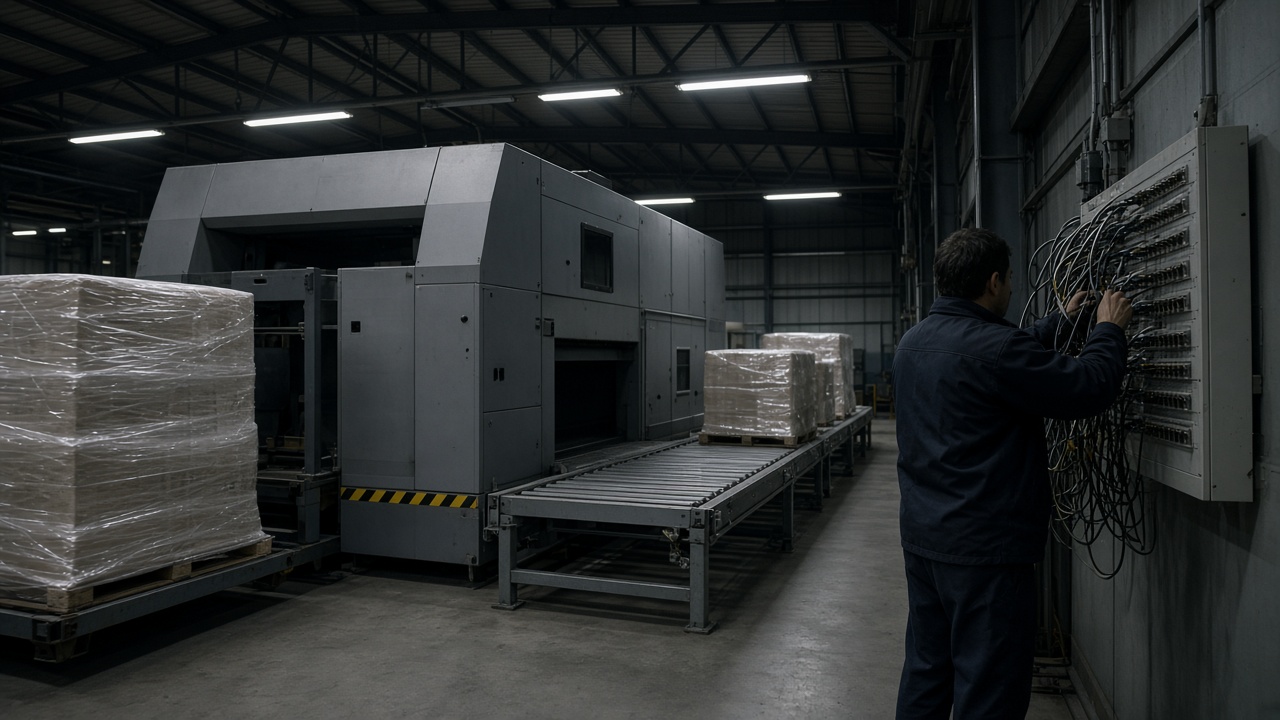
KT has switched on a pilot quantum-security VPN overlay for data paths that connect Incheon International Airport cargo-hall X-ray scanners to Korea Customs Service clearance servers, according to officials briefed on Sept. 19. The trial replaces legacy IPSec tunnels that a spring red-team exercise could intercept on a maintenance VLAN shared with baggage sortation displays.
Where the scanners sit in the workflow
Incheon's west cargo campus processes freighter pallets that never touch passenger terminals. Scanner vendors upload grayscale imagery, material density hints, and operator notes to a central risk engine that decides whether to open a unit on the hall floor. Those feeds crossed a 10-gigabit fiber ring that KT already manages under a 2023 smart-airport research memorandum with the airport authority.
Customs tightened logging requirements after a 2025 audit flagged missing integrity checks on two secondary halls. Quantum-resistant encryption became a procurement talking point even though full quantum key distribution backbone links are not yet economical for every spur.
Hybrid stack KT is testing
The pilot combines post-quantum cipher suites on the VPN termination appliances with quantum random number generators KT commercialized alongside AhnLab in 2022. Long-haul segments toward the government data center still ride existing fiber, but session keys rotate on intervals measured in minutes rather than hours.
KT earlier demonstrated a similar hybrid model on simulated defense and land-ministry networks, pairing QKD on backbone spans with PQC inside customer edge gear. Incheon is the first live airport cargo VLAN to adopt that pattern for operational traffic rather than lab replay.
Performance constraints in a freight hall
Scanner vendors demanded that added crypto latency stay under 12 milliseconds per image set, a ceiling derived from conveyor speed through the tunnel. KT engineers said early shifts averaged nine milliseconds of extra round-trip time on the overlay, within spec but tight enough that maintenance windows must pre-announce key rotations.
If latency spikes, halls fall back to a parallel plain VPN that remains provisioned but disabled except for disaster recovery. Operators run daily checksum drills comparing hashes on both paths without sending contraband imagery twice.
Governance and shared responsibility
Incheon International Airport Corporation owns physical security in the halls; KT operates the telecommunications contract; customs owns the risk engine software. The pilot adds a fourth party—National Intelligence Service-certified modules in the QRNG firmware—whose update calendar must align with scanner vendor patches.
Airport infrastructure chief briefings cited the 2023 MOU goal of proving specialized 5G and security services without forcing every tenant to build its own core. Cargo scanners remain wired for now, but planners want the same VPN profiles available to future 5G handheld manifest tablets.
Why quantum marketing meets cargo reality
Quantum-safe branding draws headlines, yet the operational win is narrower: preventing lateral movement if an attacker compromises a hall kiosk and rides east-west into customs databases. Pen testers in March showed that kiosk VLANs were over-trusted because they shared a flat routing table with building management systems.
Segmentation plus PQC addresses that architectural debt faster than waiting for nationwide QKD. KT sales teams nonetheless pitch the Incheon logo to other public-sector clients facing similar audit language from the Korea Internet and Security Agency.
Costs and duration
The pilot is funded for nine months under a smart-airport innovation budget line, with option years if customs certifies the overlay for all four cargo halls. KT declined to disclose license fees, saying only that QRNG modules are rented rather than sold to keep replacement cycles predictable.
Competing integrators SK Telecom and LG Uplus have quantum portfolios too, but neither has announced a cargo-scanner production path at Incheon. Airport procurement rules favor incumbents when security incidents triggered the upgrade.
What traders and forwarders will notice
Shippers see no new forms if the pilot succeeds—only fewer manual re-scans when integrity alarms fire falsely. Forwarders care about uptime during peak perishable seasons; any key rotation outage must happen in the 2 a.m. slack window when freighter banks are thin.
Customs said it would publish a technical bulletin for bonded warehouse operators if the overlay becomes mandatory, likely mirroring the language already used for electronic manifest signatures.