The Ministry of Electronics and Information Technology opened a GenAI sandbox this week that lets startups and research labs train, fine-tune, and evaluate models on curated Indian-language datasets pulled from the BHASHINI platform, with audit logs shaped for eventual government procurement reviews.
What the sandbox provides
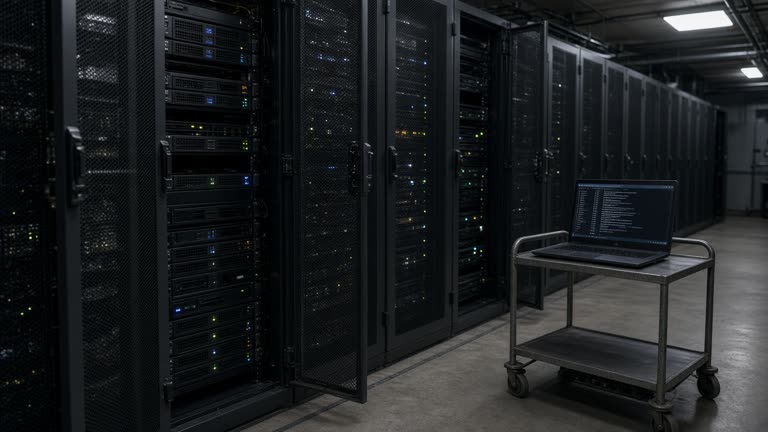
Approved teams receive time-boxed GPU clusters in MeitY’s IndiaAI compute grid plus read-only mirrors of BHASHINI speech and text corpora that have cleared consent and licensing checks. Data covers 22 scheduled languages with varying depth—Hindi, Tamil, Telugu, and Bengali have the largest token counts; several northeastern languages remain sparse but include human-reviewed transliteration pairs.
Sandbox operators issue dataset hashes and model cards that procurement officers can compare when ministries buy chatbots for schemes like PM-KISAN helplines or state education portals. Export of weights trained inside the sandbox is allowed for commercial release, but teams must file evaluation summaries against MeitY’s harm and bias worksheets.
BHASHINI’s role
BHASHINI began as a translation and TTS backbone for Digital India; its data repository now feeds automatic speech recognition benchmarks ministries cite in tender documents. Connecting the sandbox to BHASHINI APIs means startups do not re-scrape government websites or pirate news dumps—a practice MeitY warned against in April advisories.
Language mission officials said new crowdsourced audio from state portals enters BHASHINI only after dual review for PII scrubbing. Sandbox users see versioned snapshots, not live streams, so experiments remain reproducible when auditors ask.
Who gets in
Eligibility requires incorporation in India, a designated responsible AI officer, and a statement of intended use case. Academics can join through IIT and IIIT MOUs already on file. Foreign-owned startups with Indian subsidiaries may apply if data residency stays inside approved data centres in Hyderabad and Pune.
Initial cohort size is capped at 40 teams to keep GPU queues manageable; MeitY will expand if IndiaAI budget lines approved in the July supplementary grants hold.
Policy hooks
The sandbox sits under MeitY’s broader IndiaAI mission and interoperates with draft rules on synthetic media labeling that circulated for comment in August. Teams experimenting with voice cloning must tag outputs in metadata fields the sandbox enforces at export.
Officials stressed the sandbox is not a substitute for sector regulators—RBI and IRDAI still govern financial models—but it gives ministries a common yardstick when they ask vendors to prove Indic language performance.
Technical workflow
Researchers launch Jupyter and Slurm jobs through a portal integrated with Aadhaar-authenticated eSign for liability acknowledgements. Baseline open models—government-hosted Llama-class checkpoints—are available so teams do not burn GPU hours downloading from abroad. Fine-tunes on sensitive dialects run in confidential enclaves without internet egress.
Evaluation harnesses include IndicGLUE-style tasks maintained by academic partners, plus MeitY-supplied red-team prompts for caste, religion, and election misinformation.
Industry reaction
Indian LLM startups welcomed reproducible datasets but asked for faster approval cycles; some said two-week onboarding is long when global labs ship weekly. Incumbents with proprietary corpora worry about commoditisation yet still applied, hoping government references help state tender scores.
Civil society groups want public incident reports when sandbox models fail harm tests; MeitY promised quarterly aggregate statistics without naming startups.
Risks
Dataset gaps in low-resource languages could bake in majority-language bias if ministries deploy models without local review. GPU shortages elsewhere in IndiaAI could starve the sandbox during festival-quarter demand spikes. Legal scholars note copyright on news and textbook excerpts in BHASHINI mirrors remains contested, though MeitY cites government licence frameworks.
What ships next
Successful sandbox graduates may list models on a government marketplace linked to GEM procurement, with optional fast-track security reviews. MeitY plans hackathons in Chennai and Lucknow to stress-test dialect coverage before the winter parliamentary session, when ministries traditionally announce citizen-facing AI pilots.
Teams that cannot meet audit standards keep research access but lose export privileges—a stick designed to prevent shadow releases on open hubs without documentation.
Compute and cost
GPU hours are priced below commercial cloud on- demand rates but above academic grants, a middle ground MeitY hopes will filter serious applicants. Teams can bring their own checkpoints yet must run mandatory safety evaluations on MeitY hardware so results stay comparable across cohorts.