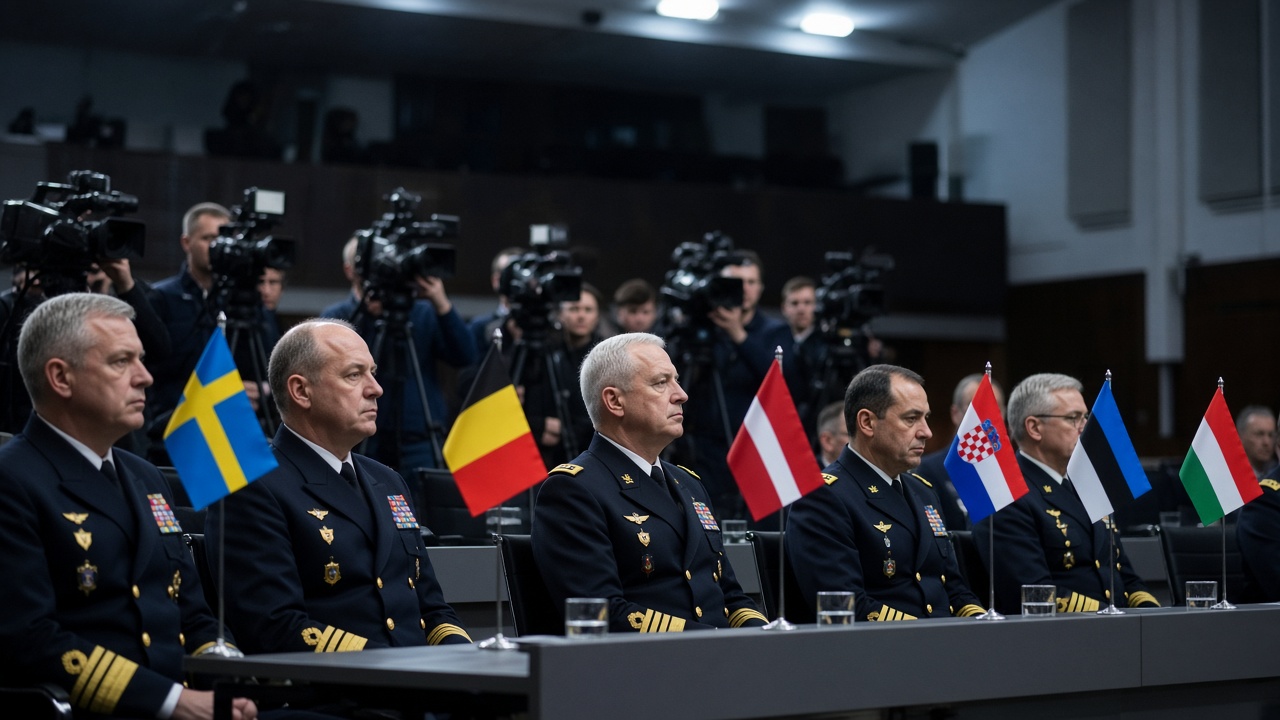
NATO’s deputy commander in Europe warned Tuesday that Russian President Vladimir Putin is growing “increasingly cavalier, dangerous and risk accepting” as the war in Ukraine enters its fifth year, telling reporters in Tallinn that Moscow is probing Western unity through sabotage, espionage and information campaigns even as conventional forces remain tied down on the front.
Stringer’s assessment in Tallinn
Air Chief Marshal Sir John Stringer, who serves as deputy supreme allied commander for Europe, spoke on the sidelines of a regional security forum in Estonia’s capital. He said Russian agencies are “looking at a whole number of ways to try to create division between NATO allies” because battlefield advances have come slowly and at enormous human cost.
Stringer did not cite classified intelligence, but his remarks aligned with warnings from several European capitals that hybrid attacks have intensified ahead of winter campaigning in Ukraine. Estonian officials hosting the conference noted a string of recent border incidents involving GPS jamming and cyber probes attributed to Russian actors.
Ukraine battlefield and energy pressure
Despite heavy casualties, Russia has not abandoned its territorial aims in Ukraine, Stringer said. Ukrainian long-range strikes on Russian energy infrastructure have produced fuel shortages in dozens of Russian regions, according to recent British defence briefings, yet Moscow continues nightly drone and missile salvos aimed at Ukraine’s power grid.
Stringer’s comments landed as President Volodymyr Zelenskyy told reporters in New York that Kyiv remains open to a bilateral energy ceasefire if Russia stops targeting Ukrainian electricity and heating assets. NATO officials in Tallinn stressed that alliance members still view backing Ukraine as the primary deterrent against wider escalation.
Prospects for a conventional NATO attack
Estonian Prime Minister Kristen Michal, who shared the stage with Stringer, said a full-scale Russian invasion of NATO territory remains “improbable” for now because of collective-defence guarantees and because much of Russia’s army is engaged in Ukraine. She added, however, that the current level of malign activity is “here to stay” until Putin alters his war aims.
Stringer urged allies to keep investing in air and missile defence along the eastern flank, noting that even limited incursions or sabotage could test political will if governments hesitate to invoke Article 5.
What allies are watching
Defence ministers from several front-line states used the Tallinn forum to push for faster munitions production and clearer rules for responding to hybrid incidents that fall below traditional war thresholds. Stringer said NATO’s military staff is updating contingency plans to reflect the higher risk tolerance he sees in Kremlin decision-making.
The message to Moscow, he said, is that alliance cohesion will outlast incremental provocations—but only if capitals treat sabotage and disinformation as seriously as tank movements. Baltic lawmakers attending the forum pledged to fast-track fibre-route redundancy projects after a winter of cable scares, citing Stringer’s warning that even non-kinetic pressure could fray public trust in NATO guarantees.