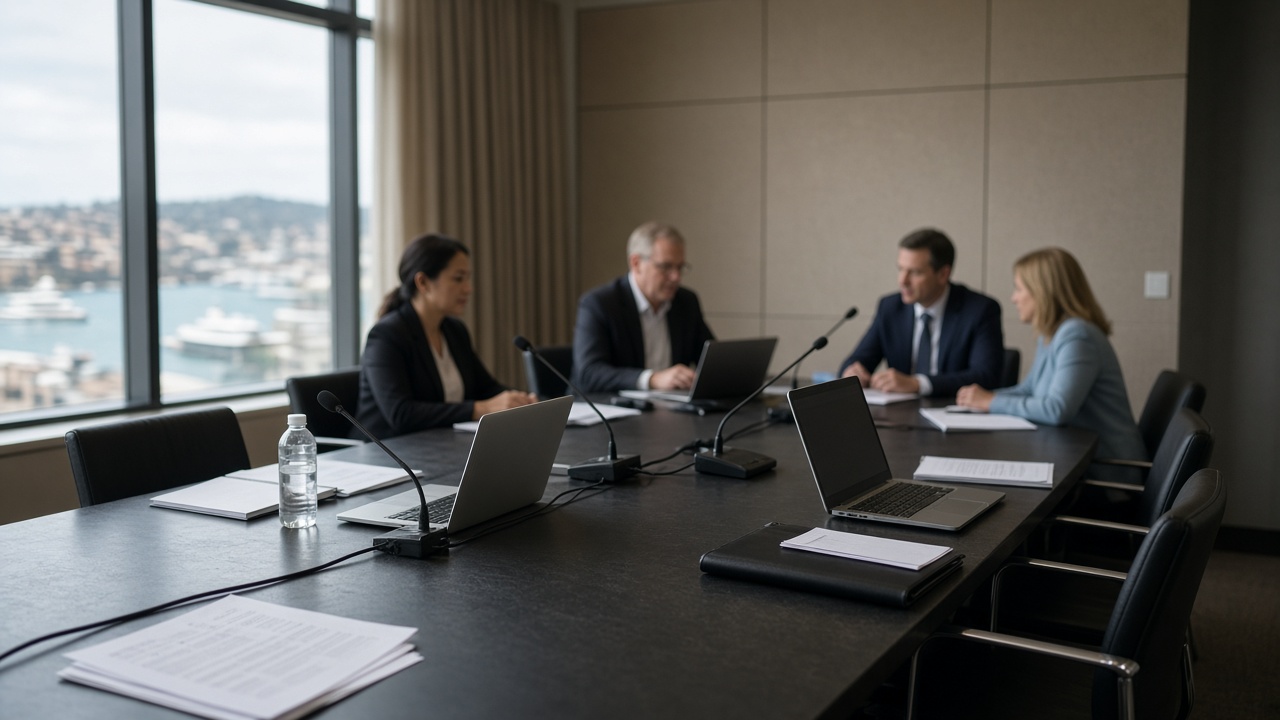
OpenAI and Anthropic urged Australia on Tuesday to reconsider a copyright rule that effectively blocks them from training large language models on locally created books, news archives, and film scripts, telling a parliamentary inquiry that a tightly scoped exemption could unlock data-centre investment without stripping artists of royalty streams. The submissions land the same day the U.S. Embassy publicly attacked Canberra’s separate digital duty-of-care bill, illustrating how Washington and Silicon Valley are pressing Australia on two fronts of the AI regulatory fight.
What the labs want
Reuters reported from Sydney that both companies acknowledged the Albanese government’s decision to deny a broad fair-use style carve-out for model training, but asked lawmakers to pilot a permit system: labs would pay into a collective licensing pool, disclose dataset sources, and accept Australian jurisdiction for safety evaluations. Anthropic’s filing stressed “constitutional AI” red-teaming in-market, while OpenAI argued that without training access Australian startups would fine-tune foreign weights rather than build sovereign models.
Arts groups that defeated the exemption in July said the new proposals still risk normalizing uncompensated scraping. Screen Producers Australia told the inquiry any pool must set minimum per-minute rates for film and television clips, not lump-sum caps that studios could exhaust in a single training run. The Media, Entertainment and Arts Alliance said it would accept a narrow news-publisher tariff if journalists retained opt-out rights on a title-by-title basis.
How this fits Canberra’s AI package
The government plans wider AI and data-centre rules taking effect next year, including energy disclosures and safety tests for high-impact systems. Communications Minister Michelle Rowland has said copyright and safety are separate tracks; Tuesday’s submissions test whether Parliament will link them when industry promises local GPUs. Microsoft and Google have stayed quieter publicly, but lobbying registers show all major hyperscalers met with the attorney-general’s department in August on liability shields.
Meanwhile, the U.S. Embassy submission on the digital duty-of-care bill called Australia’s algorithm opt-out mandate “extraterritorial censorship,” asking that American social platforms be excluded. That fight is distinct from training data, yet both debates hinge on whether Canberra can impose conditions on U.S. tech giants without triggering trade retaliation—a concern Treasury officials raised in briefing notes leaked to ABC News.
Market and workforce stakes
Australia’s cloud region expansions in Melbourne and Sydney already cite AI workloads as anchor tenants. Property analysts warn that without clarifying training rights, venture capital will fund inference-only apps—chatbots that call U.S. models—rather than foundational research employing Australian PhDs. Universities negotiating campus licences with OpenAI said they need clarity before semester-two research grants close on Oct. 15.
Copyright Tribunal precedents on music sampling will likely guide any pool design. Lawyers following the inquiry expect a interim report in November, after parliamentary hearings in Canberra and a town hall in Adelaide focused on Indigenous art datasets, where consent norms are stricter than for newspaper archives.
What comes next
Committee chairs must decide whether to recommend a pilot exemption limited to models trained in Australian data centres—a compromise that could satisfy Anthropic’s safety conditions while placating authors. If the government holds the ban, expect both labs to route training through U.S. clusters and sell Australian customers hosted inference only, blunting the sovereign-AI narrative ministers promoted at last month’s AUKUS technology forum.
For the AI desk, the new filings are the concrete ask: paid collective licences instead of a hard ban. Canberra now has numbers to model, and Washington’s parallel pressure on duty-of-care shows the lobbying season is fully joined.