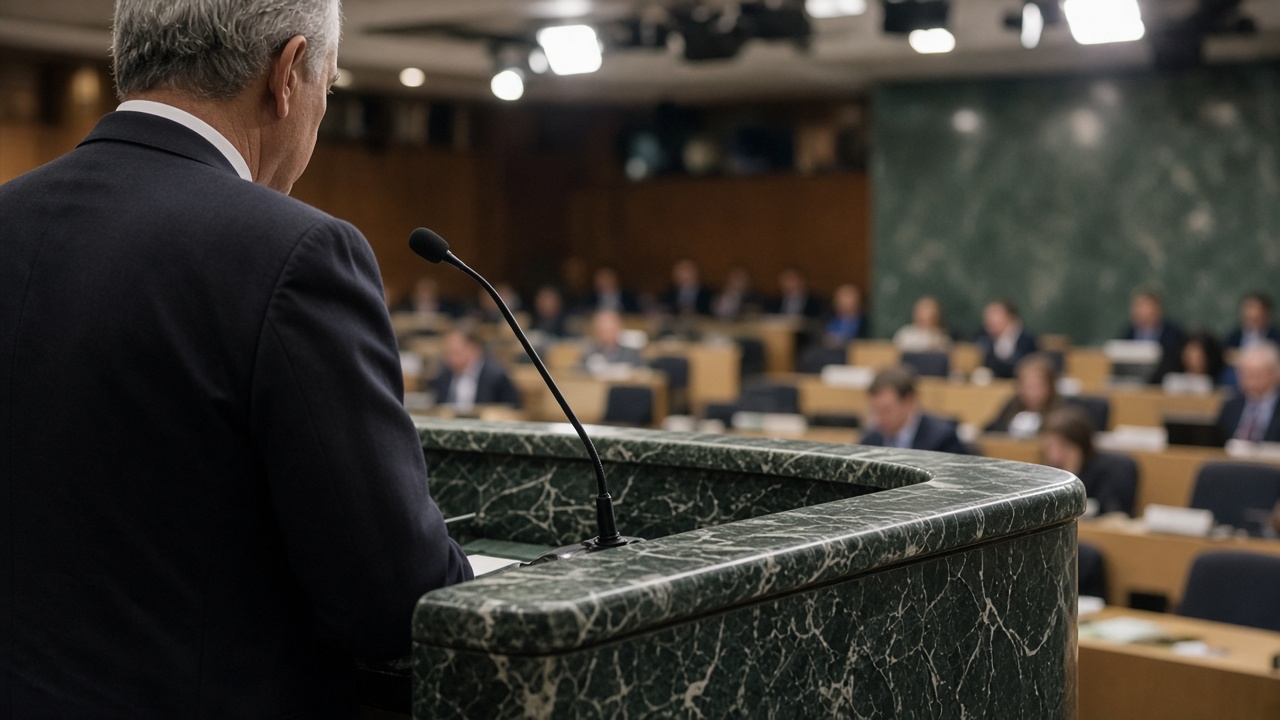
Sheikh Tamim bin Hamad Al Thani, the emir of Qatar, warned the United Nations General Assembly on Tuesday that the Gulf region is enduring one of its most perilous periods in a generation, urging diplomats to treat ceasefire diplomacy as the only durable exit from the widening U.S.–Israel war on Iran.
A Gulf appeal at the podium
In a speech that drew quiet applause from several delegations, Sheikh Tamim said energy markets, shipping insurers and civilian airports across the Arabian Peninsula were absorbing shockwaves from Hormuz closures and retaliatory strikes. He did not name specific attack vectors but referenced “families displaced, ports idle and youth who see only escalation,” language Qatari officials have used when Doha’s mediation channels stay active while public rhetoric hardens.
Qatar hosts the largest U.S. air base in the region and has shuttled messages between Tehran and Washington since June’s collapsed memorandum of understanding. The emir’s tone Tuesday was sharper than his spring addresses, reflecting frustration that tanker traffic remains throttled even as leaders gather in New York for a week of bilateral meetings.
Mediated talks on the sidelines
Hours before Sheikh Tamim spoke, U.S. and Iranian officials participated in hours of indirect negotiations through mediators at UNGA, according to Al Jazeera’s reporting from Manhattan. Accounts differed on whether principals met face-to-face, but President Donald Trump told reporters that American officials had a “very good” three-hour exchange with Iranian counterparts, without detailing concessions.
Iranian state media, meanwhile, carried unconfirmed reports of an explosion audible near Qeshm Island in the Strait of Hormuz, underscoring how battlefield noise can overlap with diplomacy. Tehran continues to condition any Hormuz reopening on an end to the U.S. naval blockade of Iranian ports and the release of frozen assets—demands U.S. envoy Steve Witkoff has said remain under discussion but unresolved.
Why Qatar’s voice matters now
Unlike Saudi Arabia or the United Arab Emirates, which have emphasized maritime security coalitions, Qatar has marketed itself as a neutral backchannel even after Iranian missiles fell near Gulf capitals earlier in the summer. Energy traders watch Doha’s statements closely because liquefied natural gas flows from Ras Laffan underpin Asian power grids; any prolonged Hormuz risk premium shows up within days in Tokyo and Seoul utility auctions.
Sheikh Tamim linked the Gulf crisis to broader UN reform debates, arguing that veto-wielding powers cannot expect smaller states to carry mediation burdens without stronger Security Council enforcement. He stopped short of criticizing Washington directly, a nod to the tens of thousands of U.S. troops stationed on Qatari soil.
Calendar pressure
UN officials said mediators would continue shuttle diplomacy through Wednesday, when foreign ministers from the Gulf Cooperation Council hold a coordination breakfast with European Union counterparts. Markets will parse whether Trump’s optimistic adjectives translate into blockade easing or merely buy time for another Hormuz insurance spike.
For diplomats, Sheikh Tamim’s warning sets a public baseline: if talks fail, Gulf leaders will argue they telegraphed the stakes at the highest global forum—and that any widening war will be measured in shuttered ports, not only battlefield maps.