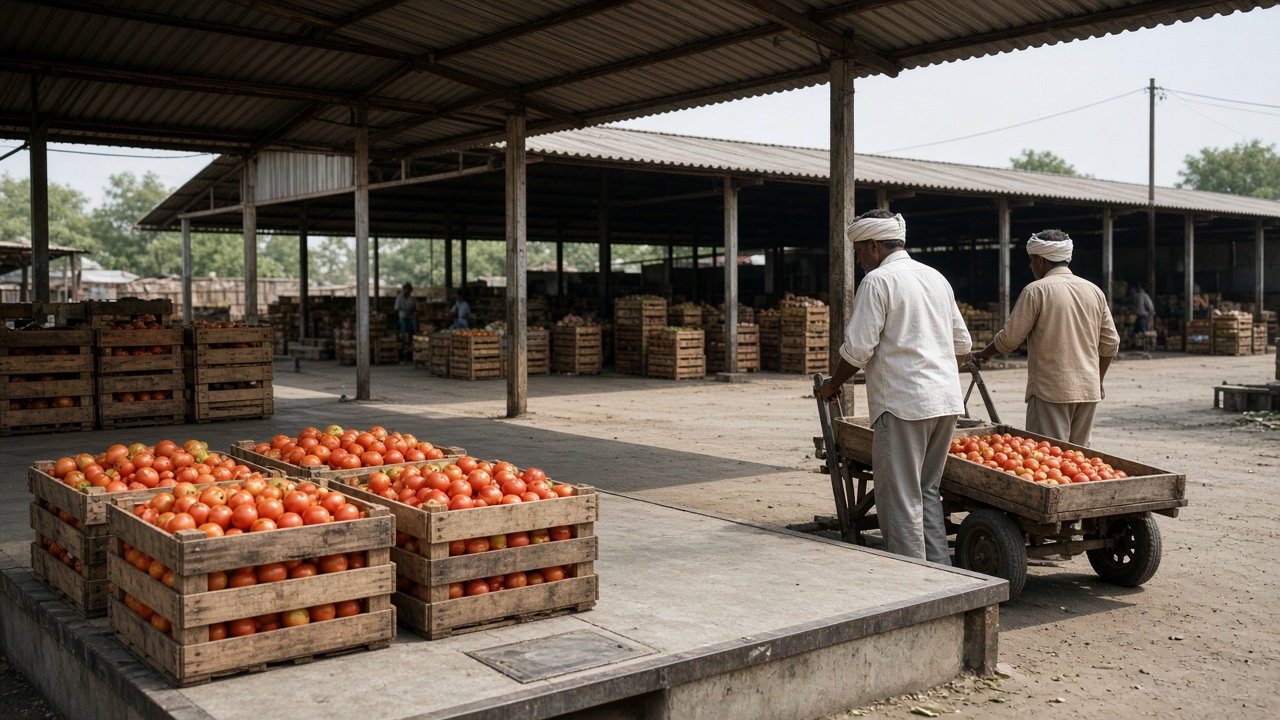
Reliance Retail has begun onboarding farmer producer organisations at two Maharashtra Agricultural Produce Market Committee pilot yards—Nashik and Pune—under memoranda traders and commission agents reviewed on 19 September. The grocer promised dedicated morning procurement windows, digital weighbridge slips, and same-day UPI settlement for qualifying horticulture lots, according to FPO board minutes InfoHandle obtained from cooperative secretaries.
What the company decided
Reliance’s smart-store division already sources staples through centralised distribution centres; the APMC pilots extend that model to regulated yards where state law still requires licenced intermediaries. The MOUs do not bypass commission agents; they set floor prices for tomato, onion and grape lots that meet Reliance’s quality rubric, with rejections routed back to FPO boards rather than dumped on the yard floor.
Maharashtra’s marketing board has pushed digitised e-trading modules at select APMCs since the 2020 reforms; Reliance’s participation uses those modules for bid discovery while settlement runs on the retailer’s vendor portal. Corporate communications declined an on-record interview, but a two-page annex lists temperature-controlled truck slots between 05:00 and 09:00 IST—hours unionised hamal workers said overlap with existing auction peaks.
What contractors and FPO members heard
In Nashik’s Pimpalgaon yard, a grape FPO with 320 member farmers reported its first Reliance pickup on 18 September: 14 tonnes at a price ₹2 above the preceding day’s modal rate, paid to member accounts by evening. Pune’s tomato FPO cited a lower reject rate than traditional commission agents because graders used the retailer’s colour-chart photos on tablets—devices FPO youth volunteers operated after a one-day training.
Hamal contractors who unload trucks warned that Reliance’s fixed windows could shrink if inbound freight from Karnataka arrives late. “The leverage is the UPI credit,” one yard supervisor said. “Farmers tolerate a stricter grade if the money hits before they board the ST bus home.”
Where the leverage sits this quarter
APMC pilots sit inside Maharashtra’s broader debate on whether to keep physical yards or expand direct farmer–buyer channels. Reliance gains shelf-stable supply for Mumbai and Pune smart stores without building parallel cold chains at every village gate—capital expenditure competitors like Aditya Birla’s More and DMart watch closely.
For workers, the near-term risk is speed-up: more weighed loads per hour with the same headcount. FPO boards negotiated a ₹50-per-tonne handling fee routed to hamal cooperatives, but that fee is not indexed to inflation—a grievance the Pune tomato FPO secretary said would surface at the October general body if onion arrivals spike.
What a strike would change
Maharashtra hamal unions have not called action, yet a 48-hour yard boycott during Diwali arrivals would force Reliance to pull from its Gujarat and Madhya Pradesh DC buffers, eroding the “local procurement” marketing claim. A two-day stoppage would not move Reliance Industries’ consolidated revenue, but it would embarrass the pilot politically ahead of state assembly committee hearings on APMC computerisation.
Until MSAMB publishes official throughput statistics, the measurable outcomes are the MOU annex terms: morning windows, UPI settlement, and FPO-grade rubrics that commission agents must match or lose tonnage to the retailer’s lorries waiting at the weighbridge.
Regulatory and competition context
Union agriculture ministry guidelines encourage FPO registration with NABARD support; Maharashtra hosts hundreds of active organisations, but few have buyer contracts with modern retail at regulated yard prices. Reliance’s pilots therefore double as a policy test: can e-trading modules inside APMCs attract corporate procurement without triggering the political backlash that followed the 2020 central farm laws?
DMart and More continue to source largely through aggregators and DC-led contracts; neither has announced parallel MOUs at Nashik or Pune yards. If Reliance’s reject rates stay below five per cent through Navratri, expect copycat tenders from other chains—competition that could lift floor prices for FPO members but squeeze commission agents’ margins.
Kavya Iyer’s reporting from Pune noted that women members of one tomato FPO now manage the tablet grading station—shift work that pays ₹400 a day, above hamal wages but without provident fund. That labour detail will matter when the state labour department reviews whether retail-led procurement creates informal jobs at yards still classified as agricultural markets rather than factories.
For farmers, the quarter’s question is simple: does the Reliance window pay more net of transport after hamal fees than the traditional auction? Early lots suggest yes on tomatoes and grapes; onion and potato seasons will stress-test the model when yard arrivals jump tenfold.