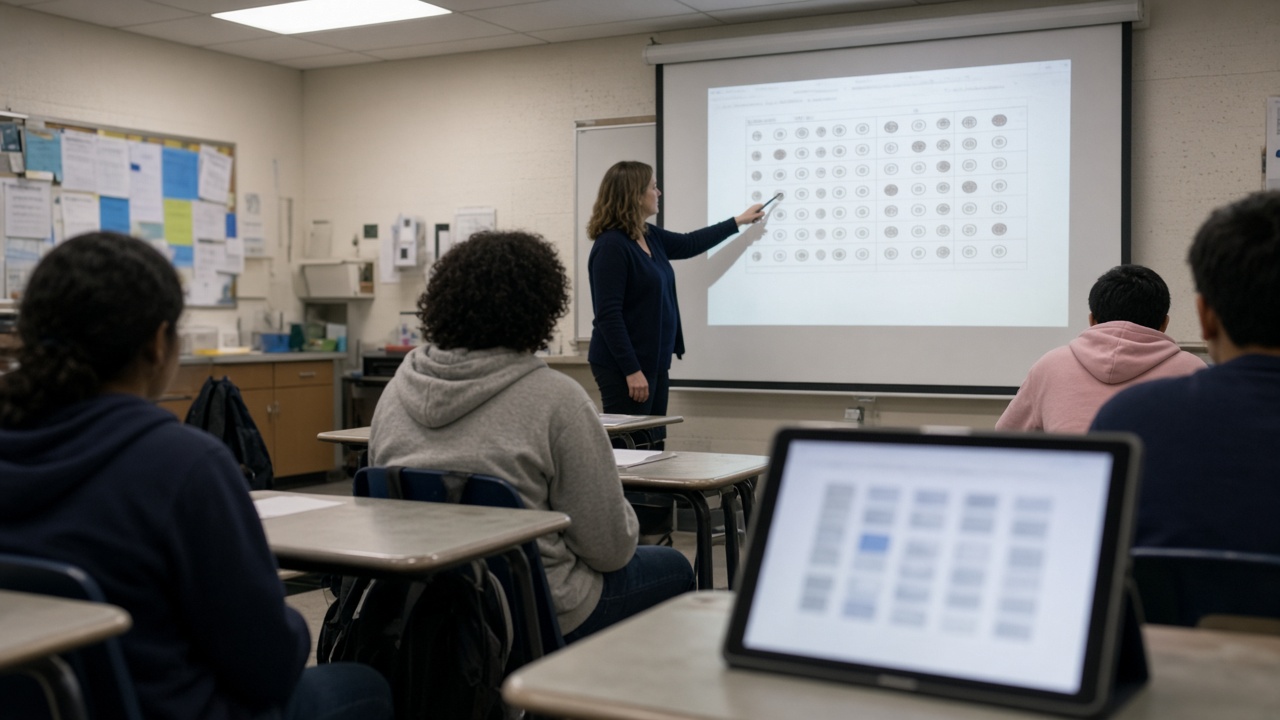
Riiid, operating publicly under the Socra AI brand for enterprise sales, has signed adaptive CSAT drill API contracts with two nationwide hagwon chains this month, integrating its knowledge-tracing servers into class portals students already use for homework uploads. The deals land two weeks before September mock exams, when chains traditionally sell printed practice sets bundled with manual grading.
What the API delivers
Partner branches send multiple-choice results and timing metadata to Riiid endpoints; the service returns the next problem set weighted toward weak domains—calculus limits, Korean literary analysis passages, or English inference items depending on the chain's curriculum license. Teachers still assign one paper mock per week; the API fills evenings with five-question bursts tuned to each student's last three sessions.
Latency targets stay under 300 milliseconds for recommendation calls so tablet apps feel instant on classroom Wi-Fi. Offline mode caches fifty problems per subject for subway rides, syncing when handsets reconnect.
Why hagwon chains bought instead of building
Top chains operate their own apps but lack machine-learning teams sized for Korea's CSAT item banks, which shift subtly each year when the Korea Institute for Curriculum and Evaluation publishes new spec sheets. Riiid markets decades of interaction logs from its Santa test-prep lineage, retrained on domestic high-school items licensed from partner publishers.
Executives at one chain said building in-house would have delayed the fall mock season; APIs let them keep branded UI while outsourcing the ranking math.
Pricing and seat counts
Contracts charge per active student month with volume discounts above fifty thousand seats combined across the two chains. Riiid declined public pricing; a branch director said their province pays roughly the same per seat as last year's third-party grammar module, with performance bonuses if average mock scores rise month over month.
Smaller neighborhood hagwons are not in scope until spring, when Riiid plans a self-serve sandbox with capped free calls for pilots under five hundred students.
Alignment with mock-exam calendars
September mocks from the Korea Association of Hagwon and the state-run CSAT mock registration window both concentrate demand in the next ten days. API dashboards highlight students whose predicted scores swing more than five percent week over week, flagging them for homeroom teachers before physical mock grading returns.
Chains promised parents paper booklets will not disappear—digital drills are positioned as supplements, a messaging choice after last year's backlash when one Seoul chain tried fully digital mocks and older students complained of eye strain.
Data governance
Student records stay in the chain's tenant; Riiid receives only anonymized interaction vectors unless parents opt into research pooling. Regional education offices asked for audit trails proving recommendations do not cherry-pick proprietary items from rival publishers; Riiid logs item IDs and license tags for each pull.
Socra AI's corporate site lists ISO-aligned security practices, though chains remain legally responsible for parental consent forms they already collect for online homework.
Competitive edtech landscape
Megastudy and EBS online modules dominate content, while AI startups pitch similar APIs. Riiid differentiates on CSAT-specific score prediction claims validated on prior years' national exams, metrics it shares under NDA with chain academic directors.
ChatGPT-style tutors are blocked on school tablets; these APIs feed structured items with deterministic answers, easing compliance officers worried about hallucinated solutions.
Teacher workflow changes
Instructors get a Thursday report ranking misconception clusters—vector geometry versus probability, for example—so weekend lectures can target gaps before Monday drills. Training sessions this week covered how to override algorithm suggestions when human graders spot ambiguous items.
One chain mandates human review before any automatically generated explanation text reaches students, mirroring guardrails Riiid built for Woongjin Thinkbig's middle-school English grammar rollout.
Roadmap if fall metrics hold
Riiid plans speaking-practice modules for the English section using speech recognition tuned to Korean accents, pending microphone labs in Busan branches. Longer term, APIs could feed university admissions counseling tools, but executives said they will not market essay grading until bias audits finish.
For now, the near-term win is keeping enrolled students drilling nightly during mock season without hiring hundreds of additional graders.