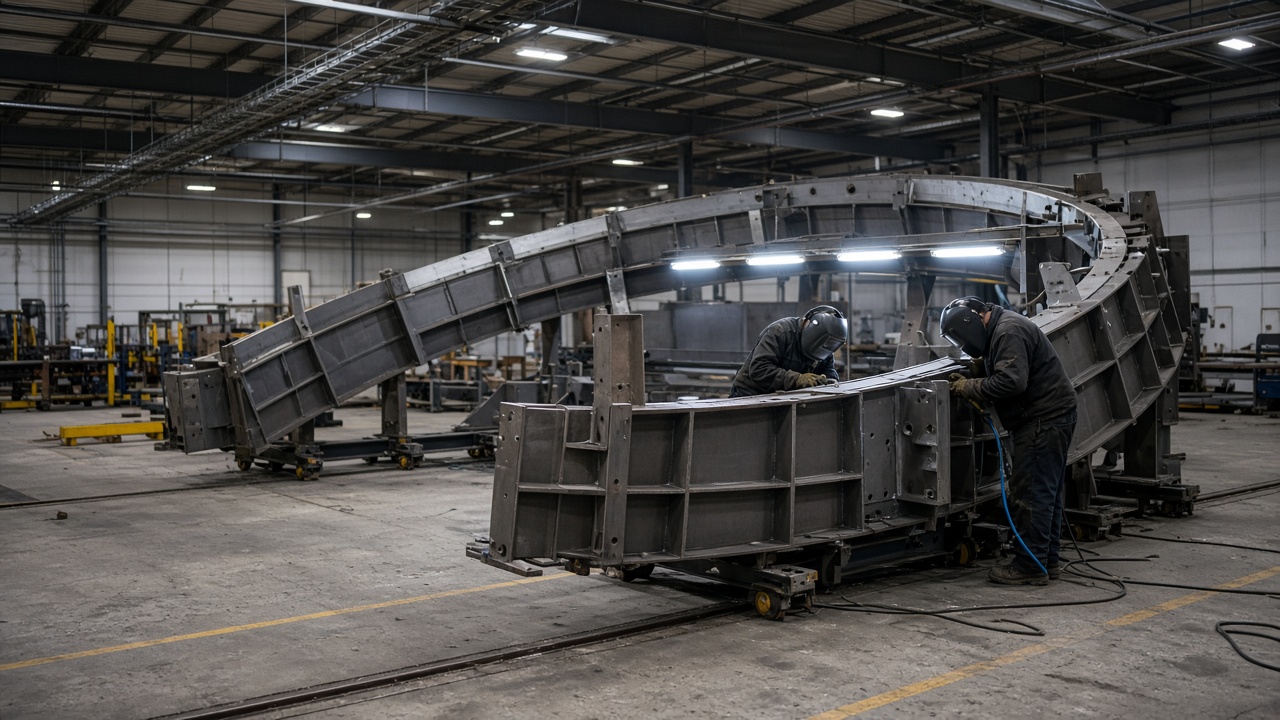
Rolls-Royce SMR Ltd issued purchase orders to two Derbyshire steel fabricators for first-of-a-kind module housing skids destined for its Derby campus expansion, binding delivery slots to an autumn hiring wave of roughly 180 welders, pipe fitters, and quality inspectors, according to a supplier letter and workforce plan shared with shop stewards Friday and reviewed by InfoHandle. The orders are not the nuclear island itself—they are the transportable steel frames that will hold reactor modules during assembly and test— but they commit cash and calendar time ahead of the UK Generic Design Assessment gate the venture must clear with regulators.
What the shop floor heard
Unite reps at the Derby site said Monday briefings promised 90 net hires between October and December on day shifts, with overtime on a capped rota so GDA documentation work is not starved of senior inspectors. Apprentices from local colleges get first refusal on fitter slots if they pass weld tests; agency labour is limited to 15 percent of hours so ONR audit trails stay readable. Workers were told housing orders are “long-lead insurance”—if GDA questions slip a month, fabrication still absorbs payroll instead of idling bays.
One fabricator, based on the Pride Park industrial estate, will supply two prototype housings by late November; a second supplier near Ilkeston takes serial production from January if welds pass ultrasonic tests. Rolls-Royce SMR is not publishing supplier names in press releases yet; purchase-order numbers in the union pack match Derby firms already on the group’s civil-nuclear vendor list.
Why module housing matters for timing
Small modular reactors ship as factory-built units; on-site work is mostly mating modules and civil concrete. Housing skids must survive road haul to coastal demo sites without flexing tie-points the reactor vendor certifies. Delayed steel means delayed module lifts even if the reactor core design is frozen. Rolls-Royce SMR’s programme office tied order release to “housing readiness” in its GDA risk register—a signal to DESNZ grant reviewers that physical work is moving, not just slides.
Regulator and grant context
The Office for Nuclear Regulation has not signed off construction; these are manufacturing-learning contracts under the assessment phase. DESNZ’s SMR selection process named Rolls-Royce SMR a preferred technology, but preferred status does not waive weld procedures. ONR observers may witness first housing lifts; union briefings warned workers not to treat that as permission to discuss fuel loads on social media.
Local councils welcomed the orders as rateable-value stabilisers on industrial estates that lost automotive suppliers over the past decade. Derby City Council’s inward-investment team said housing fabrication is eligible for skills boot-camp referrals even though civil-nuclear security clearance slows onboarding. East Midlands Chamber noted supply-chain spillover to heat-treatment shops in Belper—not huge, but visible on payroll tax receipts if autumn hires land.
Competition and export angle
Rolls-Royce SMR is bidding overseas demo partnerships; Derby housing prototypes double as marketing proof points for Czech and Polish delegations touring the campus. Export sales do not fund these purchase orders directly—UK grant and equity capital do—but shop stewards were told export milestones trigger bonus pools tied to weld defect rates, not headline reactor orders. That keeps quality incentives aligned with GDA documentation rather than speed alone.
What workers should watch
New hires need SC clearance paths for parts of the campus; HR said turnaround is six to ten weeks for British nationals with clean records. Travel allowances apply only after 12 months—not a perk for autumn agency staff. If GDA issues a formal hold, overtime caps tighten; the letter says “pause hiring” before “lay off permanent staff.”
Apprentices who fail first weld tests can rotate to logistics roles without losing seniority clock— a concession Unite negotiated after last year’s hiring freeze. Night-shift premiums stay at 15 percent unless ONR schedules witness lifts after 22:00, in which case premiums rise but shifts are voluntary. For Derby metal trades, the concrete change is orders on the books and autumn shifts opening—not a reactor switch-on, but real payroll tied to steel arriving on Pride Park lorries.