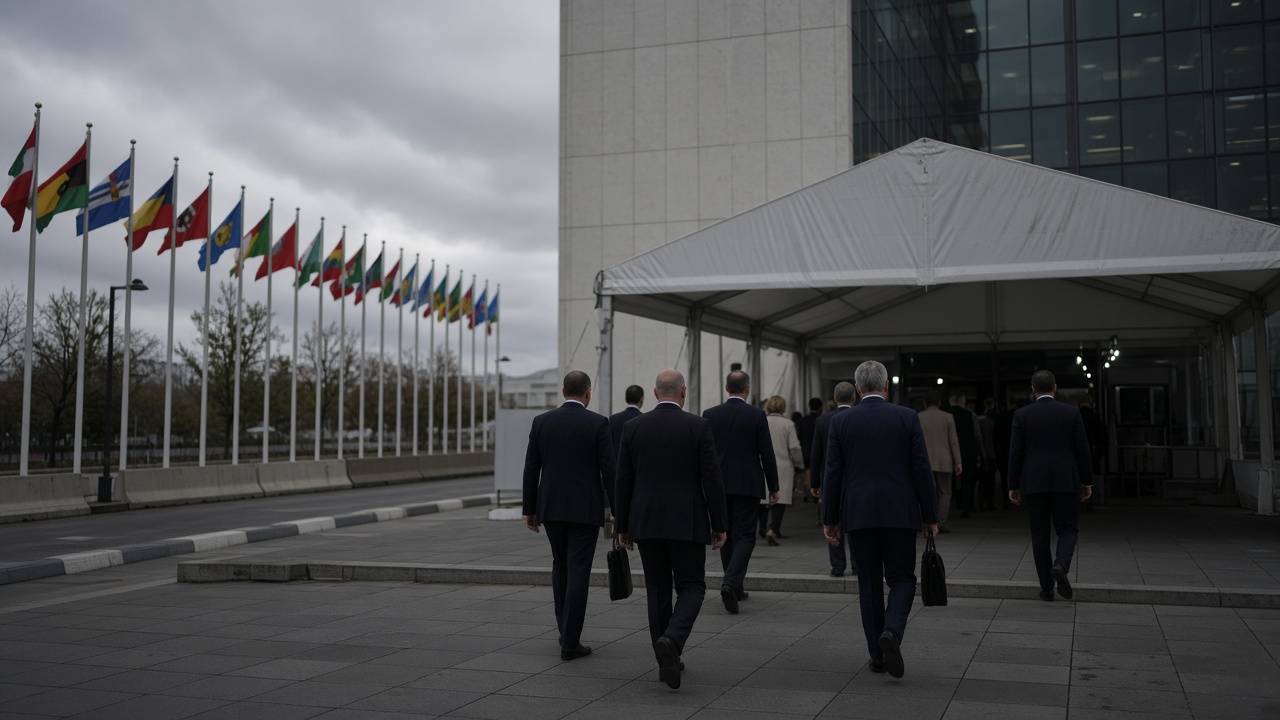
U.S. Secretary of State Marco Rubio and Russian Foreign Minister Sergey Lavrov are scheduled to meet in New York on Wednesday, Kirill Logvinov, a senior Russian foreign ministry official, told TASS on Tuesday. Foreign ministry spokeswoman Maria Zakharova said the session was still being finalized, but the calendar slot lands in the middle of a General Assembly week when both capitals are juggling Iran talks, Gulf security, and Ukraine’s campaign for winter energy relief.
What Moscow is signaling
Logvinov, who directs the ministry’s international organizations department, said Lavrov would consider additional bilateral requests from Western officials “if corresponding requests are received,” adding that Russia “has never shied away from meetings.” The comment frames Wednesday’s Rubio encounter as one of many sidelines appointments for a delegation that is not sending President Vladimir Putin to the rostrum but is still central to any U.S. conversation about sanctions, prisoners, or battlefield pauses.
Zakharova told RIA Novosti the same day that planners were “working out” the Rubio meeting, language diplomats often use when security details or talking-point clearance remain open. TASS noted Lavrov will lead Russia’s delegation through the General Debate, which runs through September 26 with closing speeches on September 28.
Ukraine on the same calendar
Reuters reported Zelenskyy is due to meet Trump on Tuesday in New York to push for an energy truce with Russia, seeking protections for power plants and fuel infrastructure before winter. Overnight strikes continued on both sides: Ukrainian officials said Russian missiles and drones hit multiple regions, while Zelenskyy said Kyiv damaged two more Russian refineries—attacks Trump has publicly criticized for tightening global diesel supply.
Wednesday’s Rubio-Lavrov session does not replace Zelenskyy’s channel; it parallels it. European diplomats hope any U.S.-Russia conversation at least stabilizes escalation around energy targets, even if a full ceasefire remains distant. Lavrov’s prior UN appearances have paired broad anti-Western rhetoric with narrow offers on grain corridors or prisoner swaps, a pattern U.S. officials say they will test again.
UN week congestion
The meeting stacks against Trump’s Tuesday address threatening renewed action against Iran, sideline talks with Tehran’s envoys, and a separate G7 push on Houthi strikes in Saudi Arabia. Scheduling alone has become a diplomatic commodity: Middle East envoys worry a lengthy Rubio-Lavrov huddle could delay Gulf shipping discussions, while Ukraine’s team wants visible U.S. commitments before Zelenskyy leaves New York.
Security Council reform and artificial intelligence governance are also on the formal agenda, topics Guterres highlighted in his farewell opening address. Russia has resisted expanding permanent membership without its veto prerogatives intact, a friction point unlikely to dissolve in a single bilateral.
What to watch Wednesday
State Department spokespeople have not published a readout template in advance. Journalists will look for whether the two ministers issue a joint statement on humanitarian corridors, or whether Moscow repeats demands for sanctions relief tied to any battlefield restraint.
For the politics desk, the new fact is procedural but consequential: a dated Rubio-Lavrov meeting, confirmed from Moscow on the morning Zelenskyy sits down with Trump. In UN week, the handshake schedule is policy—and Wednesday’s slot is now on the wire.