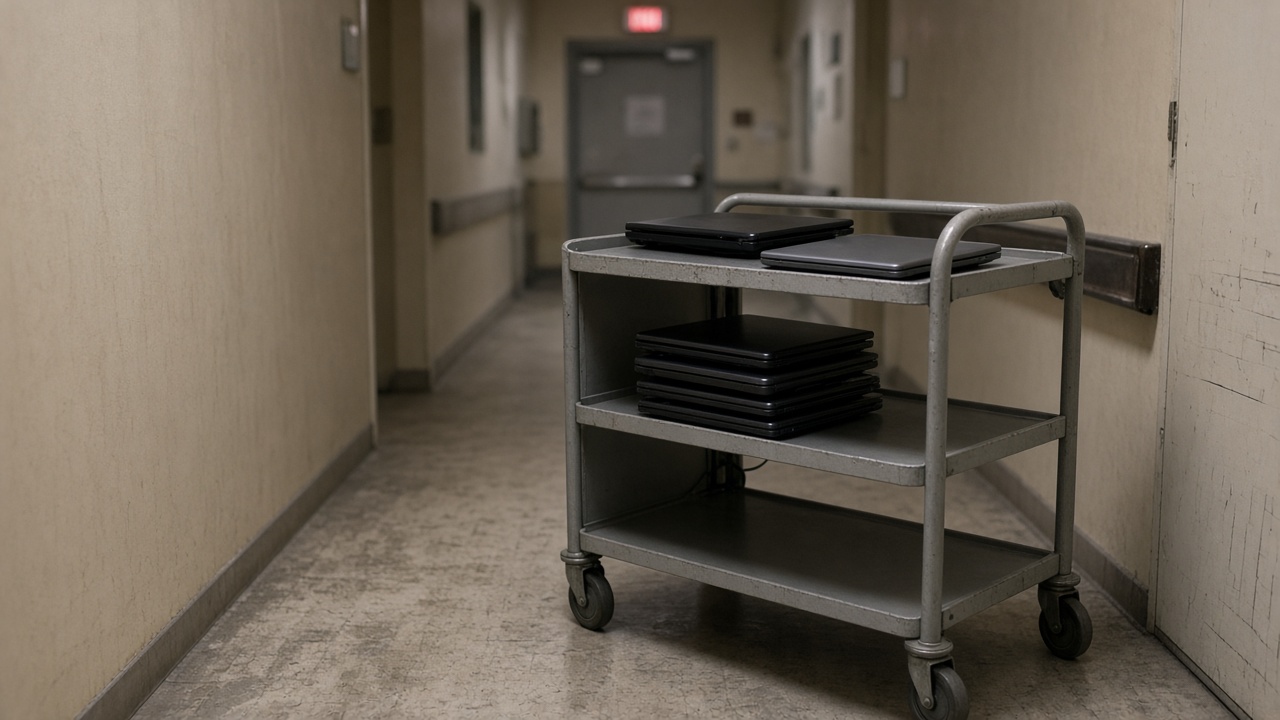
ServiceNow released on-device copilot guardrails for hospital IT service desks this week, letting technicians summarize tickets and draft knowledge-base replies on managed laptops while keeping patient identifiers and device telemetry off public cloud inference endpoints. The feature targets biomedical engineering and clinical workstation support teams that rejected browser-based assistants when HIPAA security reviews flagged data residency gaps.
What actually shipped
The update bundles a local inference runtime certified for select Windows and macOS builds hospital fleets already standardize, plus policy templates that block copilot actions when ticket text matches PHI patterns or when laptops leave approved VLANs. Administrators set rules in the same ServiceNow console they use for CMDB discovery—no separate security appliance unless they choose network-layer enforcement partners.
Models ship as signed packages ServiceNow updates quarterly; hospitals can pin versions during accreditation surveys. On-device summarization runs only after role-based access checks confirm the technician holds scopes for the cited configuration item, reducing “copilot read every ticket in the queue” leakage paths internal auditors worried about.
Claim versus test
ServiceNow claims median ticket triage time drops eighteen percent in early adopter metrics from three U.S. health systems that allowed public citation. Those numbers come from controlled pilots with dedicated trainers—not automatic proof for a rural critical-access hospital with two IT generalists. InfoHandle could not independently reproduce the trials; buyers should demand their own A/B weeks with help-desk timestamps and reopen rates, not vendor slide decks alone.
Accuracy tests in release notes show hallucinated asset tags still occur when CMDB records lag physical moves—a known failure mode human reviewers must catch before closing incidents that touch infusion pumps or imaging modalities.
Why hospital IT cared
Epic and Cerner environments generate thousands of workstation tickets monthly; executives want AI assist without expanding business associate agreements to new sub-processors. On-device processing keeps inference inside endpoints already encrypted with BitLocker or FileVault policies security committees approved.
Biomedical teams face FDA-adjacent documentation when software changes touch devices; ServiceNow’s guardrails log prompt and output hashes for audit trails quality officers can export. That logging matters when Joint Commission surveyors ask how AI-assisted closures were reviewed.
Power and procurement
Large IDNs negotiate enterprise ServiceNow footprints; this feature lands in premium healthcare SKUs, nudging renewals rather than new logos. Smaller hospitals on limited modules may lack CMDB hygiene needed for safe summarization—sales engineers said implementations include data cleanup sprints billed separately.
Microsoft and Google market hospital copilots too; ServiceNow’s pitch is workflow embedding inside ITSM tickets rivals do not own. Unionized help-desk staff at some public hospitals asked whether copilot metrics would feed performance reviews; ServiceNow documentation says policy is customer-controlled, not vendor-default.
Limits buyers should document
On-device models shrink compared with cloud giants’ frontier systems; complex root-cause analysis across multi-vendor outages may still need human escalation. Air-gapped imaging networks may ban any local LLM until biomed certifies fan curves and GPU heat in sterile-adjacent closets—a deployment detail marketing summaries skip.
Patch Tuesday collisions can disable signed model packages; runbooks must include rollback steps so copilot outages do not block plain-text ticketing.
Vendor management teams should add language to laptop leases requiring GPU drivers compatible with ServiceNow’s signed runtime; otherwise biomedical carts run copilot-disabled builds until imaging vendors certify updates—a delay pattern three early adopters reported in closed user groups.
What careful readers still will not know
ServiceNow has not published third-party penetration test results specific to the on-device runtime; hospitals should attach their own red-team scopes before enabling on clinical subnets. Long-term, model bias toward closing tickets quickly could hide recurring device faults if supervisors reward auto-summarized closures without spot checks.
Next steps for CIOs
Security officers should map which ticket categories may use copilot drafts versus which require human-only notes—especially substance-use and behavioral health metadata with heightened privacy expectations. The artifact that shipped is policy-aware local inference inside ITSM, not a clinical decision support system; keeping that distinction explicit is how hospitals adopt assistive tools without turning help desks into shadow health apps.