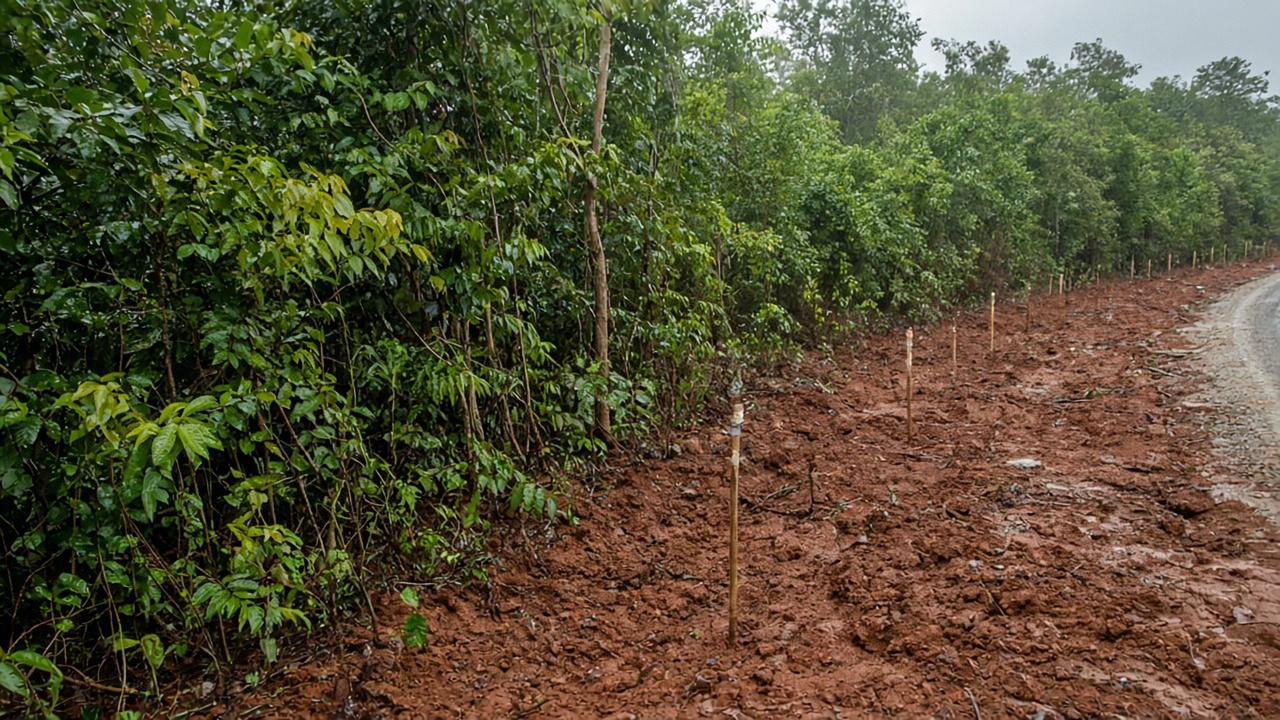
Second Minister for National Development Indranee Rajah told the House on Sept 14 that the Government does not choose greenery or long-standing heritage sites for housing on a whim. The trade-off surfaces only when planners cannot find suitable existing estates or brownfield land, she said, and even then ministries try to shrink the footprint after nature groups and residents weigh in on Gillman Barracks and the Maju Forest stretch at Sunset Way.
When brownfield runs out
Singapore’s default is still to stack flats on land that was already built up or industrial, Indranee said. Where that is exhausted, officials look at taller blocks on smaller footprints—she cited a future development at the foot of a central-area site that could exceed 60 storeys—before they touch forested or heritage-rich plots. The sequencing matters for west-side households watching Clementi and Queenstown prices, because every deferred site pushes demand back into mature towns.
Indranee’s framing came as the Housing and Development Board (HDB) works through environmental and heritage studies for two politically sensitive sites. Gillman Barracks, a 40-hectare arts and military heritage cluster, is slated to mix public and private homes while keeping the forest stream and much of the native-dominated secondary forest. Sunset Way’s greenfield parcel, bounded by Brookvale Drive and Clementi Road, is earmarked for public housing woven into retained streams and the Old Jurong Line corridor.
What changed after feedback
Neither plan is a Build-To-Order launch yet—HDB has not published flat types, prices or application dates—but the land-use decision is already locked in Parliament. Minister of State for National Development Alvin Tan said in August that public feedback would force further tweaks: more green buffers at Gillman and Maju Forest, and therefore fewer homes than the first cut of the studies suggested. Nature advocates had pressed to keep ecological links toward Labrador Nature Reserve and the freshwater stream at Maju Forest; HDB’s July reports proposed retaining about eight hectares at Sunset Way alone for fauna movement.
Indranee linked those site fights to the wider supply pipeline. The Government has committed to launching 55,000 BTO flats from 2025 to 2027 and will exceed that if queues stay long, she said. Two-room flexi supply will rise nearly 50 per cent from 2026 to 2028 compared with 2023 to 2025, targeting seniors and singles who cannot wait for a four-room ballot in a mature town. Prime Minister Lawrence Wong’s National Day Rally move to lift the BTO income ceiling to S$16,000 for families—and S$8,000 for eligible singles—feeds the same queue Indranee described.
What households should watch
For buyers, the Gillman and Sunset Way debates clarify a policy line, not a booking date. HDB will still run regular BTO exercises elsewhere while consultants refine biophilic layouts at the two contested sites. Town councils and MPs in West Coast and Holland-Bukit Timah GRCs will keep hearing from residents who want both affordable flats and the bird corridors they walk on weekends.
Indranee stressed that affordability rests on heavy BTO subsidies and grants, not on skipping environmental review. If the next revision trims yield again, the 55,000-flat target leans harder on other regions—Woodlands, Tengah and the eastern stretch—to absorb ballot pressure. That is the Singapore compromise she outlined: housing as a national guarantee, greenery as a negotiable constraint rather than an absolute veto, and Parliament as the place where the order of sacrifices gets argued in public.
Heritage layers at Gillman
At Gillman Barracks, heritage consultants assessed 86 buildings and recommended keeping more than 20, including clusters that tell the colonial and military story of the ridge. Artists and gallery tenants still face lease uncertainty even as HDB sketches residential streets around conserved blocks. Indranee’s point—that heritage review runs in parallel with housing math—means traders may get transition relief while residents eventually gain a walkable mix of homes and cultural spaces. The timeline for tenant moves remains opaque, but the ministry’s message is that heritage retention is a budget line, not an afterthought once forest buffers are drawn.
West-side MPs have asked for clearer maps showing which trails stay public when flats arrive. HDB’s biophilic design language—native planting, elevated walkways, streams left daylighted—will be tested against residents who remember pre-development bird counts. Indranee did not promise a fixed flat count for either site; she anchored the debate on principles and supply totals instead. For voters, that translates into watching the November BTO launches and flexi flat lists more closely than Gillman renderings, while still holding the line that Singapore cannot freeze every green patch if children in rental flats need owned keys.