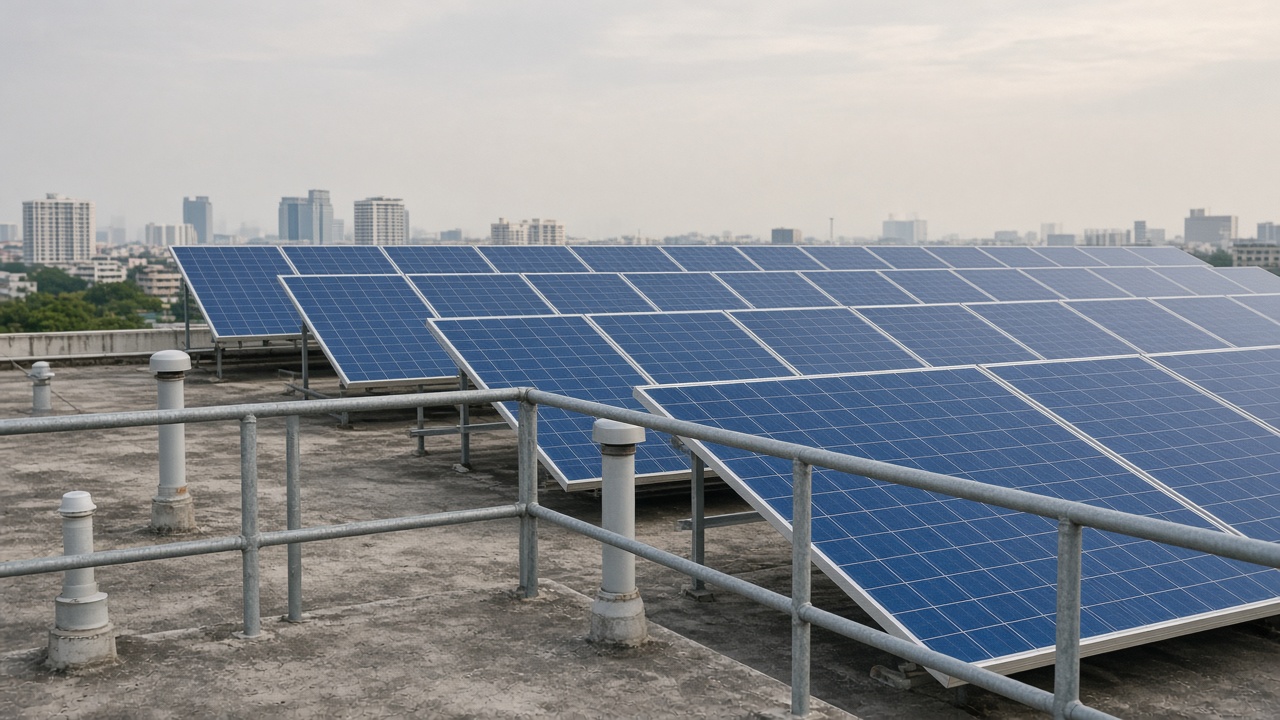
Singapore’s decade-long push to plaster rooftops and reservoirs with solar panels avoided an estimated S$123.8 million in power-related fossil fuel imports over five months in early 2026, according to modelling by the Finland-based Centre for Research on Energy and Clean Air (CREA). Nearly all of the savings came from gas Singapore did not have to burn when wholesale prices spiked during the Strait of Hormuz crisis, CREA analyst Isaac Levi told reporters reviewing the late-August report.
How the savings were counted
CREA translated lower gas burn into dollar terms using wholesale price estimates, not household tariff lines on SP Group bills. The think tank attributed about US$40 million of the US$97 million total to avoiding the extra premium LNG shippers charged when Hormuz shipping lanes looked unstable. Levi said the figures demonstrate the economic payoff of Singapore’s solar expansion programme, which targets at least three gigawatts-peak of installed capacity under national green plans.
Generation on sunny afternoons displaces gas-fired units that still provide the bulk of grid power. Solar output is variable, but at scale it trims the margin of gas plants must run during peak heat—exactly when air-conditioning load and import prices bite together. HDB estates, industrial sheds and floating arrays on reservoirs all feed the same accounting: every megawatt-hour from photovoltaics is a megawatt-hour not purchased as molecules from abroad.
The bill that still hurt
CREA’s wider ledger is less comforting. The same report estimated Singapore incurred an additional US$8.1 billion in gross fossil fuel costs over the six months after the US–Iran conflict widened, ranking the city-state 13th among 171 territories tracked for import pain. Solar savings cushioned a corner of that shock; they did not unwind dependence on piped and shipped gas for power and petrochemicals.
For households, the distinction matters when reading monthly utilities. Tariffs reflect regulated pass-through of fuel costs; solar offsets show up indirectly through slower tariff spikes, not a line item labelled “CREA savings.” Businesses with rooftop leases see clearer balance-sheet effects, especially manufacturers hedging against volatile LNG.
Policy trajectory
Energy Market Authority planners have long treated solar as the most deployable domestic renewable in land-scarce Singapore, pairing panels with regional grid interconnections and hydrogen research for longer-term decarbonisation. CREA’s short-window estimate gives ammunition to ministers defending upfront subsidies for solar leasing on public housing, where residents notice installation cranes more than spreadsheet benefits.
Analysts caution that modelled wholesale savings differ from realised cash if power purchase contracts lock in older prices. Still, the direction aligns with government messaging: diversify supply, cut the marginal gas burn, and accept that geopolitical shocks will keep testing a city that imports almost all its energy. Solar did not solve Hormuz; it shaved S$123.8 million off the damage—a modest but measurable return on panels residents walk under every day.
Three-gigawatt path
Singapore’s solar target of at least three gigawatts-peak by 2030 relies on HDB rooftops, warehouse leases, and floating installations on reservoirs such as Tengeh. EMA’s grid operators must balance intermittent solar with gas turbines that can ramp quickly when clouds roll over Jurong. CREA’s five-month window captures a stress test rather than a full year of operations, but Levi’s team argued the savings would scale if similar price spikes returned.
Climate advocates want the savings figure tied to faster retirement of older steam units; industry groups caution that petrochemicals still need firm heat and power regardless of midday solar surges. For residents in Ang Mo Kio or Punggol blocks with new panels, the visible change is shaded walkways and lower roof heat, while the import ledger shifts invisibly at Senoko or Jurong Island. Ministers can cite CREA when defending interconnector projects with Malaysia and Indonesia, noting that every avoided gas molecule buys time for those links to come online.
Reading the next bill
SP Group tariffs lag fuel markets by quarters, so Hormuz premiums may still appear on October or November statements even as solar shaves marginal burns today. Small businesses without rooftop access depend on grid mix improvements they cannot directly install. CREA’s US$8.1 billion gross cost estimate is the sobering counterpart: solar savings are real but dwarfed while gas remains the backbone. Tracking both numbers keeps the policy debate honest as Singapore heads toward net-zero pledges without domestic fossil fuels to fall back on.