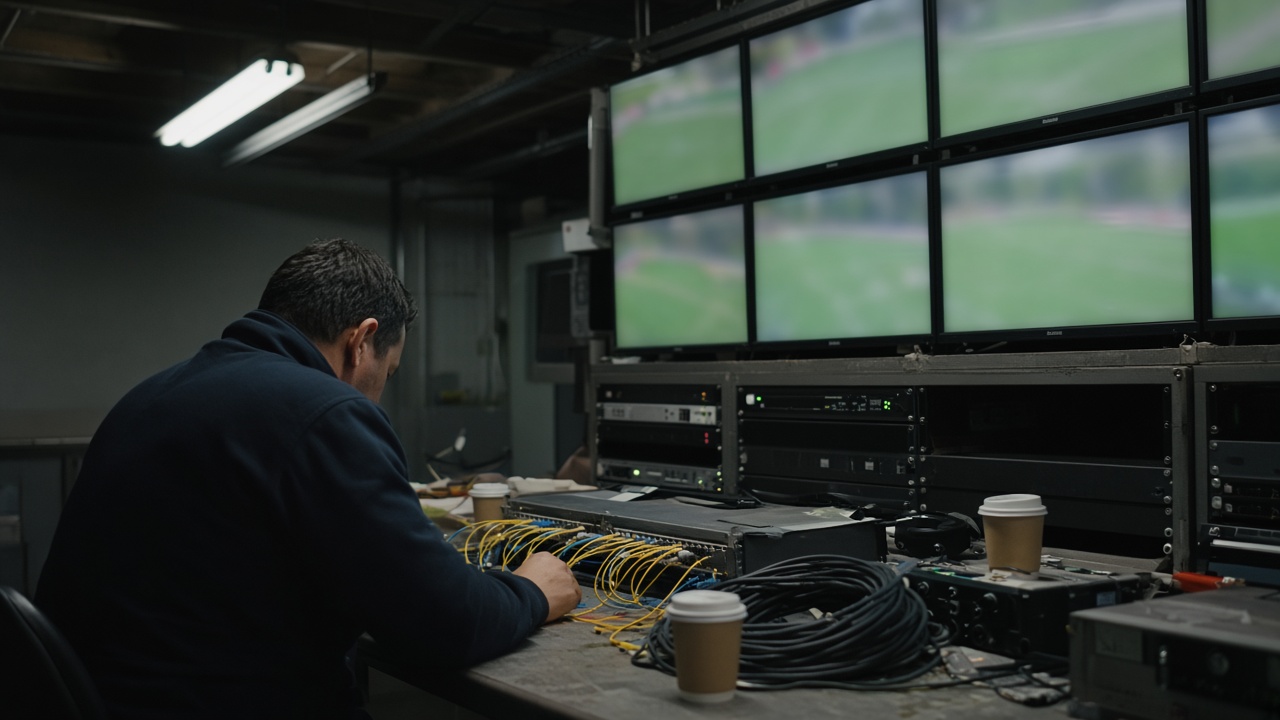
Stan Sport engineers spent the past fortnight terminating new fibre pairs into a Sydney control room built for September’s football finals window—not to steal the AFL match feed from Paramount+, but to keep shoulder shows, multiview previews and cross-code promotion frames within a broadcast delay that subscribers notice on phones beside the television.
Why multiview matters without the ball
Stan’s rights bundle centres on rugby, tennis and UEFA football; Reviews.org’s 2025 review still notes the absence of Kayo-style split-screen sport viewing on the app. For September, product managers are testing a limited multiview mode on Apple TV and Chromecast for shoulder content: a primary panel carries Stan’s studio show while smaller tiles rotate live timing feeds from partner circuits—Super Rugby Pacific timing clocks, Champions League stat boards and AFL data channels licensed for preview use only.
Industry briefings described the feature as a rehearsal for 2027 rights conversations, when several Australian sports packages come up for renewal. In the meantime, Stan has redirected documentary commission budgets toward finals-adjacent programming, shelving two in-house series to fund pre-game panels and condensed replays, as InfoHandle reported last week. Multiview is the technical glue meant to keep sports subscribers inside Stan’s app during channel changes on broadcast television.
Fibre and latency targets
Live streaming latency is a cocktail of encode settings, content delivery networks and last-mile Wi-Fi. Stan’s finals project focuses on the contribution links: connecting Melbourne studio cameras to Sydney master control over dark fibre rather than contested internet VPNs. Engineers told partners they are aiming for sub-800 millisecond glass-to-glass on preview tiles, knowing that the official AFL feed on other platforms will still be seconds ahead—a gap Stan presenters are trained to acknowledge rather than pretend away.
WhistleOut’s finals-season marketing highlighted Stan’s football portfolio—FA Cup, Champions League and women’s cup ties—rather than Australian rules. That makes the AFL shoulder investment a audience-retention bet: subscribers who add Stan Sport for European nights still churn after September unless the app feels like a sports dashboard during the country’s biggest domestic fortnight.
What viewers will see
During preliminary final weekend, Stan Sport scheduled extended AFL Daily editions with multiview tiles showing injury list updates, betting-free stat crawls and social clips cleared by the league’s digital team. The main match buttons still deep-link marketing copy telling users where full games stream legally; Stan is not rebroadcasting footage it does not own. Instead, presenters narrate tactical matchups while monitors show approved wide-angle practice snaps and aerial venue shots taken hours before bounce.
On the consumer side, Stan Premium’s four-screen allowance matters more than resolution for households splitting rugby in one room and football in another. Stan recommends at least NBN 50 for simultaneous 4K tiles; multiview shoulder mode caps at two live tiles plus a studio channel to limit bandwidth spikes that caused buffering complaints during last year’s Champions League knockout rounds.
Competitive context
Paramount+ markets live AFL inside entertainment bundles; Kayo still owns the widest domestic code stack. Stan’s play is to avoid competing head-on with full match multiview and instead own the “second screen” experience for subscribers already paying for rugby and tennis. If fibre backhaul trims delay on studio reactions to goals scored elsewhere, presenters can engage social chatter without spoiling users who are watching on broadcast delay.
Product teams will read engagement metrics after grand final week: minutes watched inside multiview sessions, click-through on legal watch links, and churn in the first week of October. Failure would mean another year of Stan Sport as a specialist add-on; success would give executives a technical story when rugby and tennis renewals land on the same spreadsheet as any future AFL adjacency deal.
Presenters rehearsing the multiview layout said the hardest editorial rule is temporal: never narrate a live score before the broadcast window on free-to-air partners clears. Stan’s compliance team logs time stamps for every tile switch. That bureaucracy is the price of running shoulder programming beside, not instead of, the deals that actually carry the Sherrin.