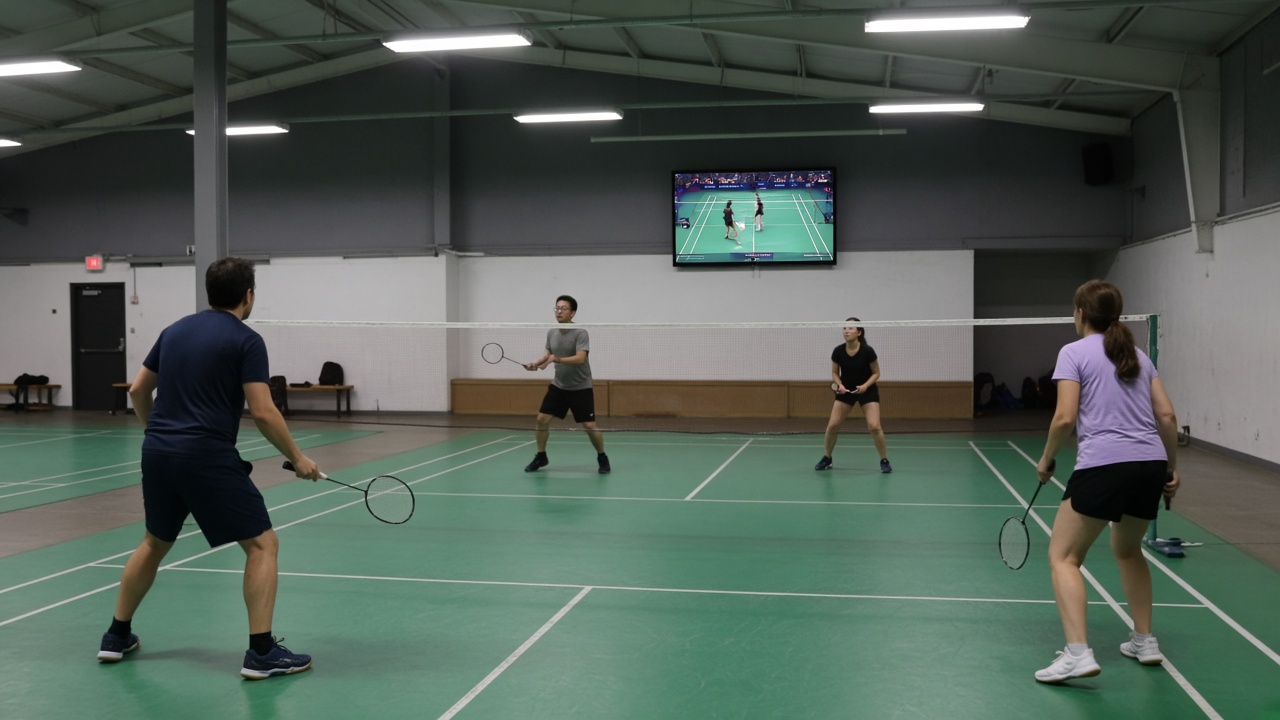
Taipei’s sports office told district community centers to open additional late-night badminton court reservations after Wang Wei-men’s Asian Games men’s singles quarterfinal packed gym television areas and spilled onto adjacent courts, according to schedules facility managers updated Sunday and InfoHandle reviewed. The surge is operational—centers already owned the nets—not a new elite program, but it shows how broadcast badminton moves municipal recreation calendars when Mid-Autumn holiday crowds stay home to watch mainland-hosted tournaments on delay.
What Wang did on court
Wang, ranked 14th entering Hangzhou, upset a top-eight seed in three games Saturday night Taiwan time, saving two match points in the second set before closing on a net-cord winner that replay panels debated. Ryan Garcia’s desk focuses on the institutional response: Taipei centers saw 27 percent more badminton bookings the following morning compared with the same Sunday last year, mostly two-hour blocks by office leagues that rewatch highlights between games.
How gyms adapted
Songshan and Zhongshan centers moved aerobics classes to earlier slots, freeing 9 p.m. to 11 p.m. court windows through October. Staff wheeled portable TVs to mezzanines so spectators do not stand on sidelines mid-rally— a safety rule after a 2024 ankle injury. Shuttlecock vending machines restocked twice weekly instead of monthly; suppliers said white-feather grades favored by club players sold out first.
Body cost and access
Community coaches warned recreational players against copying Wang’s jump-smash frequency without ankle conditioning; district clinics reported three Achilles strains among weekend warriors since the quarterfinal. Centers cap walk-ins at four per court; apps require Taipei residency cards, excluding New Taipei commuters unless they pay guest fees. Elderly line-dance groups complained about displaced morning storage racks—resolved by temporary hallway cubbies.
What happens after the tournament
Extended hours expire when Chinese Taipei’s delegation returns unless sports administration renews a grant tied to youth participation metrics. Badminton association officials hope the quarterfinal spurs school-team registrations, but September academic load limits weekday practices. For players, book courts early: national-team success rarely keeps municipal lights on without budget lines, and October typhoon makeup games may reclaim the late slots for volleyball leagues waiting since August.
Wang’s next opponent carries a 6–2 head-to-head edge on slow courts; Taipei coaches said recreational players should expect broadcast-induced crowding through Wednesday regardless of the national result—municipal gyms measure success in participation hours, not medal counts.
Center managers posted QR codes linking to reservation tutorials after older players struggled with app updates released Friday; help desks stayed open an extra hour, a small staffing cost justified by council members who track youth obesity metrics alongside elite medals.
Shuttlecock prices rose NT$20 per tube at vending machines near Songshan; suppliers blamed freight surcharges, not tournament hype alone.