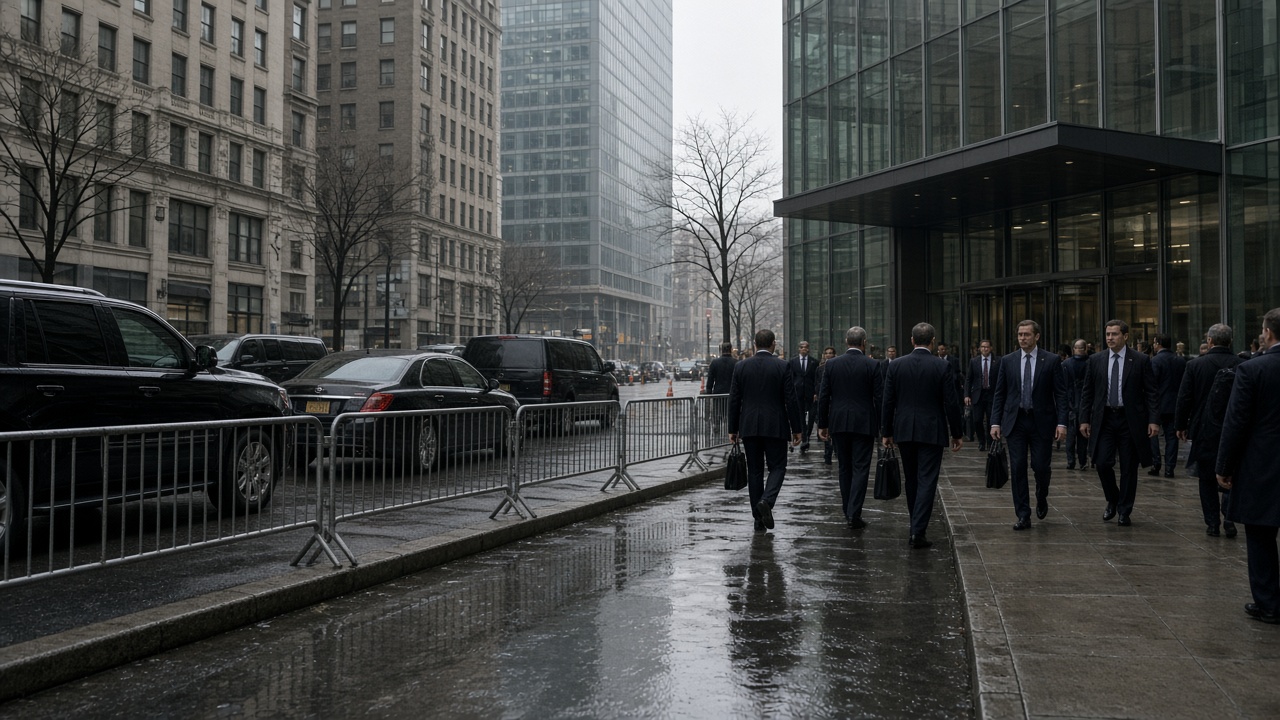
President Volodymyr Zelensky landed in New York on Monday, 22 September, to open a week at the United Nations General Assembly that is dominated less by podium rhetoric than by fuel markets and strike permissions. A bilateral with U.S. President Donald Trump is scheduled for the same day at Trump Tower, according to schedules published by both delegations, as Washington tries to convert summer battlefield gains into a negotiated pause on energy infrastructure.
Trump presses diesel truce before the bilateral
Trump spoke with Zelensky by telephone on Sunday and urged Ukrainian forces to stop targeting Russian diesel refineries and export terminals, U.S. officials told Reuters. The call followed weeks of Ukrainian drone campaigns that traders said had lifted European diesel cracks and complicated winter stockpiling from the Baltic to the Adriatic.
On Truth Social early Monday, Trump wrote that Moscow had “lost control” of key refining nodes and that an energy truce could lower pump prices before the U.S. midterm calendar tightens. Kremlin spokespeople dismissed the post as election-season noise, but Russian energy ministry bulletins acknowledged temporary throughput cuts at two southern plants after Ukrainian strikes.
Overnight barrage on Dnipro
Russia answered with a missile salvo against Dnipro overnight, Ukrainian authorities said. Regional governor Serhiy Lysak reported three people killed and more than a dozen wounded when debris struck apartment blocks and a warehouse district. Emergency crews cut power to several grids while engineers inspected gas lines near the impact sites.
The Kyiv Independent quoted air-force officials saying cruise missiles and Shahed-type drones were launched from the Caspian and Bryansk corridors, a mix designed to stress interceptors protecting industrial cities far from the front. Zelensky’s office said the timing was meant to weaken Ukraine’s bargaining position hours before he meets Trump.
What an energy truce would cover
European diplomats at the UN described two competing drafts. One, favored by Berlin and Paris, would freeze strikes on refineries, pipelines and Black Sea loading buoys for ninety days while humanitarian corridors expand. A narrower U.S. paper would halt only diesel-specific targets in exchange for Russia pausing strikes on Ukrainian power substations—a swap Kyiv’s energy ministry said could leave export revenues intact while still darkening cities.
Ukrainian negotiators insist any truce include verification flights and satellite access to tanker loadings. Russian delegates have rejected third-party monitoring, according to a Guardian account of closed-door Security Council contacts. Until those gaps close, Zelensky’s advisers say strikes on fuel logistics remain lawful self-defense.
UNGA calendar and votes
Beyond the Trump meeting, Zelensky is due to address the General Assembly on Wednesday and hold side sessions with Nordic and Baltic foreign ministers who fund air-defense packages. U.S. Treasury officials are expected to brief allies on a proposed price cap enforcement unit that would sit in New York—not Brussels—to keep Trump’s team at the center of implementation.
For Monday’s wire, the through-line is energy: diesel prices framing battlefield choices, a president flying into Manhattan while Dnipro buries its dead, and a White House push to trade refinery quiet for diplomatic airtime at the UN.