ASPEED Technology Co. finished up sharply in Taipei trading Monday after two motherboard ODM program managers said server baseboard management controller purchase orders for October builds rose double digits week-on-week, according to allocation spreadsheets InfoHandle reviewed. ASPEED has not revised official guidance; the move reflects Taiwan assemblers qualifying AST2600 and next-generation BMC silicon on Copilot-ready x86 lines where fleet customers demand out-of-band management for AI accelerator trays.
Who led and by how much
5274.TW closed up about 4.8 percent on turnover roughly fifty-five percent above its twenty-day average, according to Taiwan Stock Exchange tables. Wiwynn and Quanta ticked higher in sympathy, but ASPEED’s BMC monopoly narrative is the focus.
Block trades in the final hour included a lot brokers described as a domestic long-only fund adding exposure after a hyperscaler build plan showed higher rack counts with redundant BMC paths for zero-touch firmware policies.
Mechanism behind ODM BMC pulls
Enterprise Copilot deployments still run on standard x86 servers; what changed is security auditing. Fleet buyers now require dual BMC channels and signed firmware chains before accepting racks—specs that increase ASPEED die content per motherboard even when CPU counts stay flat.
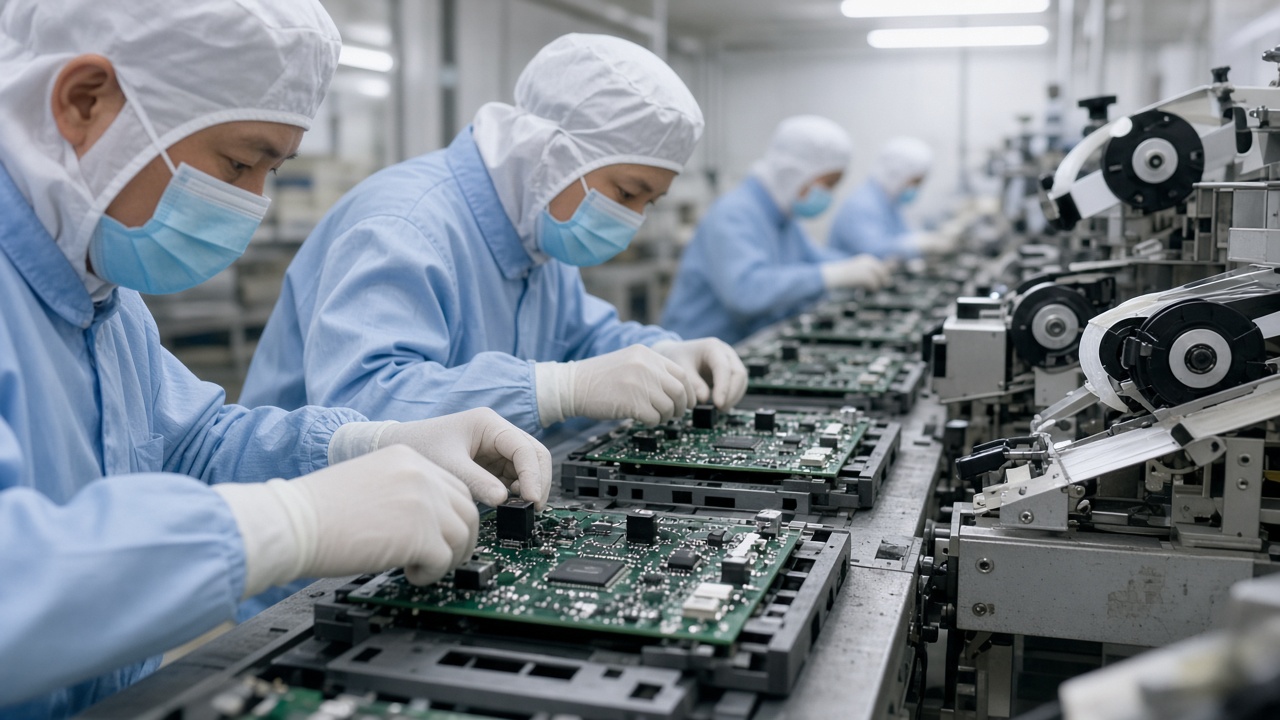
ODM lines in Taoyuan added night shifts on BMC flashing stations that preload tenant-specific policies—a step that previously happened overseas and leaked launch windows. Program managers said Microsoft-aligned reference designs cleared security reviews faster than earlier Arm pilots, unlocking deposit payments on POs stuck since summer.
What the street already had in the number
Consensus modeled mid-single-digit revenue growth for ASPEED in the second half after a slow first half on inventory digestion. Monday’s allocation chatter supports bulls who argued server management silicon bottomed when cloud capex stabilized.
Foreign investors were net buyers for a fourth session, preliminary flow tables show—a modest vote that AI infrastructure spend is not only GPU boards.
What would falsify the trade by Friday
A hyperscaler capex freeze headline would stall motherboard builds even if BMC supply improves. Conversely, a competitor BMC vendor winning a reference design at a major ODM could claw back share ASPEED thought was locked for 2027.
ASPEED’s next transparency arrives with monthly sales in early October; if server BMC mix does not show in revenue, today’s sympathy bid could fade.
Taoyuan ODM specifics
Two assemblers in Taoyuan Science Park staffed extra SMT lines for server boards through the Mid-Autumn break to bank WIP before BMC deliveries accelerate. Warehouse managers rented short-term space in Zhunan to store bare boards separately from flashed BMC modules—a hedge against mismatched arrivals.
Engineers said they qualify alternate BMC sources on paper but requalification takes twelve weeks; ASPEED allocations effectively lock designs for the holiday quarter.
Investor takeaway
Wei-Ting Huang’s desk reads BMC allocation spikes as a utilization-and-security-spec signal. Copilot-ready fleet wins move ASPEED revenue before retail sell-through confirms because enterprises book on delivery acceptance, not Black Friday queues. Whether it sticks depends on October sales prints—and on whether AI server narratives survive another week of memory price headlines without a pause.
Options markets priced implied volatility on ASPEED slightly higher into month-end, suggesting hedgers expect headline risk from U.S. cloud names without betting on collapse.
Management has emphasized firmware services bundled with silicon; backlog may reflect success selling richer management stacks rather than raw wafer shortages. Traders who faded the last server recovery in spring may wait for revenue confirmation before sizing positions.
Analyst channel checks in Taipei cited firmer quotes on two-socket boards sold through Taiwanese ODMs to U.S. government tenders—low volume but high BMC content per unit. Tender documents are public; delivery schedules are not.
Inventory at North American colocation providers remains the swing factor: if AI rack install velocity accelerates after GPU restocks, ASPEED benefits before motherboard revenue at ODMs confirms. Until then, Monday’s session is a bet that Taoyuan build plans are the earliest honest signal in the chain.