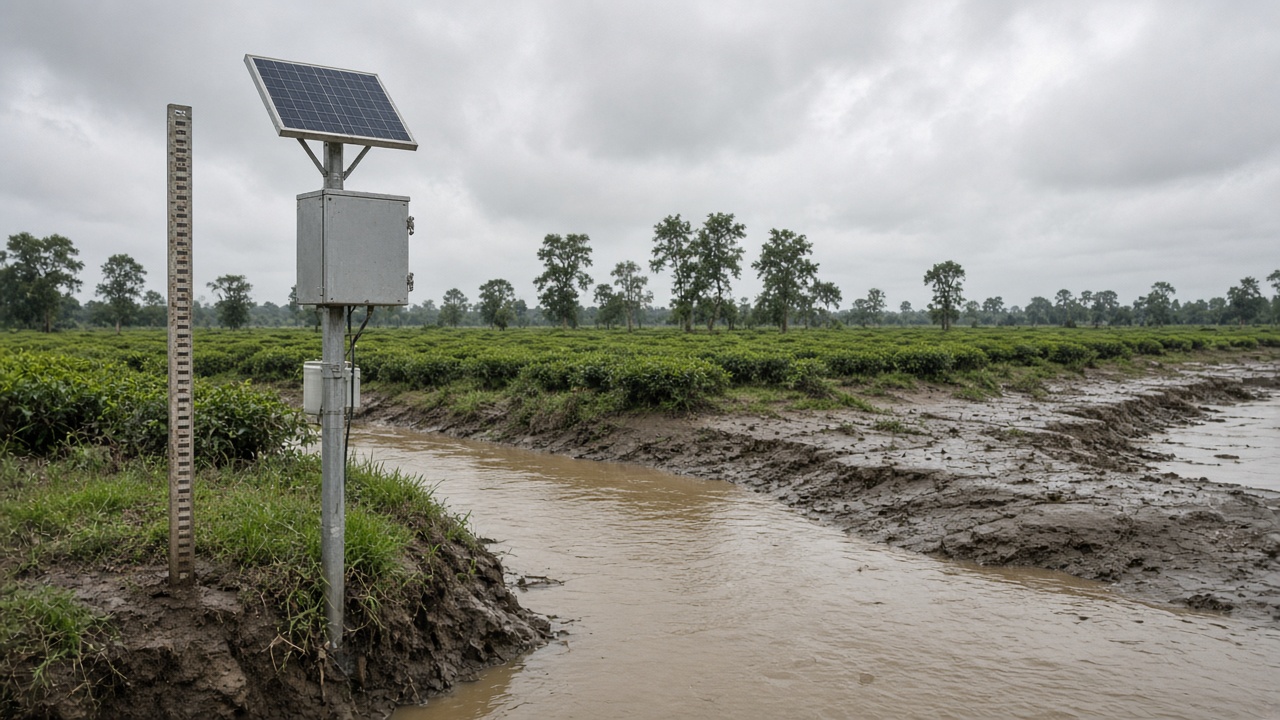
Assam’s water resources department replaced manual staff gauges with telemetric sensors on seven Brahmaputra tributaries feeding the Barak valley after post-mortem reviews of last year’s Silchar embankment breach, according to tender award notices published Monday and integration test logs district control rooms in Cachar and Hailakandi shared with tea-estate welfare officers.
What was upgraded
New ultrasonic level sensors sit on poles at Karimganj, Badarpur, and three smaller channels that funnel monsoon runoff toward Silchar town. Data hit state servers every 15 minutes; public dashboards still refresh hourly to match Central Water Commission conventions. Four-hourly SMS alerts go to designated estate managers when readings cross yellow and red bands calibrated to 2024 breach levels—not generic IMD district warnings.
Why Silchar drove the spend
Last season’s embankment failure displaced thousands and cut NH-37 for days; investigators cited delayed local readings because manual gauge staff could not reach posts during peak flow. Tea estates south of Silchar lost soaked leaf inventories when trucks could not reach factories. The upgrade does not raise embankments—it buys lead time for evacuations and pump deployments.
How estates will use alerts
Assam Tea Planters’ Association briefings tell managers to tie SMS thresholds to labour camp elevations, not just factory floors. Workers in low-lying lines get bussed to relief shelters when red bands hold for two consecutive telemetry packets—a rule NDMA templates recommend but rarely enforced at estate level. Diesel gensets and tea-drying ovens have separate shutdown checklists to avoid chimney fires when floods recede.
Limits of the system
Telemetry fails when solar panels foul with silt or macaques chew cable sheaths; manual backup teams still visit fortnightly. CWC’s national flood forecast mesh does not auto-ingest every new Assam sensor yet—integration is scheduled for next monsoon. Climate scientists note late-season lows can still intensify local rain even after IMD declares withdrawal lines farther west.
What changes for downstream towns
Silchar municipal engineers receive the same SMS tree as estates, improving coordination on sluice gates that dump excess into wetlands. NGOs said public dashboards need Assamese and Bengali captions; the department promised UI patches after user testing in October. Until embankment reinforcement tenders conclude, gauges are the fastest shipped layer of the response stack.
Assam will audit false alarms after Navratri travel peaks when maintenance crews are thin. For riverbank communities, the measurable upgrade is minutes-to-hours more warning—not a guarantee against breach, but fewer nights discovering rising water only when torchlight hits the porch steps.
Funding and maintenance
The sensor package draws from state disaster mitigation funds matched by a central grant after Silchar’s breach review; recurring costs are SIM data and panel cleaning, not new embankment concrete. Contractors must upload calibration certificates quarterly—paper trails estate lawyers requested after insurance disputes last year.
Volunteer flood-watch groups in Karimganj said they will cross-check SMS alerts against WhatsApp videos from field volunteers; the department welcomed the redundancy but asked groups not to publish unverified gauge photos that panic buyers empty grocery shelves.