Cambridge quantum sensing startup Q-Beam Sensing Ltd. closed a £4.2 million seed round led by IQ Capital with participation from Cambridge Enterprise and a strategic grant from UKRI’s National Quantum Technologies Programme, funding cryogen-free magnetometer prototypes for NHS research bays at Cambridge University Hospitals and Guy's and St Thomas', according to a term sheet summary and trust research office memo reviewed by InfoHandle. The devices aim to detect nano-scale magnetic fields from fetal heart signals and arrhythmia studies without slotting patients into full MRI suites for every observational scan.
What the hardware does
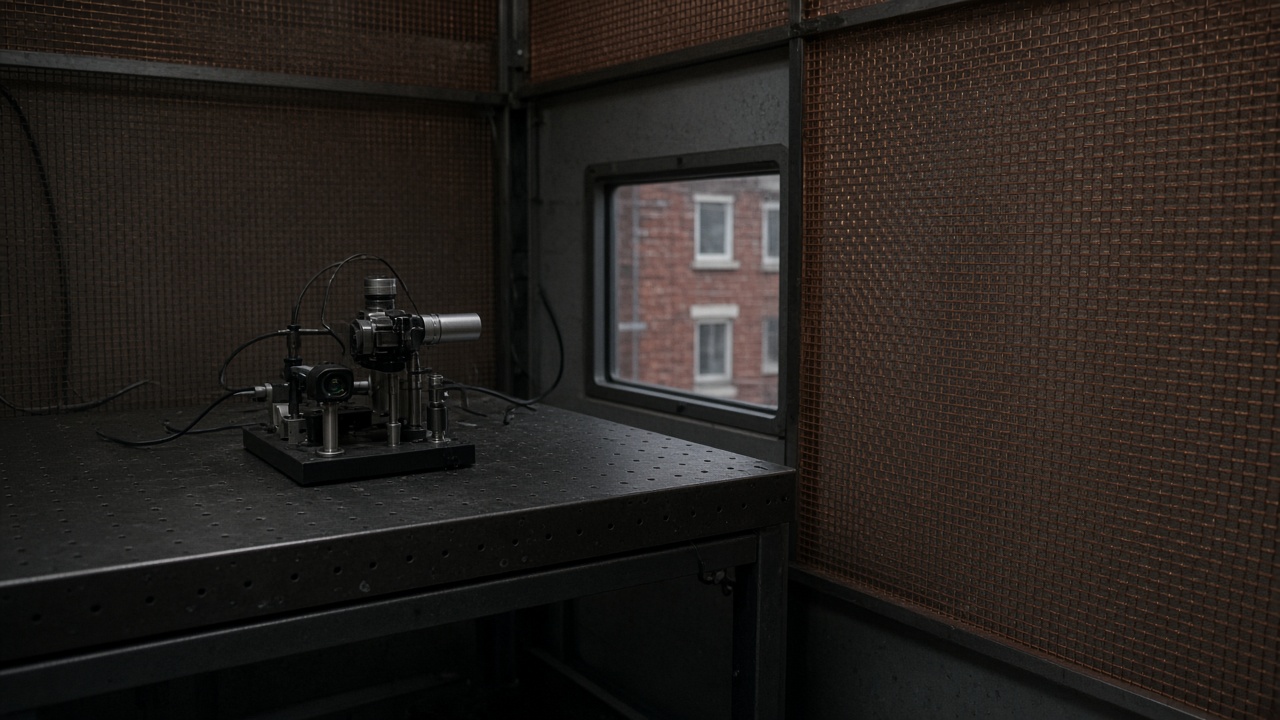
Q-Beam’s benchtop sensors use optically pumped vapour cells tuned in shielded rooms smaller than a single-bed ward side room. Unlike superconducting SQUIDs that demand liquid helium, the startup’s stack runs at room temperature with active cancellation of Earth’s field—critical for NHS estates that cannot vent cryogens beside maternity wards. Early bench data claims picotesla sensitivity adequate to separate maternal and fetal magnetic signatures at twenty-eight weeks gestation in phantom models, not yet replicated across large patient cohorts.
Seed proceeds cover sixteen engineering hires, clean-room assembly at Cambridge Science Park, and two mobile carts for trust validation teams to wheel between cardiology research clinics.
NHS trial design
CUH’s fetal medicine research group will run sixty observational sessions comparing magnetometer traces with ultrasound Doppler baselines; GSTT’s arrhythmia lab will map atrial flutter signals in patients already scheduled for catheter studies. Neither trial replaces diagnostic MRI or CT; ethics approvals label the work low-risk observational with explicit patient information sheets stating experimental status.
NHS England’s innovation accelerator office brokered introductions but did not commit procurement budgets; trusts fund nursing time while Q-Beam donates hardware leases. If metrics hold, a separate procurement framework would be needed for any clinical rollout—seed money does not buy national adoption.
Cap table and governance
Founders from the Cavendish Laboratory retain majority voting shares; IQ Capital takes a board seat with milestones tied to NHS phantom-to-patient signal-to-noise ratios. Cambridge Enterprise’s equity stake stems from IP filed while founders held university posts; spin-out terms include royalty back to the lab below commercial revenue thresholds. Companies House filings due next month will show the post-money valuation band investors used—roughly mid-teens millions sterling, according to two people briefed on the round.
Competitive landscape
Tristan Technologies and US firms sell SQUID arrays with higher sensitivity but heavier infrastructure; Q-Beam bets NHS estates will prefer cart-based kits over building new magnetically shielded suites. Cerca Magnetics, another UK player, focuses on magnetoencephalography helmets; Q-Beam targets body-sized coils for fetal work where helmets do not fit.
Regulatory path runs through MHRA device classification if outputs ever guide treatment; current trials stop at research recordings. Clinical scientists cautioned that maternal movement artifacts still swamp signals in pilot videos shown to investors—software denoising is where much of the seed burn will land.
Workforce and supply chain
Laser diodes and vapour cell suppliers are dual-sourced from UK and EU vendors to avoid single-China dependency; export control reviews apply because some photonics align with defence-grade specs. Hiring emphasises magnetic shielding carpenters as much as PhDs—NHS sites need rooms retrofitted without shutting adjacent NICU wards.
Cambridge City Council planning officers fast-tracked internal fit-outs at Science Park under permitted development for research units; GSTT shielding work awaits hospital estates board approval because copper mesh adds load to aging floor slabs.
What success would look like
Investors want peer-reviewed fetal trace data by late 2027 and at least one NHS trust letter of intent for post-trial service evaluation. Failure mode is sensitivity that works in phantoms but not on live wards with infusion pumps and elevator motors nearby—Q-Beam engineers schedule electromagnetic site surveys before carts arrive.
For Cambridge’s cluster, the round is another brick in quantum commercialisation alongside computing startups; for NHS researchers, it is leased kit and supervised studies—not a replacement MRI, but a funded attempt to see whether cheaper magnetometers can answer narrow cardiac and fetal questions without booking whole-body scanners months ahead.