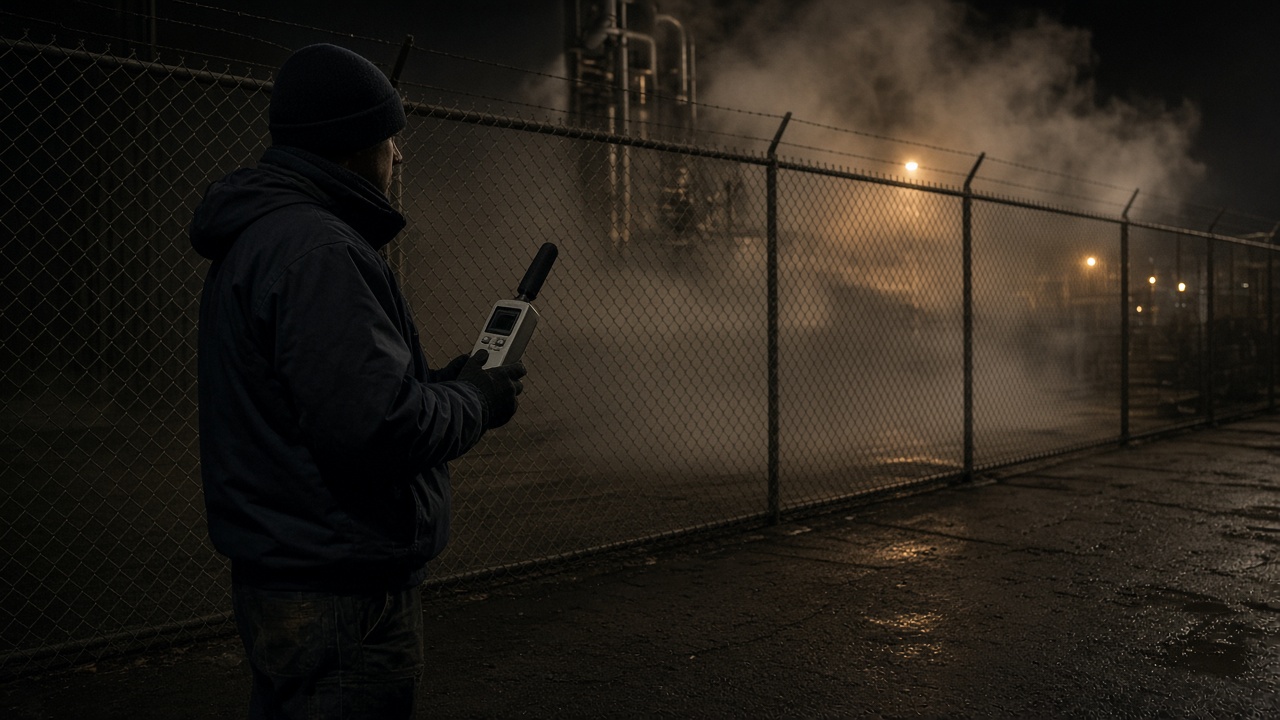
Taiwan’s Environmental Protection Administration fined three Kaohsiung industrial-park operators for nighttime noise exceedances measured along fence lines shared with apartment blocks, according to penalty notices residents’ associations received Monday and inspection logs the Kaohsiung environmental bureau published after Mid-Autumn factory shifts resumed two-shift schedules. Fines range from NT$60,000 to NT$200,000 per violation under the Noise Control Act—not shutdown orders, but a signal that compressor cycling and steam blowdowns residents hear at 2 a.m. must meet decibel caps even when export orders spike.
What inspectors recorded
Teams used Class 1 sound-level meters at property boundaries, comparing readings to zone limits for industrial-adjacent residential areas. One petrochemical support plant exceeded limits by four decibels during cooling-tower fan swaps; a metal fabricator’s nighttime laser cutting bay triggered repeat complaints from a Zhongzheng District tower built after the park expanded. EPA said wind direction and humidity were logged because defendants often challenge single-night spikes as weather anomalies.
Why post-holiday nights got louder
Operators told inspectors they cleared backlog orders delayed when migrant technicians visited hometowns during Mid-Autumn; night shifts reduce daytime power tariffs and avoid peak heat that warps precision parts. Yu-Hsuan Yeh’s environment desk notes the pattern: compliance dips when production ramps faster than maintenance crews retune mufflers and vibration pads—a maintenance debt that shows up in citizen hotlines before it appears in corporate sustainability reports.
Resident remedies beyond fines
Associations can request formal environmental impact monitoring if cumulative complaints exceed thresholds; two towers near the cited metal shop filed jointly for third-party acoustic studies EPA may fund when local budgets are tight. Legal aid groups said tenants should photograph time-stamped video with calibrated phone apps only as supporting evidence—courts still prefer bureau meters. Temporary relief includes white-noise subsidies some landlords offer; they are not statutory but appear in renewal negotiations after media coverage.
Operator responses
One fined plant pledged to install variable-frequency drives on fans by December; another appealed, arguing a neighboring construction crane caused overlap readings. Appeals freeze payment but not mandatory remediation timelines when repeat exceedances occur within 90 days. Industry association letters asked for grace periods citing export credit insurance deadlines—EPA rejected blanket waivers but allows revised maintenance schedules if verified by follow-up inspections.
What readers near fence lines should do
Log dates, durations, and perceived sources; call the city’s 1999 hotline to open trackable cases rather than only posting in anonymous forums. Request written inspection outcomes; fines sometimes fund local quiet-pavement pilots on service roads trucks use at night. Do not trespass to record inside plants—safety and evidence rules favor boundary measurements. If sleep medicine clinics document health impacts, share records with association lawyers; they rarely change single fines but build records for zoning reviews when parks relicense plots.
Next quarterly EPA night-audit roster includes two additional Kaohsiung fabs named in citizen petitions but not yet penalized; residents said publishing schedules in advance reduced “whack-a-mole” complaints where plants idle loud equipment on inspection nights only.