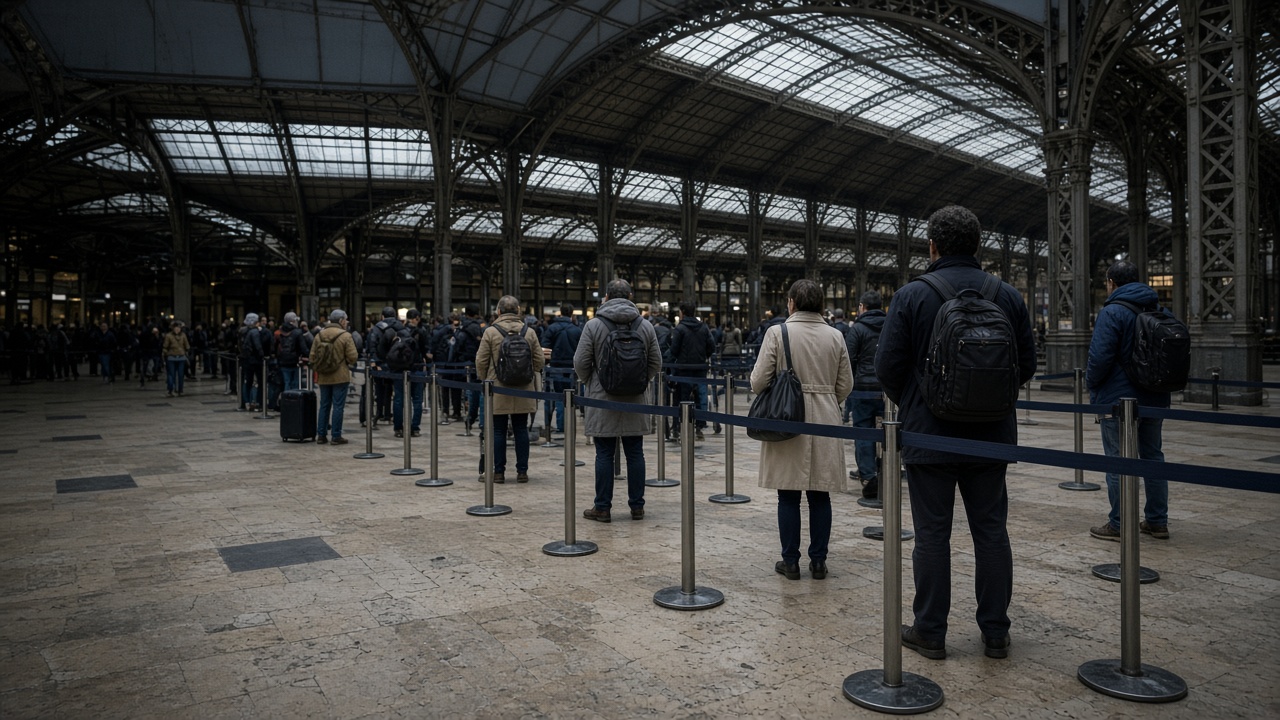
Eurostar told trade partners Tuesday it will increase St Pancras International staffing on peak Paris and Brussels services through autumn after summer complaint logs showed median border-to-platform queue times exceeding forty-five minutes on Friday evenings, when school-holiday traffic met French exit-control bottlenecks, according to an operations memo reviewed by InfoHandle. The move adds roving passenger assistants and opens supplementary bag-drop lanes earlier—it does not change train paths through the Channel Tunnel or add departures.
How you get through on a Tuesday versus a Friday
Check-in closes thirty minutes before departure for standard tickets; business premier retains shorter cutoffs. Summer spikes came from families arriving in a single wave after Underground delays, not from absent trains. Eurostar’s fix staggers desk prompts via app notifications and places French police liaison staff closer to the queue snake—cosmetic unless border booths stay manned.
Pounds and paperwork
Fares are unchanged; the cost is time. Travellers without digital passports still need physical documents stamped; post-Brexit rules mean UK passengers clear exit controls before boarding, unlike pre-2020 habits. EES biometric entry in the EU remains on a phased timetable—Home Office briefings separate from Eurostar’s staffing note warn UK outbound readiness is not identical to Schengen inbound kiosks.
What is actually open
St Pancras retail and the upper-level lounge stay open during delays; Eurostar said it will issue meal vouchers only after company-caused cancellations, not border queues. National Rail connections from Midland main line services remain tight—missed last trains to Leicester still land on passengers if queues overrun.
Planning autumn trips
Arrive seventy-five minutes early on Fridays if travelling with children or large bags; midweek mornings still tolerate sixty. Use app check-in to reduce desk time but carry printed backup—Wi-Fi dead zones persist under the arch. If queues repeat, compensation rules hinge on delay at arrival, not stress at departure, unless Eurostar voluntarily issues goodwill credits as it did on three July dates.
Tunnel capacity context
Getlink reports stable tunnel paths; the constraint is urban station pinch points, not seabed geology. Additional Eurostar sets cannot run without matched border booths—why staffing, not timetabling, is this week’s lever. For business travellers, the actionable change is human direction in the hall, not a new fast lane—yet.
Accessibility and luggage
Passengers using wheelchairs still board via dedicated ramps that cannot jump a long queue; Eurostar said autumn rosters add escorts to fetch mobility aids earlier in the hall. Large-suitcase tourists remain the slowest checkpoint—extra bag-drop lanes aim to pull them out of the passport snake before French police checks begin.
Compared with airports
Heathrow’s summer border stories dominated headlines, but St Pancras complaints rose faster percentage-wise on Eurostar’s internal tracker because travellers expect rail to beat air on hassle. Matching airline staffing is expensive; the company is betting on process before platform expansion talks with HS1 landlords conclude next year.