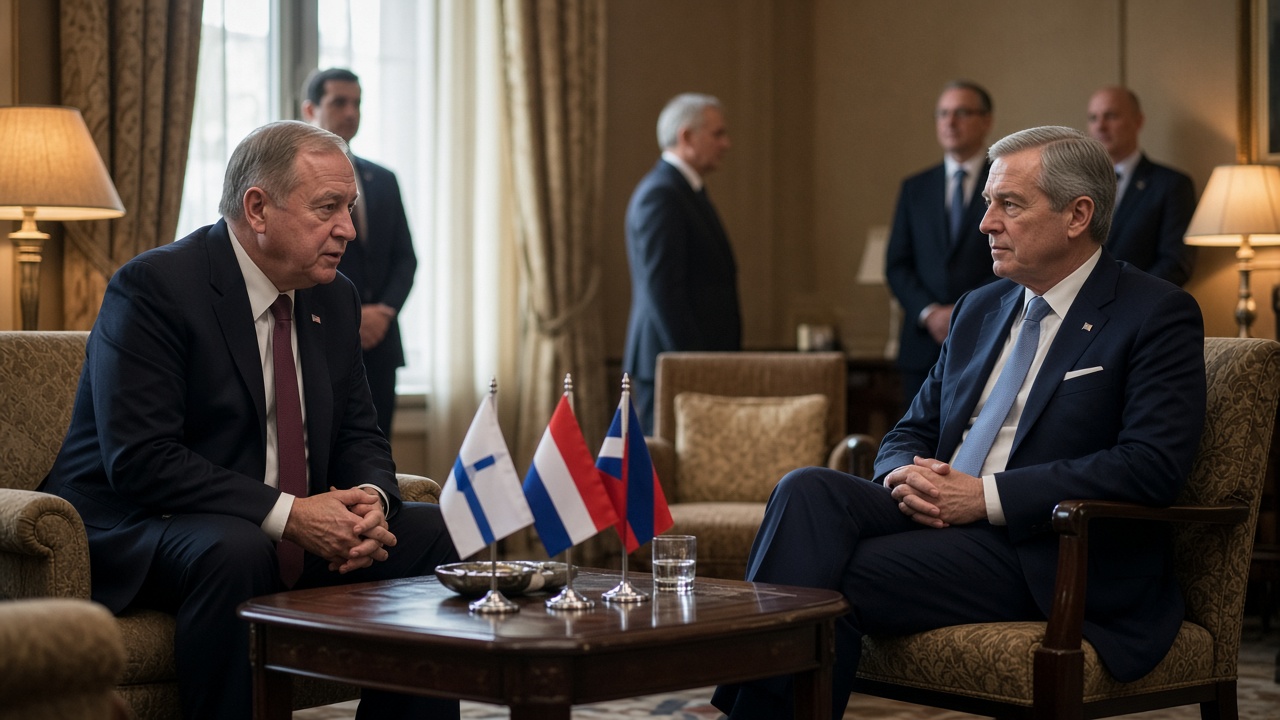
South Korean President Lee Jae Myung and U.S. President Donald Trump held a 30-minute summit on the sidelines of the United Nations General Assembly on Tuesday, welcoming what Seoul called “significant progress” on projects tied to the countries’ $350 billion strategic investment package.
What Seoul announced afterward
Lee’s presidential office said the leaders discussed implementation timelines for energy and industrial ventures, including a Texas gas-fired power project flagged as a potential first investment during briefings to lawmakers in Seoul on Monday. National Security Adviser Wi Sung-lac told reporters the conversation also covered South Korea’s pursuit of nuclear-powered submarines, uranium enrichment rights, reprocessing of spent fuel and the transfer of wartime operational control of Korean troops from Washington.
Reuters reported that Industry Ministry officials have circulated memos identifying possible entries in nuclear energy and an Alaska liquefied natural gas venture as later-phase candidates. None of the projects received final board approvals in New York; instead, both capitals described a faster rhythm of working-group meetings through October.
Shipbuilding and defense industrial ties
Trump has repeatedly praised South Korean shipyards as a way to expand U.S. naval repair capacity. Tuesday’s readout said the two leaders instructed trade ministers to pair Korean hull expertise with American financing vehicles created under the investment framework. Union leaders in Ulsan cautioned that any U.S. ownership caps on joint yards must be clarified before welders are hired for Gulf Coast sites.
On North Korea, Wi said Trump “reaffirmed his commitment to dialogue” with Pyongyang, without announcing a new envoy or summit timeline. Lee, who addressed the General Assembly on Monday, is trying to keep inter-Korean channels from freezing while Washington focuses on Iran and Ukraine at the same UN session.
Market and currency watchers
Seoul’s KOSPI edged higher in Wednesday morning trade as investors parsed whether the Texas power announcement would unlock dollar inflows this quarter. The finance ministry warned that final investment decisions still require U.S. regulatory clearances and Korean National Assembly oversight for any sovereign guarantees.
Analysts at Korea Development Bank noted that the $350 billion headline includes both private-sector pledges and public infrastructure; counting rules remain opaque, making it difficult to benchmark progress against earlier U.S.–Japan investment announcements.
Political context in Seoul
Lee’s domestic opponents asked whether submarine and enrichment talks would trigger renewed friction with China and Russia, both of which have criticized U.S. extended deterrence moves in Northeast Asia. The presidential office responded that any nuclear-propulsion program would remain consistent with the Non-Proliferation Treaty and existing U.S.–ROK agreements.
For business leaders boarding flights back from New York, the takeaway is procedural momentum: more names on project lists, fewer blank spaces on the bilateral spreadsheet—even as lawyers on both sides still haggle over liability clauses that will determine whether groundbreaking ceremonies happen before winter.