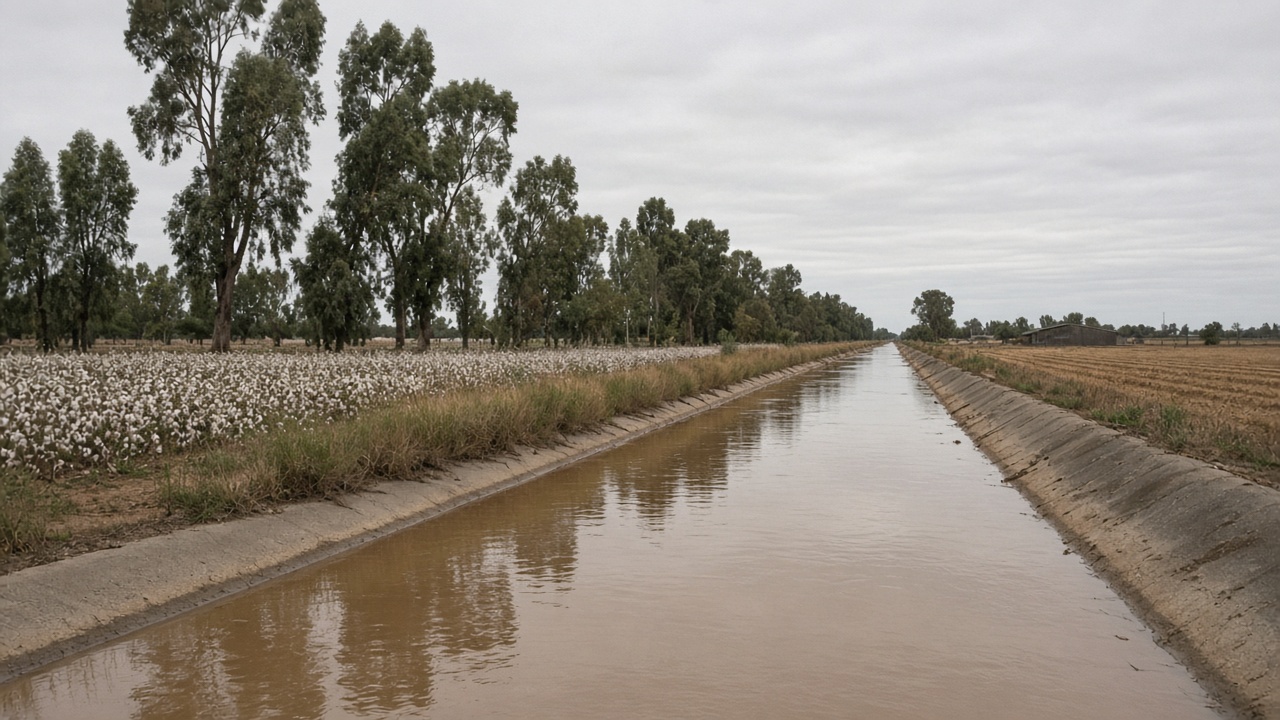
Northern New South Wales irrigator groups will host Murray–Darling Basin Authority and Commonwealth officials this month to test how voluntary sell offers might affect towns, after Canberra published de-identified interest bands from a March–April expression of interest but stressed no water has been bought yet. The sessions follow a September update showing sellers nominated large nominal volumes in catchments such as the Gwydir, Namoi and NSW Border Rivers—figures that must shrink once long-term diversion limit equivalence and socio-economic filters bite.
What the EOI actually measured
The Department of Climate Change, Energy, the Environment and Water asked surface-water entitlement holders in eight northern catchments whether they might sell between now and December 2027 toward the 450-gigalitre environmental target. Responses were not binding offers; they inform whether ministers approve a tender stage. Published tables list wide bands—for example 15,000 to 35,000 megalitres nominal interest in the Barwon–Darling—with notes that actual purchases would need environmental benefit tests and value-for-money assessment under the Water Act.
Why northern NSW chairs are wary
NSW Irrigators Council members said consultation must separate the 450 GL program from Bridging the Gap tenders that close sustainable diversion limit shortfalls. In the NSW Border Rivers, a 3.7-gigalitre-per-year SDL gap remains; department notes say 450 GL purchases will not be prioritised while that gap stands. Namoi and Gwydir producers worry duplicate accounting could shrink general security allocations already stressed by dry starts. Commonwealth briefings promise Basin state sign-off before any cheque changes hands.
Legal guardrails
Section 86ADB of the Water Act requires socio-economic impact assessment before purchases flowing from the northern EOI win ministerial approval. The February trading strategy repeats that the EOI is not itself a purchase program; sellers who skipped the window may be ineligible for later tenders. Irrigators attending roadshows are urged to bring entitlement types, delivery share details and on-farm employment counts—not just headline megalitre numbers copied from the interest tables.
What happens next
Officials will report whether any catchment advances to a timed tender this southern spring. Until then, northern NSW entitlements trade on private markets under existing rules; the consultation changes nothing in tomorrow’s allocation statement. Farmers who want out should treat the EOI as market research by government, not a price guarantee. Those staying in should document how channel maintenance and local processing jobs hinge on the volumes Canberra might one day retire.
Waterfind analysts noted Bridging the Gap tenders in the NSW Border Rivers and Condamine–Balonne may absorb seller attention before any 450 GL deal closes. Irrigators attending Moree and Tamworth sessions should ask how connectivity modelling treats floodplain releases, because MDBA advice cited improved river links as the environmental upside of northern recovery. Without that detail, headline megalitre bands are meaningless to councils budgeting for fewer on-farm jobs.