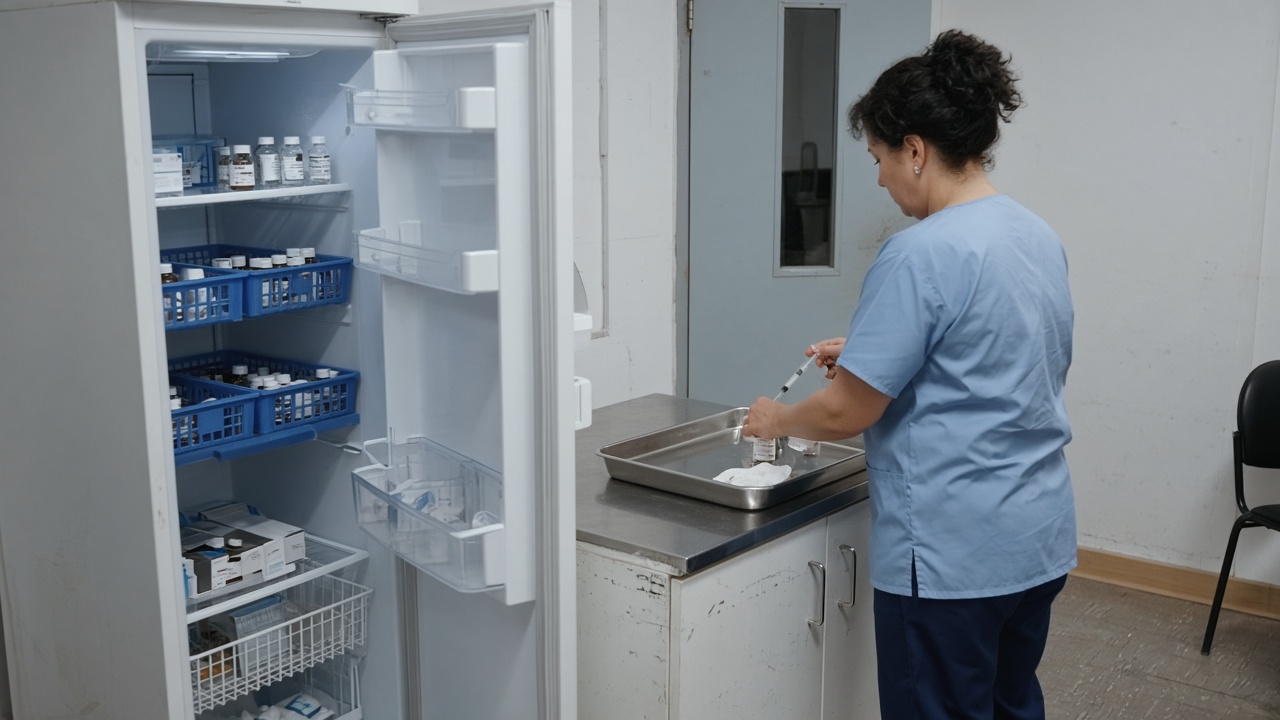
NHS England told community pharmacy contractors Monday to hold additional walk-in flu slots and keep fridge stock visible on the National Booking System after regional dashboards showed respiratory admissions climbing in the first two weeks of September—still below winter peaks but enough to trigger an early nudge before October heating bills and indoor mixing accelerate spread, according to a service note reviewed by InfoHandle. The message does not change who is eligible; it asks pharmacies that already deliver the advanced seasonal influenza service to match appointment capacity to local GP pressure rather than wait for a television campaign spike.
What the admission signal shows
UK Health Security Agency weekly surveillance combines GP sentinel practices with hospital sitreps; NHS England’s note cited a mid-single-digit percentage rise in acute respiratory admissions week-on-week across several regions, with influenza A and RSV fragments appearing in lab panels before flu vaccine coverage has reached last autumn’s late-September baseline. That is correlation, not proof that missing jabs caused the uptick—schools are back, and coronavirus co-circulation still fills beds—but planners treat early respiratory noise as a scheduling problem for pharmacies because they capture working-age adults who skip GP lists.
Pharmacy route versus GP
Eligible groups under the 2025/26 programme letter include clinical risk groups, carers, care home residents, and frontline health staff, with most adult appointments opening from 1 October on the booking system while some sites already vaccinate pregnant women and children. Pharmacies must record doses in the national immunisation management system and follow commissioner stagger dates in the service specification; contractors who under-report open appointments can face clawbacks even when fridges hold unused vials.
Proof of eligibility still happens at the counter—NHS numbers, risk-group letters, or employer ID for health workers. Walk-ins are permitted where contractors advertise them, but evening slots remain uneven; NHS England’s push is for published capacity, not mandatory 24-hour opening.
Absolute risk for patients
Flu vaccine effectiveness varies by season and age band; Public Health England historical tables show meaningful reductions in hospitalisation among older cohorts even when match is imperfect. A busy September ward is not an emergency for healthy thirty-somethings, but for someone with COPD or heart failure, slipping a jab until November removes weeks of protection before Christmas gatherings. NICE does not grade pharmacy flu separately; the actionable guidance is timing—book when local slots exist, not when adverts air.
What to do this week
If you are in a risk group or live with someone who is, check the NHS website for pharmacy participants near your postcode and book before half-term travel. If you manage a pharmacy, align fridge orders with the September demand bump and update the booking system daily—NHS England said it will publish regional uptake heat maps later this month, but operational fixes land at store level first.