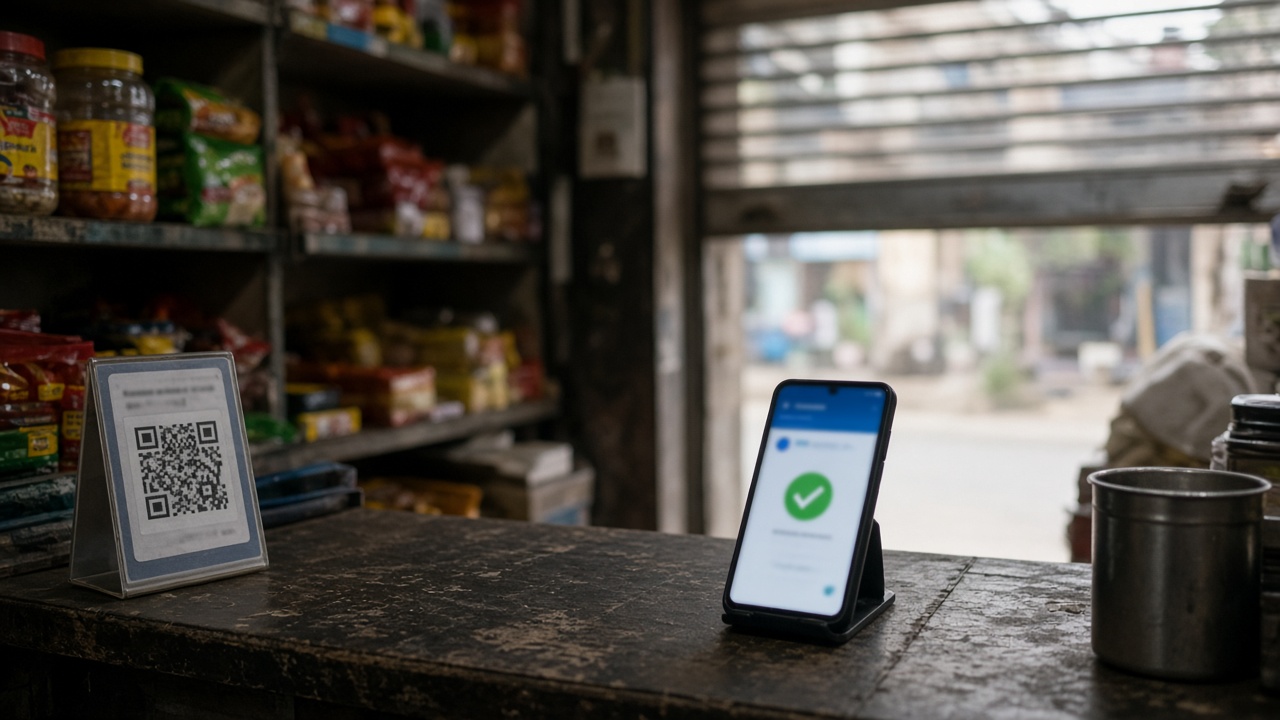
PhonePe Pvt. Ltd. filed amended draft red herring prospectus passages with Indian securities regulators this week that dissect unified payments interface merchant margin economics for prospective shareholders, separating interchange pass-through, payment-gateway fees, wallet float income, and hardware rental for QR soundboxes. The disclosure answers investor diligence that intensified after the National Payments Corporation of India capped certain merchant charges and as Paytm’s listing experience taught markets to scrutinize payments take rates line by line.
What the DRHP sections spell out
According to summaries legal advisers circulated to anchor investors, PhonePe breaks merchant services revenue into UPI acceptance where interchange is largely passed to issuers, value-added services such as invoicing and loyalty, and subscription-style soundbox rentals merchants pay monthly regardless of transaction count. The filing quantifies how much gross merchandise value flows through PhonePe’s switch versus third-party apps, and what percentage of merchants accept only UPI versus also using PhonePe’s wallet balance settlement.
Management attributed year-on-year margin compression on bare UPI acceptance to regulatory guidance encouraging zero merchant discount rate on person-to-merchant transactions, while arguing blended margins rise when merchants adopt credit-on-UPI and business accounts that carry explicit fees disclosed in the DRHP footnotes.
Why investors pressed for detail
Payments listings in India trade on user growth and take-rate sustainability. PhonePe competes with Google Pay, Paytm, and Cred for scan-and-pay dominance; NPCI publishes aggregate UPI statistics but not per-app merchant pricing. Fund managers told InfoHandle that without DRHP-level splits they could not model sensitivity if NPCI further narrows interchange or if the Reserve Bank of India tightens wallet know-your-customer rules affecting float yields.
SEBI’s ICDR norms require consistent accounting policies; PhonePe’s amendments follow comment letters from the regulator asking for clearer segmentation between payments turnover and revenue—a distinction sometimes blurred in marketing slides citing billions in annualized payment value.
Merchant-side implications
Kirana associations in Mumbai and Bengaluru said they care less about IPO tables than about soundbox rental persistence; PhonePe’s filing notes churn rates when merchants return devices after promotional free periods end. Competitors offer subsidized hardware; PhonePe disclosed depreciation schedules and vendor contracts with assembly partners in NCR.
Interchange pass-through language matters for large ecommerce merchants negotiating custom pricing; the DRHP states enterprise contracts cannot undercut NPCI-published frameworks—a compliance point general counsels watch after past enforcement letters to aggregators.
Regulatory overhang
NPCI’s board reviews merchant fees periodically; any change would flow through PhonePe’s risk factors section amended in this filing. RBI’s discussion paper on wallet interoperability could shift float economics if balances move freely to banks; PhonePe quantified wallet balances as a percentage of payment volume and interest income sensitivity.
Data localization and lending cross-sell appear in separate DRHP chapters; this amendment stays focused on merchant margins so analysts updating financial models do not conflate insurance distribution income with UPI acceptance.
Listing timeline context
PhonePe shifted domicile to India and consolidated shareholder structures ahead of a Mumbai main-board listing targeted for 2026. Anchor investors await final SEBI observations; amended merchant margin text reduces one source of comment-letter delay, though macro IPO windows and profitability narratives still matter.
Competitor Paytm’s post-listing volatility looms; PhonePe’s advisers emphasized conservative recognition of incentives paid to merchants—a contrast some fund managers called credibility-building.
What founders and merchants watch
CEO Sameer Nigam’s letters to merchants promised no sudden UPI fee reversals tied to the IPO; the DRHP risk section nonetheless reserves rights to change pricing within regulatory bounds. For public markets, the core question is whether PhonePe can keep growing soundbox and software attach on a rail NPCI designed as a low-margin utility—disclosures investors now have in black and white instead of whispered burn-rate math.
Analyst modelling notes
Equity researchers updating sum-of-the-parts spreadsheets said the amended tables finally separate payment-gateway pass-through from PhonePe’s own net revenue per merchant segment—large format, ecommerce, and long-tail kirana. That split affects how they stress-test scenarios if NPCI introduces tiered interchange caps on high-ticket categories.
Merchant acquisition cost payback periods for soundboxes appear with cohort curves previously absent from teaser decks; one Mumbai fund manager called that transparency table the most useful page in the refile for judging whether hardware subsidies are marketing or structural margin investment.