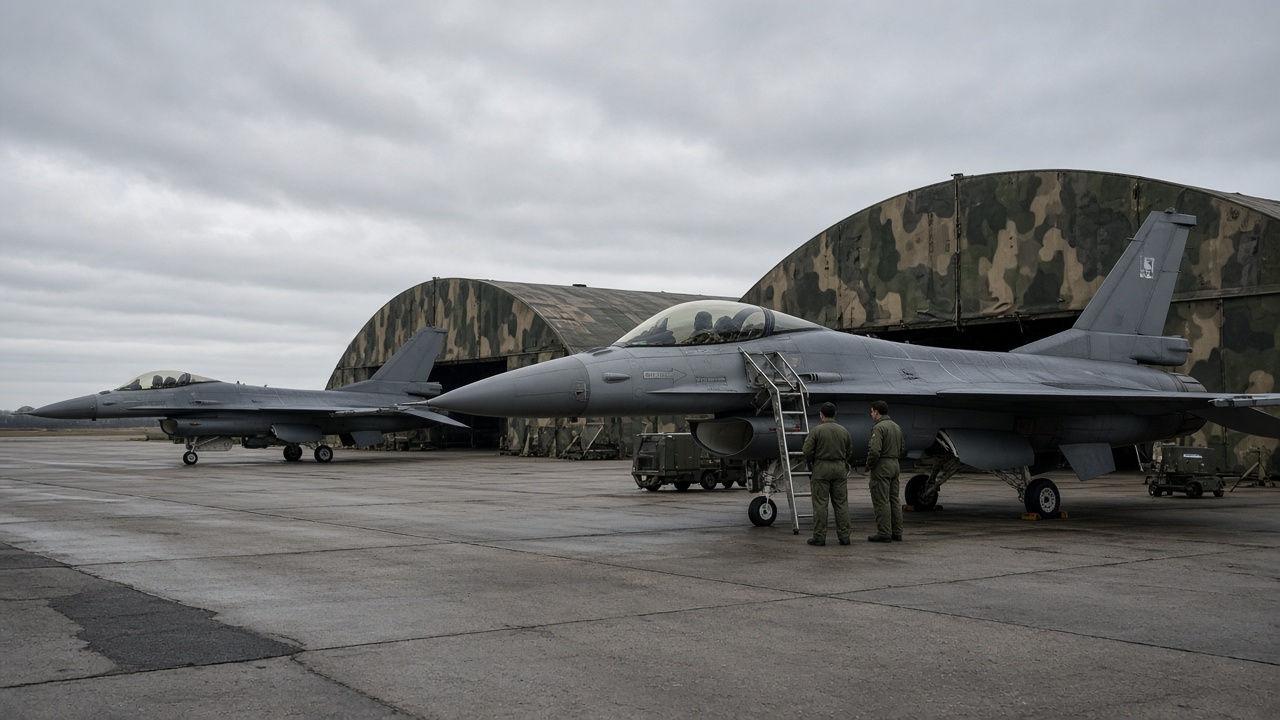
Poland scrambled fighter jets and placed ground-based air defenses on standby Wednesday after a Russian Mi-8 military helicopter briefly crossed from Kaliningrad into NATO airspace north of Braniewo, the latest in a string of incursions Warsaw ties to Moscow’s habit of probing allied readiness along the Ukraine war’s western flank.
What Warsaw reported
The Operational Command of Poland’s Armed Forces said the helicopter entered Polish airspace at 11:08 a.m. local time, penetrating to a depth of about 300 meters and remaining inside for 42 seconds before returning toward Russia’s exclave. Radar crews tracked the flight throughout, and the command posted a video still on social media showing the aircraft’s path along the Warmia-Masuria border.
“The nature of the incident indicates that Russia is once again testing the readiness of our air defense,” the command said in a statement echoed by Defence Minister Władysław Kosiniak-Kamysz, who told reporters Poland would keep interceptors aloft whenever similar tracks appear. Moscow did not immediately comment.
Pattern, not an isolated glitch
Kyiv Post noted the breach follows earlier Russian aircraft and drone violations of Polish airspace since the 2022 invasion of Ukraine, including a Mi-8 incursion over Baltic territorial waters in April 2025 that Warsaw likewise described as a readiness test. The most serious episode came in September 2025, when Poland said 19 Russian drones crossed the border during a large-scale strike package aimed at western Ukraine, triggering NATO Article 4 consultations.
Braniewo sits on the narrow land corridor between Kaliningrad and Belarus, making it a predictable vector for helicopters transiting training routes or intelligence collection runs. NATO planners have repeatedly warned that short, shallow penetrations can be used to map reaction times without risking a shoot-down decision on the first pass.
Alliance optics during UN week
The incursion landed on the same day Ukrainian President Volodymyr Zelenskyy pressed allies in New York for more air-defense missiles and as Baltic ministers met on the sidelines of the General Assembly to coordinate ammunition shipments. Poland’s quick public readout—complete with timestamps and depth figures—signals Warsaw wants the episode logged in allied channels before Russian diplomats frame it as a navigation error.
BBC reporting from Warsaw emphasized that Polish air-defense units remain on continuous observation, a posture that burns sortie hours but reassures frontline states watching whether NATO’s eastern flank can absorb simultaneous probes from Kaliningrad, Belarus, and the Black Sea.
What commanders watch next
For the security desk, the actionable fact is procedural: another Russian rotary-wing asset tested Polish intercept timelines without triggering weapons release. The policy question is whether repeated 40-second incursions eventually force NATO to publish aggregated statistics on border violations the way Baltic states now do for undersea cable sabotage scares.
Until Moscow offers coordinates or flight plans, Warsaw’s playbook is unchanged—scramble, document, brief allies—and Wednesday’s Mi-8 run added one more line to that ledger without yet changing rules of engagement.