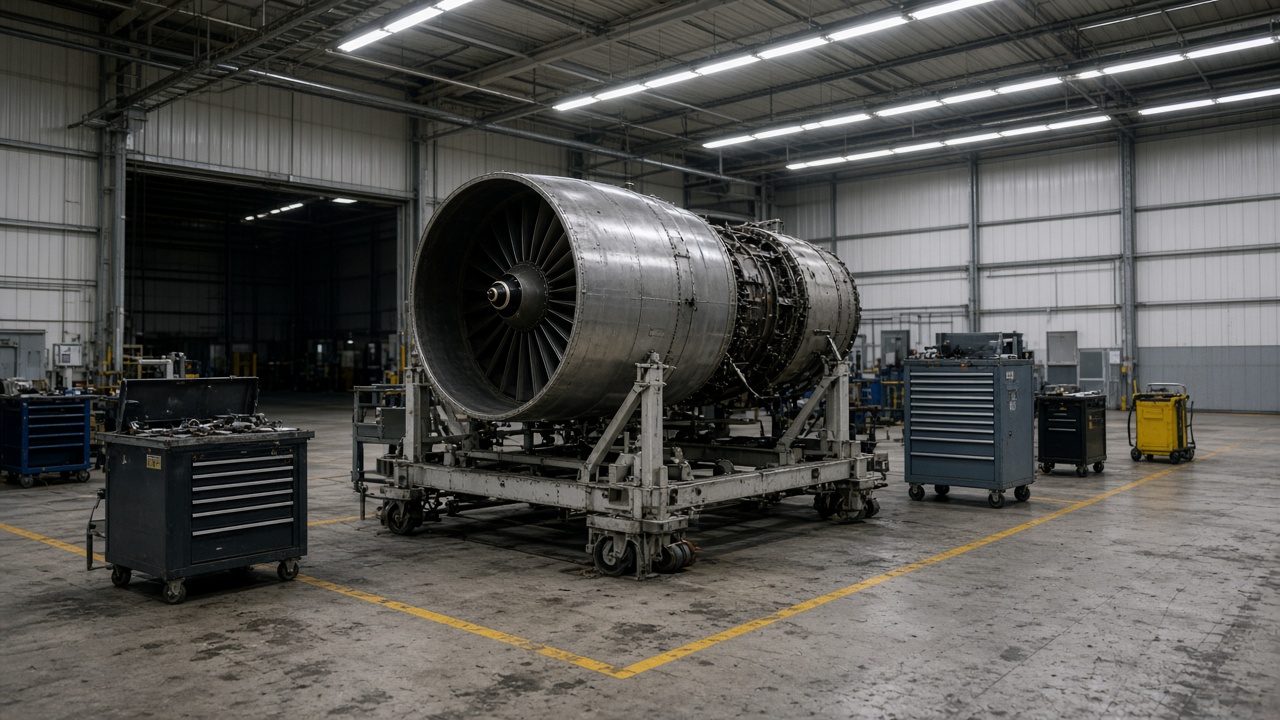
Rolls-Royce lifted its civil aerospace shop-visit guidance on Tuesday, telling investors it now expects between 1,520 and 1,580 large-engine overhauls this year after long-haul engine flying hours climbed faster than the board assumed in February. The revision matters because maintenance revenue, not new engine deliveries, is the margin engine inside chief executive Tufan Erginbilgic’s turnaround: every extra Trent induction at Derby or Singapore converts contracted long-term service agreement balances into cash the City can model with unusual precision.
The shares rose more than 3% in early London trade, extending a run tied to widebody travel demand across the Atlantic and into the Gulf. Analysts at Barclays said the guidance nudge was conservative relative to first-half throughput, when Civil Aerospace logged 712 long-term agreement visits alone, but the company is still rationing induction slots while it brings additional capacity online in Dahlewitz and at the Singapore Aero Engine Services joint venture.
What the filing actually changes
Management framed the update as a consequence of engine flying hours running at roughly 118% of 2019 levels in the third quarter, above the 115%–120% band it had promised for the full year. That matters for shop visits because hours drive wear: airlines that kept ageing Trent 1000 and Trent XWB fleets aloft through the summer peak are now booking heavy checks earlier than maintenance planners expected in spring. Rolls-Royce said contractual margin on aftermarket work held steady, though supply-chain inflation on specialist parts continues to bite.
The board did not alter free-cash-flow guidance, stressing that net long-term service agreement balance growth should remain near the £600 million recorded in 2025. Finance director Panos Kakoullis told reporters on a brief call that working capital would absorb some of the volume upside, particularly where airlines defer cash settlement until engines return to wing. Institutional holders who have owned the stock since the 2020 rights issue tend to watch that LTSA line more closely than headline profit.
Capacity on the shop floor
On the ground in Derby, the company has been hiring skilled technicians and extending shift patterns to push more Trent modules through the same footprint. Union officials at Unite said overtime rosters have been fuller since June, though Rolls-Royce has avoided the public dispute that marked earlier restructuring rounds. The Beijing Aero Engine Services venture, opened with Air China in late 2025, is still ramping and will not materially change 2026 totals, but it gives Erginbilgic a geographic hedge when Asian carriers accelerate retirements of older Airbus A330 fleets.
Competitors are not standing still. Lufthansa Technik and ST Engineering have both marketed surplus widebody hangar space to British carriers that faced long waits last winter. Rolls-Royce executives argued Tuesday that their own network expansion—more than 50% additional large-engine visits over three years—has shortened average time-on-wing for durability upgrades, which in turn reduces aircraft-on-ground events that enrage airline operations teams.
Investor read-through
For FTSE trackers, the story is partly index mechanics and partly industrial recovery. Rolls-Royce has become one of the heaviest positive contributors to the blue-chip benchmark when guidance moves up, because passive funds must buy the float that remains after the government disposed of its pandemic-era stake. Short sellers who bet against aftermarket margins in 2024 have largely covered, leaving the debate centred on whether 2027 shop visits plateau as durability kits lengthen intervals.
The company’s next formal checkpoint is the capital markets day in November, when investors expect detail on Istanbul maintenance joint venture timing with Turkish Technic. Until then, the shop-visit range is the clearest quarterly tell for whether long-haul demand is merely normalising or genuinely re-accelerating. If flying hours cool after the October half-term lull, today’s upper bound could look ambitious; if premium cabins stay full through Christmas, analysts say the number may move again without waiting for February results.
Credit analysts noted that higher aftermarket throughput also supports Rolls-Royce’s leverage reduction narrative, because cash conversion on LTSA billings funds deleveraging without fresh equity. That linkage is why a mid-year guidance tweak rarely stays a one-line footnote for long.