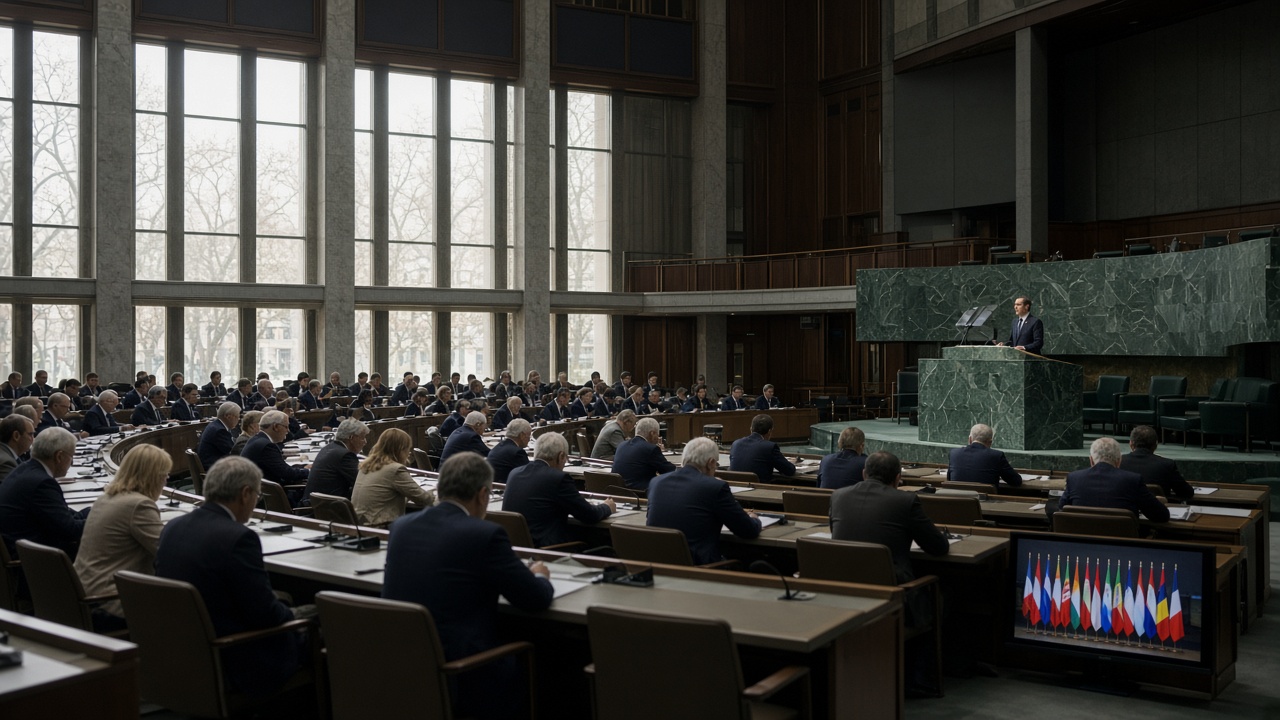
Syrian President Ahmed al-Sharaa used his first address to the United Nations General Assembly on Wednesday to declare that post-Assad Damascus is ready to re-engage diplomats worldwide, even as he accused Israel of carrying out hundreds of strikes inside Syria since December and demanded a return to the 1974 disengagement lines on the occupied Golan Heights.
A speech aimed at two audiences
Middle East Eye reported that al-Sharaa framed Syria’s transition as a chance to rebuild institutions shattered by civil war, telling delegates that his government seeks normalized trade, refugee returns, and technical assistance rather than perpetual sanctions. The tone differed sharply from the Iran-focused speeches that dominated Tuesday’s agenda, placing Israel’s military campaign—not Tehran’s nuclear file—at the center of Syria’s UN narrative.
Al-Sharaa said Israeli operations had hit airports, energy infrastructure, and civilian neighborhoods, describing the pattern as incompatible with UN resolutions that still recognize Syrian sovereignty over the Golan. He did not provide a fresh casualty tally in the chamber, but cited cumulative strike counts that Syrian monitors have circulated since the fall of Bashar al-Assad’s government.
Golan disengagement back on the table
The 1974 agreement after the Yom Kippur War created a UN-patrolled buffer zone between Israeli and Syrian forces on the Golan, a arrangement that frayed as Iran-backed militias used Syrian territory during the civil war and as Israel expanded settlements. Al-Sharaa’s reference to disengagement lines signals Damascus wants the UN to treat Golan status as a live file again, not a frozen relic of the 20th century.
Israeli officials have argued that strikes target weapons pipelines to Hezbollah and leftover Iranian assets, a justification Western capitals have often accepted quietly even when condemning individual attacks. A Syrian president speaking in English at the UN rostrum forces those governments to respond in diplomatic language rather than battlefield communiqués alone.
Regional context at UNGA
The address landed on a day when Iranian President Masoud Pezeshkian delivered his own defiant speech and Arab leaders reiterated support for Palestinian statehood. Al-Sharaa’s focus on Israeli strikes distinguished Syria’s file from Gaza headlines while still aligning with broader Muslim-majority criticism of militarism in the Levant.
European diplomats said privately they are weighing whether to invite Syrian technocrats to reconstruction conferences conditioned on minority protections and chemical-weapons accounting—steps al-Sharaa alluded to without offering a detailed timeline. Any lifting of sanctions would require U.S. buy-in, and Washington’s Syria policy remains entangled with Israel’s security calculus.
What changes on the ground
For the politics desk, the new fact is rhetorical but consequential: Syria’s internationally recognized president used the UN’s main stage to tie normalization to Golan diplomacy and to put Israeli strike volumes into the General Assembly record. That does not by itself halt sorties over Damascus suburbs, but it gives Arab League mediators a Syrian-authored text to reference when pressing for de-escalation corridors.
Until inspectors return to the Golan buffer in meaningful numbers, the speech is a marker—yet markers matter when a state rebuilding from civil war needs legal hooks to argue its case against continued air campaigns.