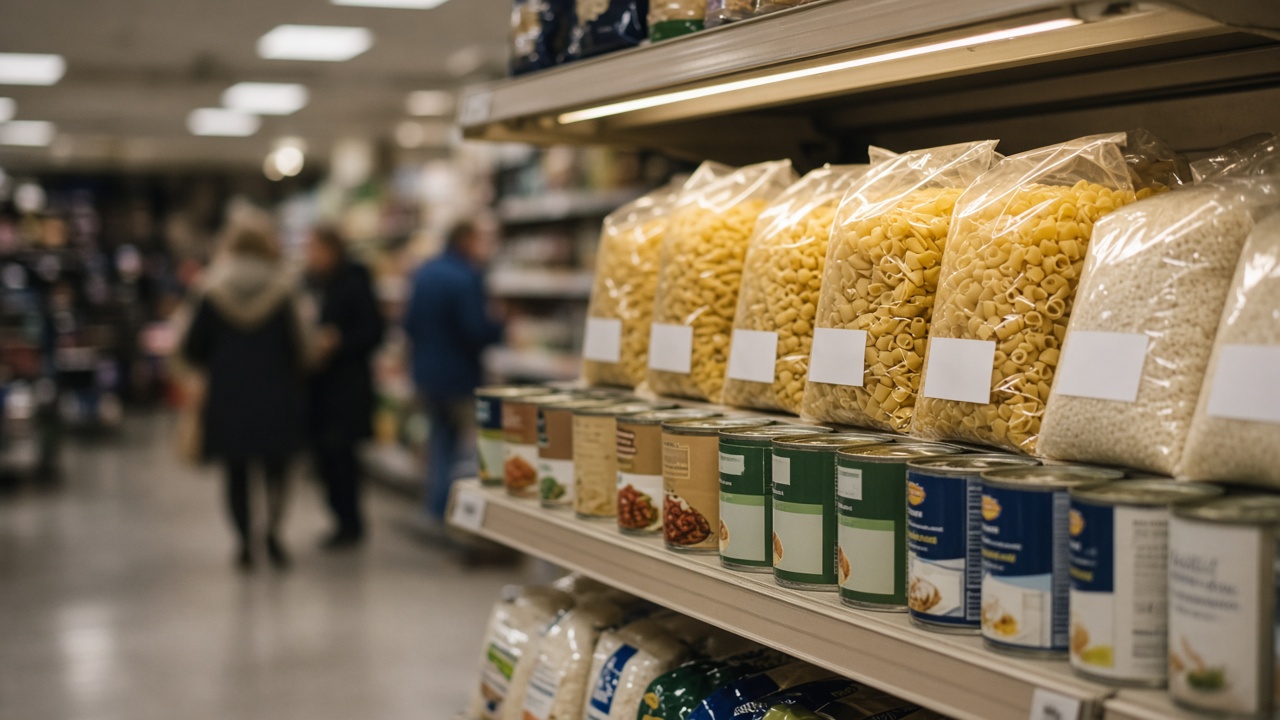
Tesco told store and distribution teams on Monday that it would hold more than 1,150 own-label staple lines at current shelf prices through 31 October, extending a pricing tactic it has used before each major inflation print since the cost-of-living surge. The move lands a week before the Office for National Statistics publishes September grocery figures that traders use to gauge whether food disinflation has stalled, and it signals that Britain’s largest grocer is willing to absorb margin on basics rather than surrender Kantar switching data to Aldi or Lidl.
Chief executive Ken Murphy did not appear on shop floors himself; instead, regional managers briefed night-shift pickers at distribution centres in Daventry and Livingston that promotional mechanics would be simplified so price labels would not change on the affected SKUs. Workers said the message was blunt: volumes on value tiers are up double digits year on year, and the business needs loyalty through winter when energy bills reset for millions on standard variable tariffs.
What staff heard that investors skimmed
In investor materials, Tesco describes the package as an extension of its Low Everyday Prices architecture, distinct from the Aldi Price Match basket that covers roughly 650 branded comparables. Own-label lines carry higher retail margins when commodity costs fall, which means a freeze is a deliberate choice to forgo upside Tesco could have banked after wholesale sugar and dairy softened this summer. Union reps at Usdaw said they pressed managers on whether temporary colleagues hired for Christmas peak would inherit the same briefing; Tesco confirmed agency staff would follow identical pick paths to avoid mispriced cartons reaching stores.
Competitors reacted within hours. Sainsbury’s said its Aldi and Lidl match sets already cover more than 2,000 lines, without matching Tesco’s calendar end-date. Asda pointed to its Just Essentials range growth. None immediately copied the October lock, suggesting Tesco is testing whether a dated commitment moves the needle in marginal constituencies where Clubcard penetration still lags.
Inflation data as calendar risk
Economists expect headline CPI to tick higher on services, but food has been the component households feel first. Tesco’s finance team modelled scenarios in which a surprise rebound in fresh produce—after poor harvest weather in parts of Europe—would have forced mid-month price rises absent a freeze. By fixing own-label staples, the grocer pushes volatility into branded suppliers’ negotiations instead of the weekly shop basket its core families track.
For suppliers, the freeze is tighter than it sounds. Tesco can still delist or resize packs; what it promised internally is no list-price increase on defined SKUs. Several chilled suppliers told trade press they were asked to hold case costs through October in exchange for volume commitments on promotional end-caps. That is leverage the supermarket chain has because it controls slotting in more than 3,400 UK stores.
Households and the shop floor
Shoppers in Stoke-on-Trent and Newport who spoke with local reporters said they noticed pasta and tea prices steady for three weeks running, a rarity after years of creeping shelf edge changes. Dietitians caution that locking ultra-processed staples does not solve fresh food affordability, but Tesco’s narrative is about predictable bills, not nutrition campaigns.
Workers on the grocery desk said overtime was offered to rebuild safety stock after a software glitch slowed night routing last month. The freeze adds pick accuracy pressure: a mislabelled SKU becomes a political story if a parliamentary aide photographs a higher till price. Tesco’s internal comms urged stores to escalate scanning errors within two hours.
Come November, either Tesco lifts the lock and risks headlines, or it quietly rolls SKUs into Christmas Clubcard Prices. Either way, October’s calendar was the point: own-label is the battlefield where Tesco believes it can keep households inside the tent while inflation data decides whether the Bank of England cuts again. For pickers on zero-hour contracts, the next four weeks mean steadier rosters—and zero tolerance for pricing mistakes on the frozen lines.