Fighting has reignited in northern Ethiopia after Tigray’s leadership ordered regional forces into what it called a defensive war against Prime Minister Abiy Ahmed’s government, shattering a four-year-old peace deal that ended the brutal 2020–2022 civil war.
What Tigray’s government announced
CNN reported that the Tigray People’s Liberation Front–led regional administration said Wednesday that clashes had intensified along multiple fronts and that Tigray forces were instructed to counter attacks by federal troops and allied militias. The statement accused Abiy’s Prosperity Party government of conducting an “invasion” through military and political pressure after months of deteriorating relations.
The announcement followed Sunday’s news that the TPLF had formed a coalition with six other armed groups from across Ethiopia, united in opposition to Abiy’s administration. Federal officials had not issued a detailed public response to the defensive-war declaration by mid-morning Eastern time, but Ethiopian state media had earlier portrayed security operations in the north as enforcement against “anti-peace elements.”
Where the fighting is spreading
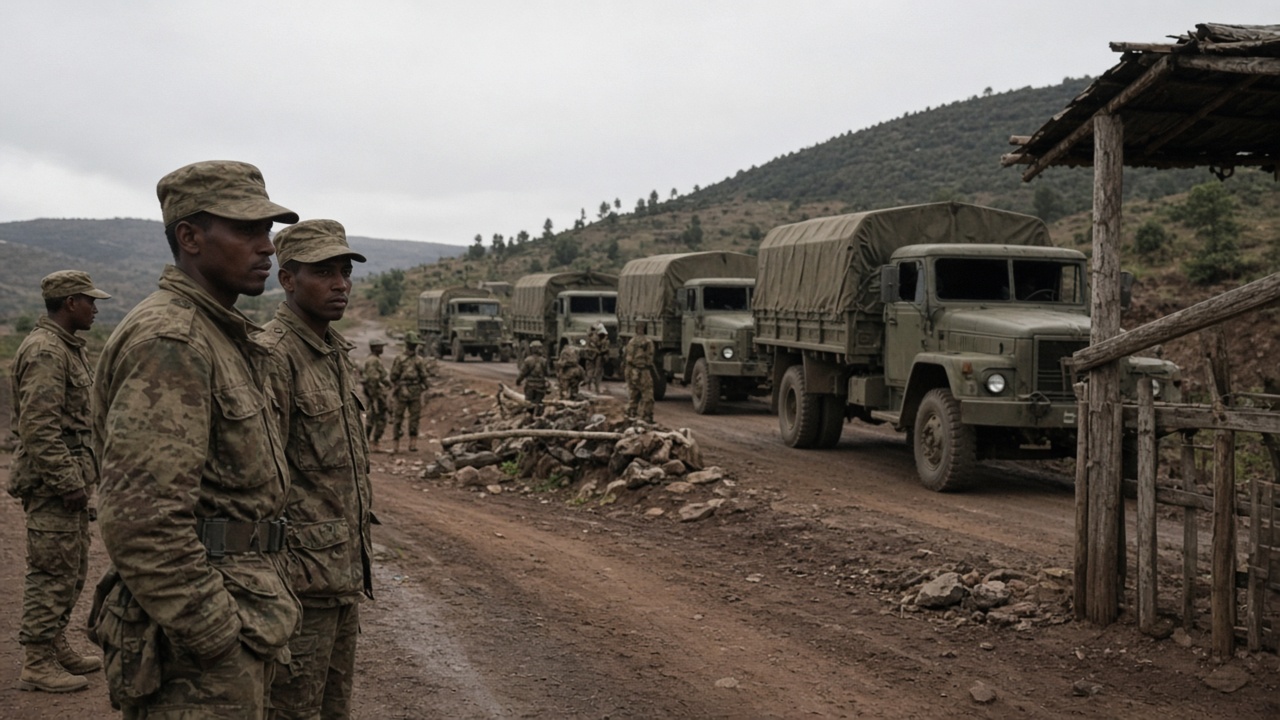
Witness accounts and regional media reports described gunfire and troop movements not only inside Tigray but in adjacent federal states, raising fears that a localized security flare could again draw in Eritrea, Amhara militias and other actors that fought in the last war. Aid agencies that had only partially restored supply corridors warned that renewed combat would complicate food deliveries ahead of the harvest season.
Unlike the 2020–2022 conflict, which began with a surprise federal offensive on Mekelle, this week’s violence broke out after a prolonged political standoff over disarmament timelines, contested territory and the TPLF’s decision to reconstitute its political wing despite federal objections.
Why diplomats are alarmed
The African Union-brokered Pretoria agreement in November 2022 halted large-scale combat that had killed hundreds of thousands of people by most independent estimates and left Tigray’s infrastructure in ruins. Western donors had conditioned budget support on both sides honoring demobilization schedules; renewed war would likely trigger immediate reviews of World Bank and IMF programs.
United Nations officials in New York, already consumed by wars in Ukraine and the Middle East, have not yet convened an emergency session on Ethiopia, but humanitarian officers said any closure of the Semera–Mekelle route would strand medical shipments within days.
What happens next
For the security desk, the measurable shift is political and military at once: a signed peace framework openly abandoned, with Tigray forces authorized to fight back and a federal government that had marketed stability as its core achievement. Whether this remains a border skirmish or escalates into nationwide conflict depends on Eritrea’s posture, Amhara militia mobilization and whether outside mediators can reopen the Pretoria implementation track before positions harden.