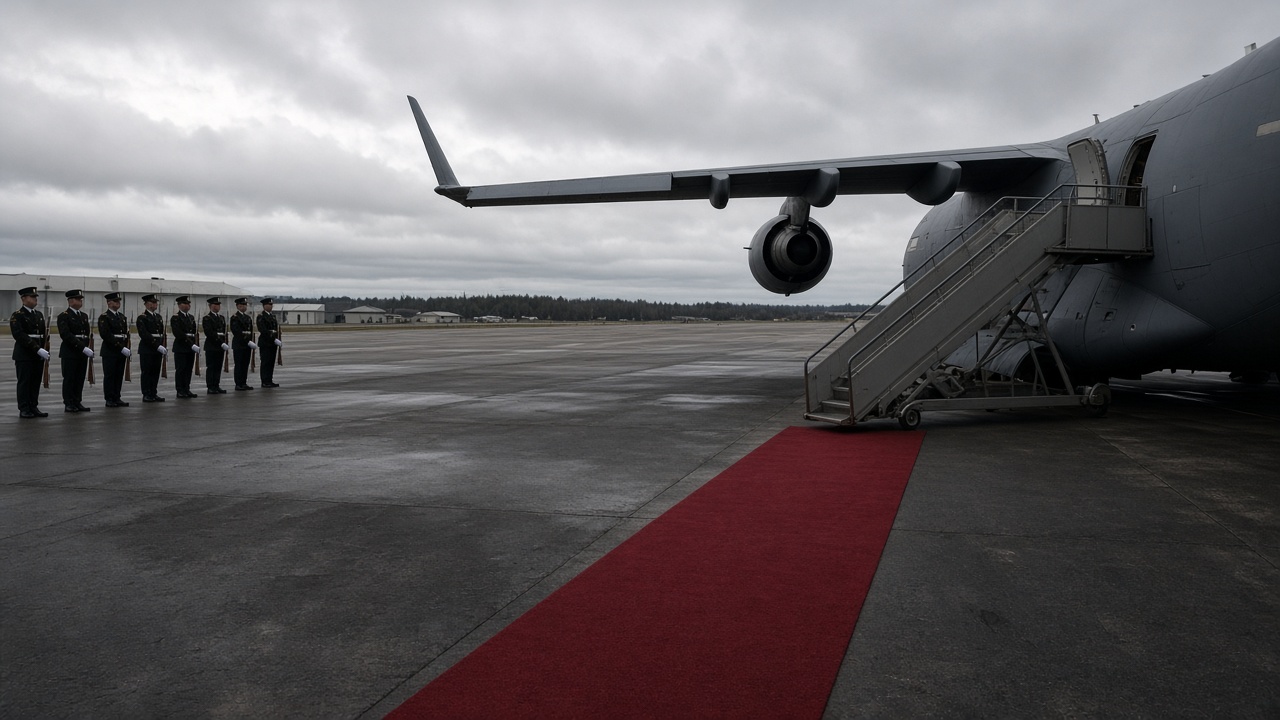
President Donald Trump will greet Chinese President Xi Jinping on the tarmac at Joint Base Andrews on Wednesday afternoon, a ceremonial choice U.S. officials rarely extend even to treaty allies and one that opens a three-day Washington visit aimed at trade, artificial intelligence rules and the fate of billions in pending Taiwan arms notifications.
What the schedule shows
White House guidance released to the press pool listed a 4:10 p.m. Eastern arrival ceremony at the Maryland base, with Trump participating alongside Xi and Peng Liyuan. The Associated Press reported Trump chose Andrews rather than the South Lawn because he wants to match the red-carpet pageantry Xi staged—through a stand-in vice president—when Trump visited Beijing in May.
Formal White House welcoming honors, bilateral meetings and a state dinner are slated for Thursday, the first such visit by a Chinese leader to the executive mansion in more than a decade. First Lady Melania Trump’s office said the East Room dinner would reciprocate the grandeur Trump received in China, including military bands and youth flag-wavers along the Air Force One motorcade route.
Stakes on the table
BBC reporting ahead of the visit noted the October 2025 tariff truce expires in November, putting rare-earth export controls and semiconductor licensing back on the clock if negotiators cannot extend or replace the deal. Trump has held off signing a multibillion-dollar congressional arms package for Taiwan, telling reporters he views the notifications as leverage with Beijing; Taipei officials said this week they would keep pressing for implementation on schedule regardless of summit optics.
Council on Foreign Relations fellow David Sacks told the BBC that greeting Xi at Andrews plus a planned flyover is “really unprecedented” for a strategic competitor, signaling Trump’s desire for a televised win on trade even as security agencies warn about Chinese cyber and shipping practices.
Congress and allies watch the optics
Capitol Hill aides said lawmakers from both parties asked the administration for a readout on whether any Taiwan arms timelines will be announced alongside trade concessions. European diplomats in Washington noted the visit coincides with UN General Assembly week, when Gulf and Ukrainian leaders are also competing for Oval Office time.
China’s embassy has framed the trip as stabilizing “the world’s most important bilateral relationship,” while U.S. industry groups urged negotiators to clarify AI chip export rules that have stalled data-centre investments in both countries.
What happens after the tarmac
Even if Wednesday’s arrival is heavy on ceremony, Thursday’s meetings will determine whether the visit produces extensions on tariffs, written assurances on rare earths, or merely a joint statement on fentanyl enforcement and student visas—packages previous summits have used to defer harder security fights.
For the politics desk, the new fact is procedural but symbolic: Trump on the Andrews tarmac, not the diplomatic entrance, for a leader Washington officially labels a competitor. The handshake photos will air before any communique, and that alone will set the tone for how markets price November’s tariff cliff.