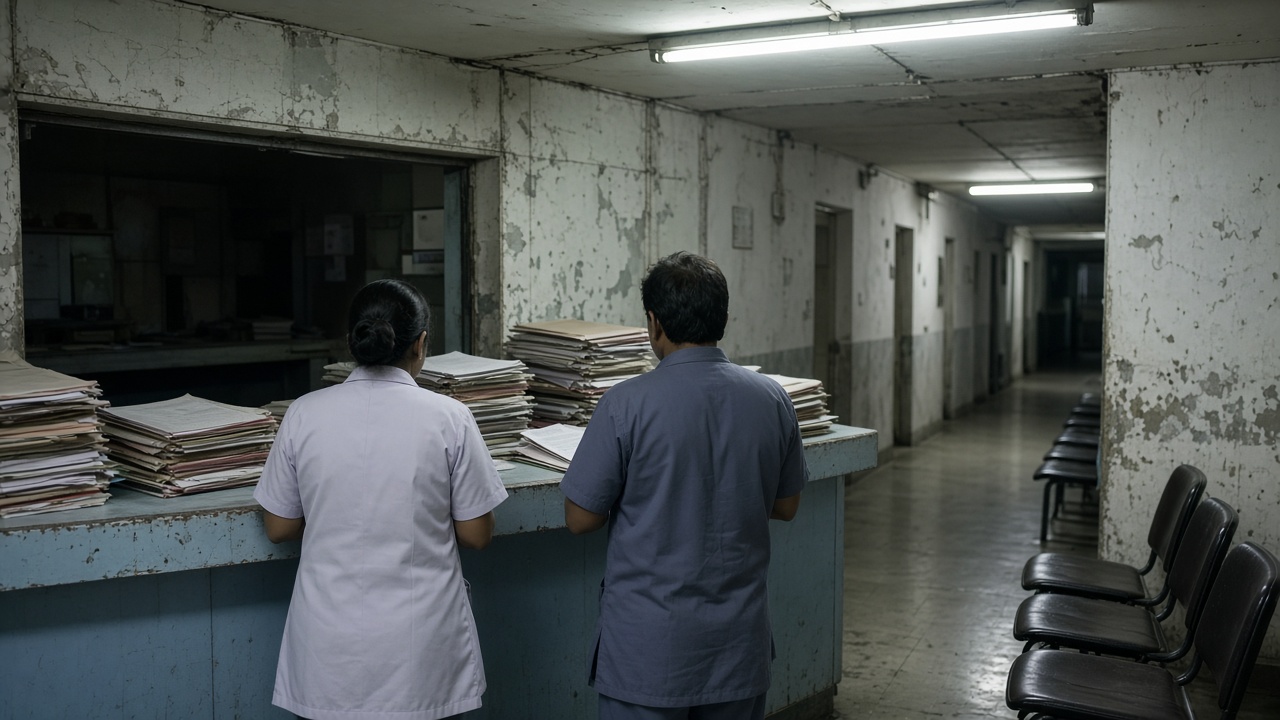
Ayushman Bharat Pradhan Mantri Jan Arogya Yojana completed eight years on Tuesday, marking the 2018 launch of a cashless hospitalisation scheme that the government says has funded 13.25 crore admissions worth ₹2.03 lakh crore through a network of more than 38,000 empanelled public and private hospitals—scale figures Prime Minister Narendra Modi and Health Minister J. P. Nadda highlighted in social posts even as researchers caution that outpatient costs still burden many families.
What the numbers show
According to a Press Information Bureau fact sheet and figures cited by The Hindu, about 48.51 crore Ayushman cards had been issued as of September 21, 2026, covering roughly one-third of India’s population under eligibility rules tied to socio-economic caste census categories and state expansion decisions. Admissions crossed 13.25 crore by August 31, with authorised treatment value at ₹2.03 lakh crore.
Nadda wrote on X that more than 60 crore people had access to ₹5 lakh annual cover when state extensions and convergence schemes are counted—a broader denominator than card issuance alone. The distinction matters for epidemiologists: cards measure enrollment logistics; access estimates include family floater assumptions.
How hospitals experience the scheme
Empanelled facilities process pre-authorisations through the National Health Authority portal, with package rates for procedures from cardiac stents to caesarean sections. Private hospitals in tier-2 cities have leaned on PM-JAY volumes when insurance mix shifted after COVID; public district hospitals use the scheme to recover operating costs for high-end surgeries previously referred outward.
CEO-level briefings this week emphasised claims analytics and biometric verification pilots, responding to periodic CAG audits that flagged duplicate billing in scattered districts. NHA officials said machine-learning flags now pause suspicious batches before payment, though peer-reviewed evaluations of those tools remain limited.
Evidence beyond press releases
Independent studies using national household surveys find PM-JAY associated with higher inpatient utilisation and lower catastrophic health expenditure at certain thresholds, while outpatient spending and transport costs remain significant drivers of distress. ICMR-linked researchers note that scheme success should be measured in reduced untreated disease, not only claim counts.
Union Budget 2026 raised PM-JAY allocations nearly 29 percent year on year in rupee terms; states still negotiate co-contribution rules when they merge legacy state insurance schemes into the Ayushman umbrella.
What patients should watch
Card issuance does not guarantee a bed on the day of need—empanelment gaps persist in tribal blocks and for niche oncology protocols. Helpline 14555 routes grievances, but rural users report hold times during outbreak seasons.
Eight years in, the policy question is no longer whether India can spin up a giant insurer—it clearly has—but whether outpatient, medicines, and diagnostics join the same financial protection pillar. Until then, 13 crore admissions are a milestone and a mirror: huge inpatient relief, unfinished universal coverage homework.