Ethiopia’s national army said Thursday that it had repelled attacks by Tigray People’s Liberation Front fighters and allied militias in northern Amhara, describing the first sustained fighting since a 2022 peace deal as a defensive success that inflicted heavy casualties and yielded seized weapons. The statement landed hours after Tigray authorities took control of three regional airports from federal police and unconfirmed reports spread of artillery fire near the Afar town of Yallo, raising fears that the country’s deadliest civil war could resume across multiple fronts.
What the army disclosed
The BBC reported that hostilities began in an Amhara area bordering Tigray and that soldiers had pushed back the assault while collecting arms from retreating fighters. Federal officials had been largely silent until Thursday’s release, leaving diplomats and aid agencies to rely on fragmentary reports from humanitarian contacts who described heavy shelling as Tigrayan units attempted to move on Yallo, close to the Afar–Tigray boundary.
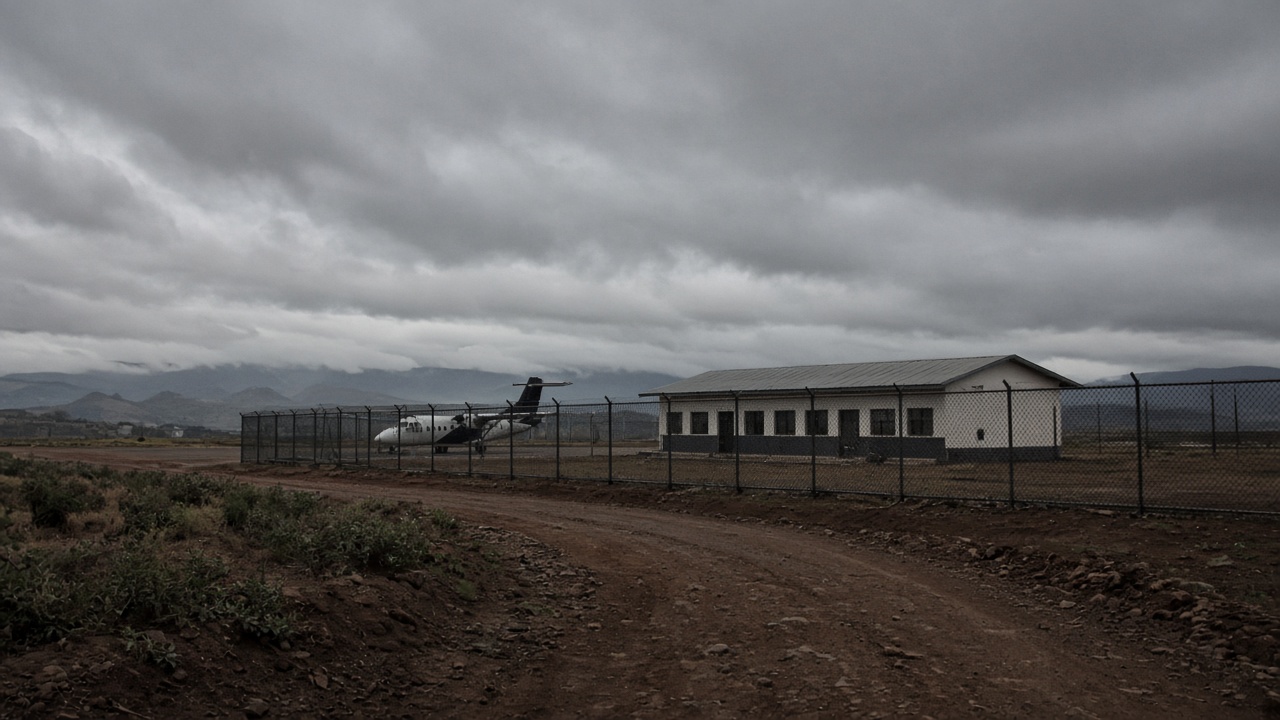
The escalation follows months of tension between Prime Minister Abiy Ahmed’s government and Tigray’s leadership. On Sunday the TPLF announced a coalition with six other armed groups seeking to oust Abiy’s administration, a pact that linked former battlefield rivals who fought the 2020–2022 war. Wednesday’s airport seizures in Tigray and Mekelle residents’ accounts of local forces replacing national police at the city airfield forced Ethiopian Airlines to cancel all flights into the region, stranding passengers and complicating medical evacuations.
Tigray’s side of the line
Tigray leaders have framed recent moves as responses to federal pressure and drone activity they say preceded this week’s ground clashes. Independent verification of casualty counts remains limited because communication blackouts and security restrictions slow reporting from Afar and Amhara as well as Tigray. The United Nations and African Union envoys who shepherded the 2022 cessation have not yet published a detailed mediation schedule, but embassies in Addis Ababa warned citizens to avoid travel north of the capital.
Humanitarian and aviation fallout
Humanitarian workers said clinics in Tigray were already stretching insulin and trauma supplies before the latest clashes. Cancelled Ethiopian Airlines rotations mean UN agencies must request military or charter lifts if they need to move staff or supplies, a step that requires government clearance and can delay responses by days. Farmers in Amhara who survived the prior war said renewed artillery audible from Yallo reminded them of front lines that had barely been demined.
Abiy’s office has not matched the army communiqué with a prime-time address; instead, state media emphasized development projects in southern regions, a messaging choice that opposition commentators read as an attempt to project normalcy while security officials manage the north. For the security desk, the measurable shifts are military: a published army claim of repelled attacks, confirmed airport transfers, and a national carrier grounding that makes the conflict tangible to travelers even when front-line imagery is scarce.
What diplomats are watching
Western and African capitals are tracking whether the TPLF’s multi-ethnic alliance coordinates offensives beyond Tigray or remains a political declaration. Eritrea’s posture remains opaque; its forces were deeply involved in the 2020–2022 campaign and any re-entry would alter military balances quickly. Sudan’s civil war already disrupts supply routes along Ethiopia’s western border, so a renewed northern conflict would squeeze food imports at a moment when global grain markets are sensitive to Black Sea shipping disruptions cited elsewhere this week.
Thursday’s army statement does not by itself prove which side initiated the latest Amhara clashes, but it confirms that federal troops are engaged and claiming battlefield gains. The next indicators will be verifiable ceasefire offers, forensic confirmation of who holds the airports, and whether Ethiopian Airlines resumes even limited cargo service to Mekelle. Until then, the breaking fact is simpler and grimmer: a four-year peace framework is under open military stress, and Addis Ababa is no longer describing the north as a frozen conflict.