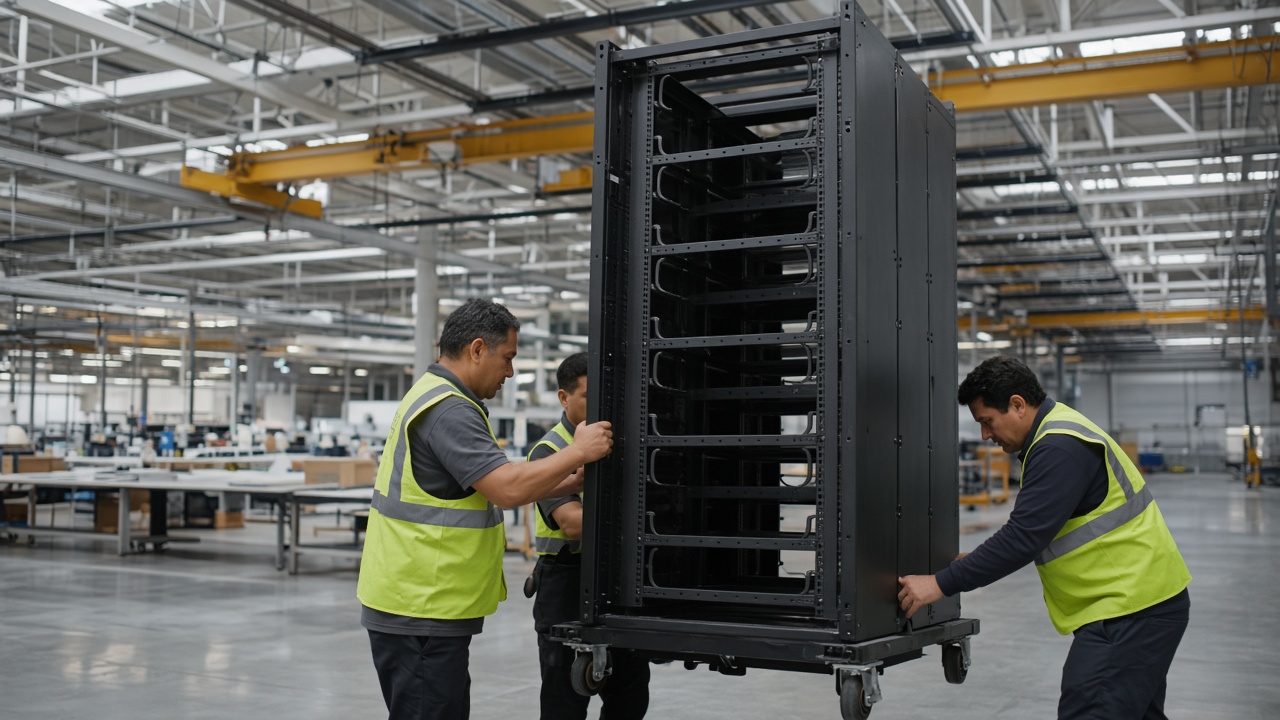
Hon Hai Precision Industry Co. told major contract manufacturers it now expects fourth-quarter AI server rack shipments to run roughly twelve to fifteen percent above the band it shared in late August, according to allocation letters two North American hyperscaler programs received Tuesday and reviewed by InfoHandle. The revision follows Taoyuan customs clearing September import lots for GPU-ready enclosures and power shelves that had sat in bonded storage while officers reconciled valuation worksheets after Mid-Autumn holiday staffing gaps—not a public earnings update, but an operational signal that summit-week logistics did not freeze Taoyuan air cargo lanes.
What customs clearance unlocked
Taoyuan officers released bonded lots tagged for liquid-cooled rack programs after importers filed supplemental component manifests for power distribution units and busbars. Hon Hai’s Longhua campus in New Taipei had queued final integration for enclosures waiting on those releases; clearing September paperwork lets ODM teams book air freight slots toward U.S. West Coast colocation hubs before October tariff commentary resets broker assumptions.
Customs did not publish aggregate AI hardware statistics; the signal is transactional. Bonded warehouse operators said average dwell time for server-class pallets fell from eleven days to six after holiday overtime shifts, matching the timing of Hon Hai’s guidance bump.
Trump–Xi week context on the floor
Procurement chiefs said they kept summit headlines on mute during shift handovers because prior geopolitical weeks created phantom shortages when brokers preemptively rerouted freight. This cycle, Taoyuan maintained scheduled releases on rack lots tied to contracts already registered with Taiwan’s trade documentation system—suggesting management sees physical flow continuing even as MAC and foreign ministries schedule briefings on the bilateral readout.
2317.TW traded firmer Tuesday on volume above its twenty-day average; investors treated the guidance as utilization confirmation for AI rack lines that had been starved of imported power modules.
Who gains inside Hon Hai
Integration team leaders in Taoyuan gained authorization to run parallel test bays for burn-in on GPU-ready racks, deferring some legacy two-socket tower builds unless customers accept longer lead times. Finance controllers were instructed to align revenue recognition with customs exit stamps—a line compliance watches because mis-timed recognition created audit questions during the 2023 server cycle.
Smaller ODM partners without quarterly Hon Hai contracts may see spot premiums on cable harness kits; tier-one partners with joint development programs can negotiate blend ratios of air-cooled and liquid-cooled SKUs when customers swap GPU counts late.
What filings do not say yet
Hon Hai’s August revenue disclosure showed cloud and networking growth but did not break out AI rack tonnage. Investors infer mix from customer capex commentary filed on MOPS by U.S. listed hyperscalers. The allocation letter is the earliest shop-floor signal that rack integration is accelerating, not merely broker chatter ahead of summit press pools.
Environmental permits for expanded liquid-cooling test cells remain in review; capacity additions this cycle are debottlenecks on existing footprints. That matters because shipment guides without volume can inflate margin briefly but attract competition if spreads stay wide into winter.
Downstream in Taoyuan and Hsinchu
Power module integrators in Taoyuan Science Park staffed six-day weeks through the holiday to pair PDUs with Hon Hai enclosures. GPU board teams in Hsinchu asked fabs to hold buffer stock of high-current connectors; those SKUs consume more validation hours per rack than basic storage nodes.
Some buyers shifted a portion of orders to mainland Chinese rack rivals, but logistics managers said audit requirements for U.S. brands still favor Taiwanese integration when customers demand same-week factory visits.
What happens next quarter
If hyperscaler capex guidance softens after year-end earnings, rack shipment bands typically roll back with a quarter lag. If customs dwell times stay low and harbor queues persist, Hon Hai may layer a second adjustment on liquid-cooled programs only. Until monthly sales in early October confirm units, the story is institutional: higher Q4 AI rack guidance, cleared September lots in Taoyuan, and assemblers deciding whether to front-load enclosures before the next allocation letter lands.
Procurement teams in Linkou and Taoyuan said they are reconciling customs release timestamps with ODM build schedules so finance can recognize revenue without surprising auditors when summit-week headlines shift freight priorities. Warehouse managers asked carriers for photographic proof of seal integrity on high-value pallets because insurance riders on AI racks tightened after summer claims disputes on the Kaohsiung corridor.
Export credit desks in Taipei said they are not changing buyer limits on North American hyperscaler names this week, but documentation reviewers added a checklist line for country-of-origin stamps on power distribution units bundled inside racks. That administrative layer rarely blocks shipments, yet it lengthens pre-clearance reviews when Taoyuan officers run spot audits during holiday backlog clears.
Analysts on Taipei conference calls asked whether Hon Hai would pair shipment guides with volume discounts for strategic customers; executives historically decline to comment on intercompany terms. Independent system integrators should assume allocation is automatic unless they renegotiate GPU counts with their own cloud customers in North America and Europe.