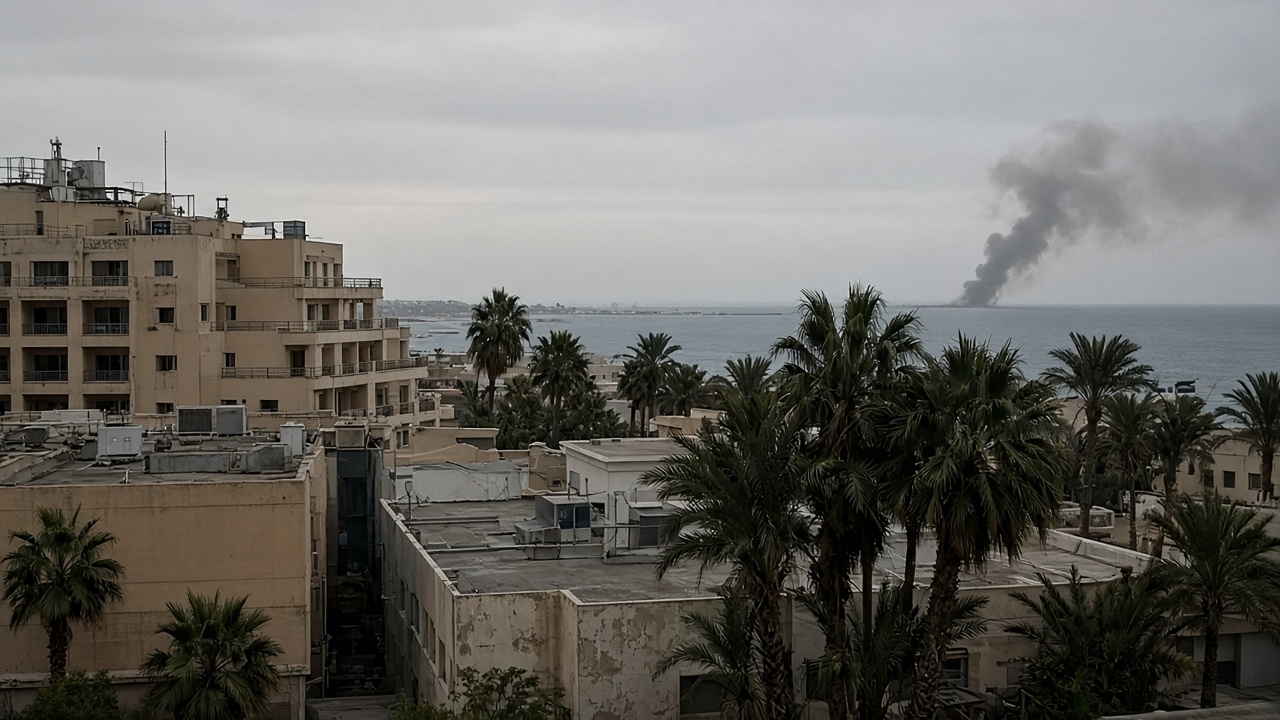
A Houthi drone attack wounded 22 people in Eilat on Wednesday, Israeli officials and wire services reported, marking a comparatively rare moment when a Yemen-launched unmanned aircraft reached Israel’s southern Red Sea coast despite interceptors that usually screen the corridor from the Arabian Peninsula.
What happened in Eilat
Police and emergency services said shrapnel and blast effects injured civilians and workers in the city that sits beside Jordan’s Aqaba and serves as a gateway for Red Sea tourism. Medical teams treated patients for wounds that ranged from light to moderate; authorities did not immediately publish a breakdown by nationality or occupation. The Israel Defense Forces said air-defense units tracked the inbound object and that an investigation into how fragments still reached built-up areas was underway.
Eilat has been targeted intermittently since the Gaza war widened regional fronts, but successful hits inside the city remain uncommon compared with interceptions over the Negev or the Gulf of Aqaba. Wednesday’s casualty count—22 hurt in a single drone event—stood out against weeks when alerts sounded without injuries on the ground.
Houthi claim and regional context
Yemen’s Houthis, who have fired missiles and drones toward Israel since late 2023, said the operation expressed solidarity with Palestinians under bombardment in Gaza. The group’s military spokesman framed the strike as part of a campaign tying Red Sea shipping attacks to the war, even though Eilat is not a port on the Bab el-Mandeb route the Houthis have most often disrupted.
Iran supplies the Houthis with drone designs and components, according to U.S. and European intelligence assessments cited in open reporting, though Tehran routinely denies directing specific launches. For Israel’s security cabinet, the Eilat breach feeds debates about whether additional Patriot or David’s Sling batteries should rotate south as Houthi ranges improve.
Netanyahu’s warning
Prime Minister Benjamin Netanyahu, speaking after security consultations, said Israel would respond to those who harm its citizens. He did not detail timing or targets, but the formulation matched prior pledges after Houthi launches and Hezbollah rocket salvos from Lebanon. Opposition lawmakers in Jerusalem asked whether civil-defense messaging in Eilat reached hotel guests quickly enough, a recurring question after siren delays in other border towns.
Jordan, which shares a tight security partnership with Israel despite public friction over Gaza, monitored fallout on the Aqaba side of the border. Neither Amman nor Cairo issued immediate statements tying the drone to wider escalation, but Gulf capitals that have normalized ties with Israel watched for retaliatory strikes on Houthi storage sites in Yemen.
Defense layers under scrutiny
Israel’s tiered system—Iron Dome for short-range rockets, David’s Sling for medium range, and Arrow for ballistic threats—has intercepted thousands of projectiles since October 2023. Drones flying low and slow sometimes stress radar coverage, especially when launched from unexpected vectors across the Red Sea. IDF briefers have previously acknowledged that no shield is airtight, and Wednesday’s injuries gave that talking point a human tally.
U.S. Central Command continues to run maritime patrols with European allies to blunt Houthi anti-ship fire, but land-based drones aimed at Eilat bypass the naval lane entirely. For the world desk, the new fact is operational: 22 wounded in Eilat from a Houthi drone that Israeli defenses did not fully stop, paired with a solidarity claim from Sanaa and a prime-ministerial promise of reprisal.
What comes next
Israeli media reported reserve call-ups remained unchanged Thursday, suggesting any response might rely on air force assets already positioned for Yemen contingencies. Hospital officials in Eilat said they had cleared emergency wards overnight, while tourism operators checked whether cruise schedules would hold for the autumn season.
Until the IDF publishes a fuller timeline—launch point, flight path, and which battery engaged—the strike will be parsed as both a tactical probe and a messaging volley aimed at Israelis who thought the Red Sea frontier was quieter than the north.