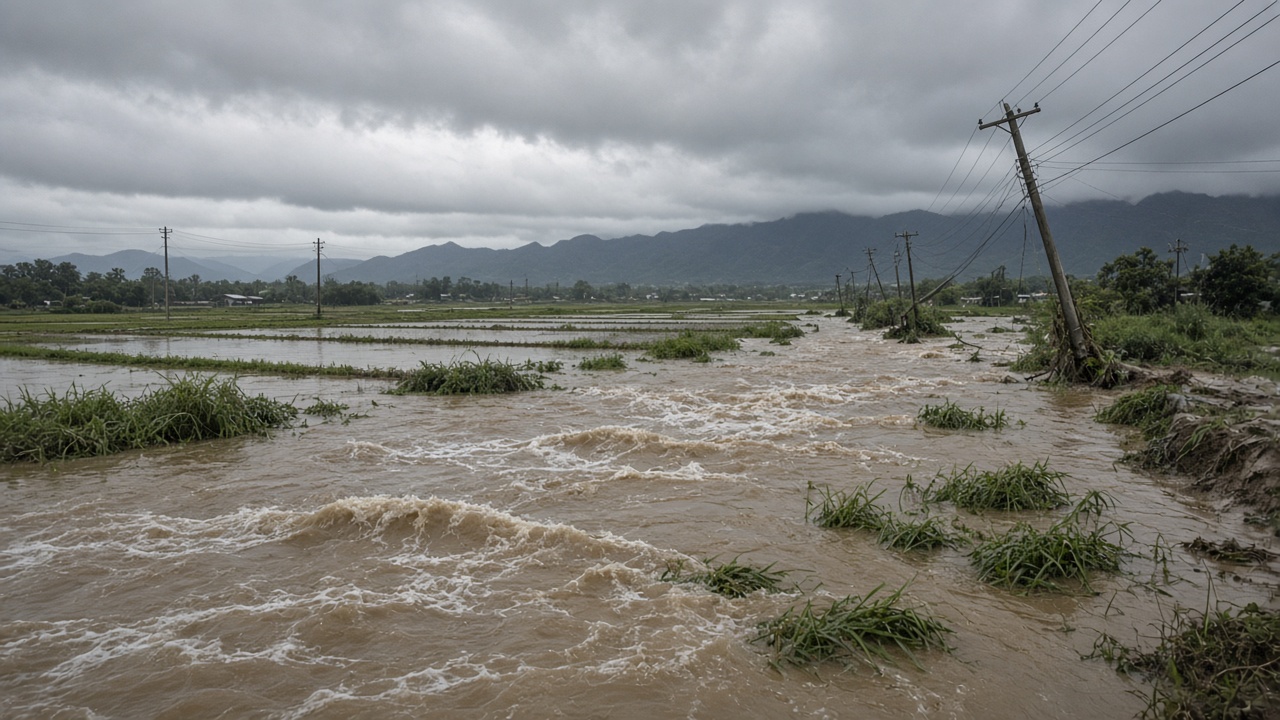
Seventeen people died after the Matai'an barrier lake burst and flooded Guangfu township in Hualien County, authorities said Wednesday, as outer rain bands from Super Typhoon Ragasa overloaded mountain catchments and Premier Cho Jung-tai ordered a cross-agency inquiry into whether evacuation alerts reached riverside villages in time.
The barrier-lake breach
Taiwan's Central Weather Administration had warned that Ragasa's circulation would scrape eastern Taiwan even if the storm's eye passed offshore. In the Matai'an wetland area, a natural barrier lake swollen by days of precipitation gave way before dawn, sending sediment-laden water down the Guangfu plain. Firefighters and army engineers later found vehicles lodged against bridge pylons and farm sheds stripped to concrete pads.
By midday Wednesday, the Hualien county government confirmed 17 fatalities and said search teams were still checking orchards and vacation cabins along side channels. Power utility crews isolated submerged transformers, and the agriculture ministry began tallying crop losses in a township known for rice and tourism around the lake's ecological park.
Survivor accounts on warnings
Residents who escaped to a community center told local reporters that cellphone alerts arrived only after knee-deep water was already moving through streets. Some said loudspeaker trucks never reached outlying hamlets cut off when a secondary road collapsed. Others recalled prior drills that assumed slower river rises, not a sudden barrier-lake failure that compressed response time to minutes.
County officials countered that forecasters upgraded rainfall rates overnight and that police went door to door in the hardest-hit district, but they acknowledged gaps in coverage for elderly households without smartphones. The tension—institutional timelines versus lived experience—now sits at the center of Cho's ordered review.
Premier Cho's inquiry mandate
Cho Jung-tai, speaking from the Executive Yuan in Taipei, directed the interior ministry and the Central Emergency Operation Center to produce a timeline within two weeks: when hydrologists flagged the lake level, when the county activated level-three alerts, and which agencies held authority to order mandatory relocation. He said the government would not prejudge liability but that "every minute of warning delay must be explained to families."
Lawmakers from Hualien's legislative district demanded a public hearing in Guangfu before the Mid-Autumn holiday travel rush, arguing that barrier lakes along the east coast need permanent monitoring gauges after climate models show typhoons carrying more moisture.
Ragasa's eastern Taiwan track
Super Typhoon Ragasa did not make landfall on Taiwan, but its outer bands dumped torrential rain on Hualien and Taitung, triggering debris flows on other streams as well. The forestry bureau closed trailheads, and the railway administration suspended some services until slope inspectors certified stability. Ragasa's track mirrored recent storms that flood the east while the west sees only gusty winds—a pattern disaster planners say strains budgets for early-warning hardware in low-population mountain corridors.
For the environment desk, accountability is the spine: a named barrier-lake failure, a death toll of 17, and a premier-level inquiry into evacuation messaging rather than only into rainfall totals.
Recovery and accountability steps
Emergency stipends for funeral costs and temporary housing were approved Thursday morning, and volunteers organized hot meals at schools on dry ground. Hydrology teams planned to drone-map the lake basin to see whether the breach widened permanently, which would alter flood models for downstream townships.
Until Cho's report lands, Guangfu residents said they would rebuild berms with shovels while waiting to learn whether official alerts failed technically—or failed because no protocol existed for sudden barrier-lake collapses at all.